Debt and Credit Explained: India and the US in One Guide

By Tapabrata Biswas · Published July 23, 2026 · 13 min read
Written and fact-checked by Tapabrata Biswas. How I write
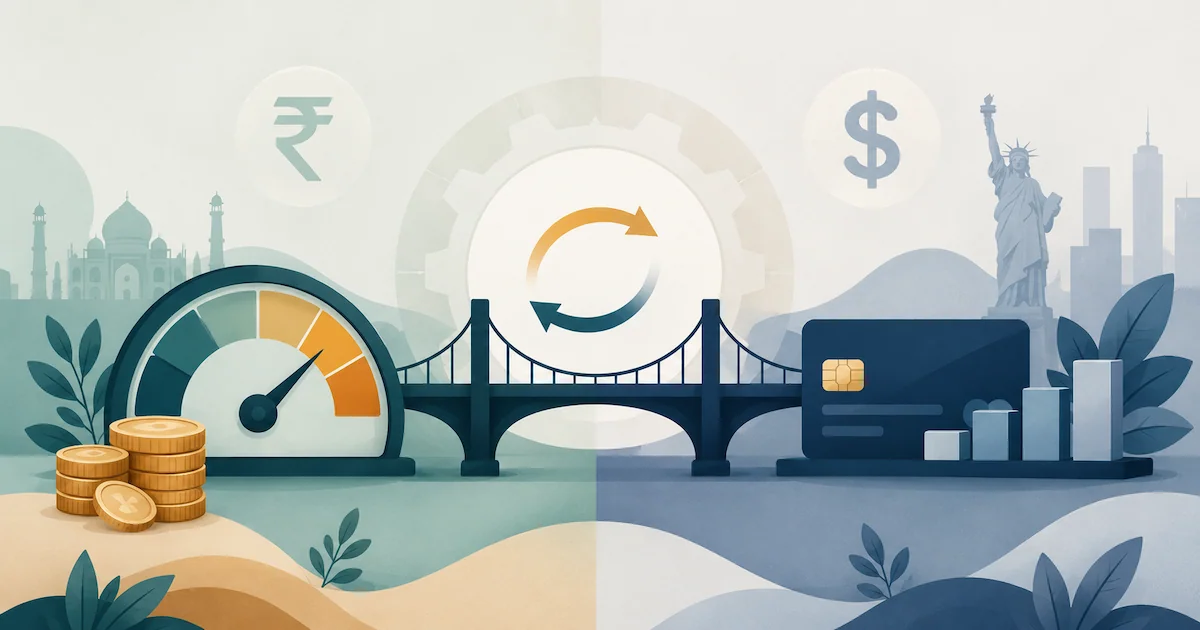
Every guide to debt and credit is written for one country. The US ones explain FICO, revolving cards and federal student loans, and never mention CIBIL or an EMI. The Indian ones explain loan types and the CIBIL score, and never mention FICO or how a US credit card revolves. A reader who lives between the two markets, or is comparing them, has to read two guides and translate.
This one covers both, because the machinery is the same under different names. It also carries something the evergreen bank and bureau pages do not bother to keep current: the actual rates and rules as they stand in July 2026. Two of those rules changed this year and reset the ground under Indian borrowers.
What follows defines debt and credit once, states where the two markets line up, and then routes you to the full guide on each piece. For where debt payoff sits in a beginner's overall plan, our personal finance roadmap for beginners puts it in order.
What do debt and credit actually mean?
Credit is the ability to borrow money, and debt is what you owe once you use it. Credit is the door; debt is what walks through it.
A card with a ₹1,00,000 limit is credit. The ₹20,000 sitting on it is debt. The distinction matters because the two are judged separately: your credit score rates how reliably you have handled borrowing, while your debt is just the amount outstanding. It is entirely possible, and healthy, to hold a large credit limit and carry no debt at all.
Debt then sorts into a few families that behave nothing alike, and most of this guide is really about telling them apart. Two splits do most of the work.
| Split | One side | The other side |
|---|---|---|
| By structure | Revolving: a card you draw, repay and redraw, no end date | Instalment: a fixed sum on a fixed schedule, EMIs in India |
| By security | Secured: backed by an asset, a house or gold | Unsecured: backed only by your promise, so it costs more |
The popular good-debt-versus-bad-debt label sits on top of these. Debt that buys something which grows, a home or an education, gets called good; debt that funds spending gets called bad. It is a fair rule of thumb, but the rate matters more than the label. A home loan at 8.5% and a credit card at 40% are not in the same universe, whatever you call them.
Where do debt and credit stand right now?
The numbers that frame every borrowing decision move, and almost no explainer keeps them current, so here they are as of July 2026.
| Anchor | Value | As of |
|---|---|---|
| RBI policy repo rate | 5.25% | July 2026, per RBI |
| US average credit card rate, all accounts | 20.94% | May 2026, Federal Reserve G.19 |
| US credit card rate on accounts assessed interest | 22.15% | May 2026, Federal Reserve G.19 |
| Indian lender credit-bureau reporting | Four times a month | Since 1 July 2026, RBI |
| Prepayment charge on a floating-rate retail loan | Barred | Loans sanctioned from 1 January 2026, RBI |
Two of those are new this year and worth stating plainly, because they change what a borrower should expect.
Since 1 July 2026, Indian lenders report your credit information to the bureaus four times a month, on the 9th, 16th, 23rd and last day, replacing the fortnightly cycle that itself only started in January 2025. Your credit report now reflects a payment, or a missed one, far faster than it used to. The mechanics and the borrower rights attached sit in what a credit report is.
And under the RBI's Pre-payment Charges on Loans Directions, 2025, prepayment charges are barred on floating-rate loans to individuals for non-business purposes, for loans sanctioned or renewed from 1 January 2026. The catch, which most coverage skips, is that many personal loans are fixed-rate and fall outside the ban. That qualifier is unpacked in what a personal loan is.
How do India and the US line up?
The two markets run the same logic under different names, and no single page anywhere puts the translation in one place. This is the table a cross-border reader, an NRI, or a US-employed Indian rarely finds.
| Concept | India | United States |
|---|---|---|
| The credit score | CIBIL, 300 to 900 | FICO, 300 to 850 |
| What moves the score most | Payment history and credit utilisation | Payment history and amounts owed |
| Monthly loan payment | EMI, an equated monthly instalment | Amortised instalment payment |
| Central-bank rate that sets loan rates | RBI repo rate, 5.25% | Fed funds target, 3.50% to 3.75% |
| Bank routing identifier | IFSC code | Routing number |
| Consumer-credit regulator | Reserve Bank of India | CFPB and the Federal Reserve |
| Free credit report | One a year from each bureau | Weekly at AnnualCreditReport.com |
The honest gaps matter as much as the matches. India's UPI has no exact US equivalent in everyday use, US federal student-loan repayment plans have no Indian analog, and the RBI concentrates powers that the US splits across several bodies. But the core idea, a score that predicts repayment and a rate that flows down from the central bank, is identical on both sides.
Your credit record: the score and what moves it
A credit score is a single number, from 300 to 900 on CIBIL or 300 to 850 on FICO, that predicts how reliably you will repay. It is built from your record, not from your income or your savings.
The largest lever in both countries is the same: paying on time. FICO weights payment history at 35% and amounts owed at 30%, per myFICO, and CIBIL is driven by the same two factors in roughly that order. The second lever, how much of your available credit you are using, is where a quick win usually hides.
- What the score is made of, factor by factor, in both systems: how credit scores are calculated.
- What actually counts as a good number, and why the bands differ: what is a good credit score.
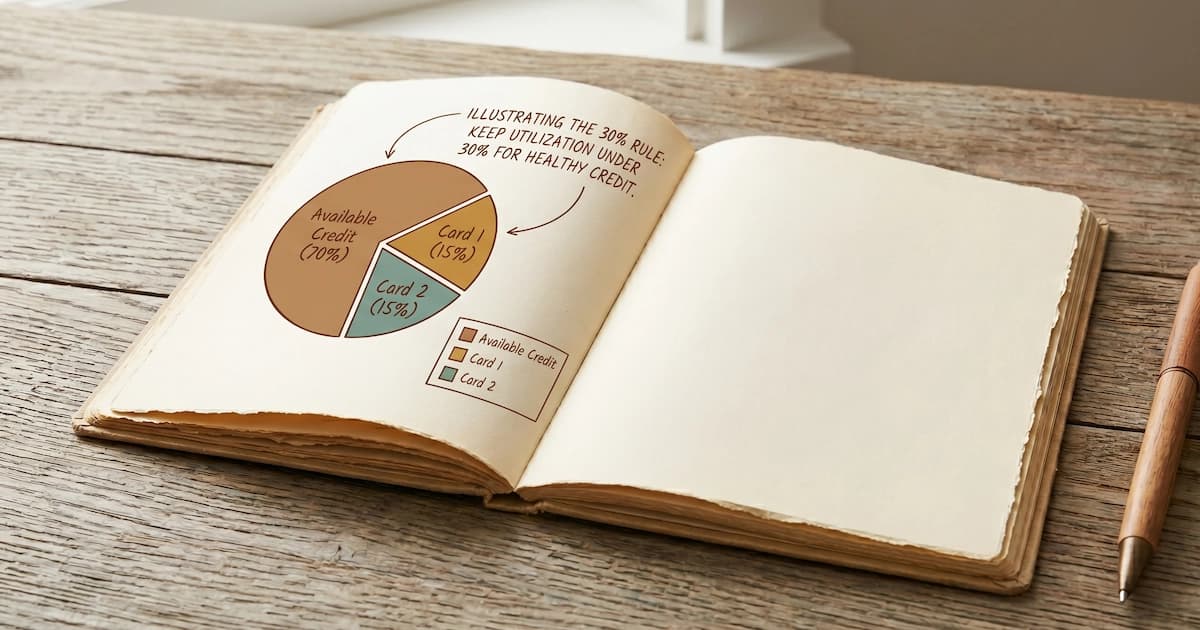
- The utilisation ratio, and whether the famous 30% rule is real: credit utilisation.
- Pulling your Indian report without paying for it: how to check your CIBIL score free.
- What a lender weighs beyond the score, and where your number actually fits: the 5 Cs of credit.
Revolving debt: credit cards
A credit card is revolving debt, meaning you can borrow up to a limit, repay, and borrow again with no fixed end date, which is exactly what makes it the most expensive common debt to carry. At an average US rate of 20.94% and Indian card rates commonly in the high 30s to low 40s, a carried balance compounds fast.
- How the interest is actually charged, and why a small balance grows quickly: how credit card interest works.
- Why a debit card is a different instrument entirely: credit card versus debit card.
- The real timeline to clear a balance on minimum payments: how long to pay off a credit card.
- What genuinely happens if you stop paying, step by step: what happens if you don't pay credit card debt.
Instalment debt: loans
An instalment loan is a fixed sum repaid on a set schedule, in equal EMIs in India, and it is usually far cheaper than revolving debt because it is structured and often secured. A personal loan, a student loan and a home loan are all instalment debt, differing mainly in rate and collateral.
- What a personal loan costs once fees are counted, and the prepayment rule: what is a personal loan.
- How student-loan interest accrues daily and capitalises: how student loan interest works.
- The grace window before repayment starts: student loan grace period.
- The four US federal income-driven plans, and why India has no equivalent: income-driven repayment.
The expensive short-term kinds: payday and BNPL
Payday loans and buy-now-pay-later are the easiest debt to enter and among the costliest to carry, which is the whole reason to understand them before using them. Both are engineered for speed at the point of sale, and both hide their true cost behind small per-transaction framing.
- Why a payday loan's fee translates into a triple-digit annual rate: what is a payday loan.
- How BNPL splits a purchase, and where the cost and the credit-report risk sit: what is buy now pay later.
Getting out of debt
Two payoff methods dominate, and which one wins depends on your specific debts, not on which is mathematically neater. The avalanche pays the highest-rate debt first and saves the most interest; the snowball clears the smallest balance first and is easier to sustain.
- The highest-rate-first method, and the honest limit on its advantage: how the debt avalanche works.
- The smallest-balance-first method, and the research behind it: how the debt snowball works.
- The head-to-head, with the number that decides it: debt snowball versus avalanche.
- Replacing several debts with one new loan, when it works and when it doesn't: what a debt consolidation loan is and how debt consolidation works.
Where should you start?
The posts read in any order, but a few sequences make sense by situation.
In debt now and wanting a plan: debt snowball versus avalanche to pick a method, then how credit card interest works to understand the most expensive balance, then what happens if you don't pay if things are tight.
Building credit from scratch: how credit scores are calculated, then credit utilisation, then what a good credit score is.
About to borrow: what a personal loan is for the rate and fee reality, then how credit scores are calculated, since the rate you are offered turns on the score.
The authorities behind these rules
Every figure in this cluster traces to a primary authority, never a secondary financial-media source.
| Authority | Jurisdiction | What it governs |
|---|---|---|
| Reserve Bank of India | India | The repo rate, lending rules, and credit-information reporting |
| Credit information companies (CIBIL and others) | India | The CIBIL score and credit reports |
| Federal Reserve | US | The federal funds rate and consumer-credit data (G.19) |
| Consumer Financial Protection Bureau | US | Consumer-credit protection and disclosure |
| Fair Isaac Corporation (FICO) | US | The FICO score model |
What this pillar deliberately does not cover
This hub defines debt and credit for both markets and routes you to the deep guides. It does not tell you whether to borrow, which lender or card to choose, or how to handle a specific debt, since those turn on numbers a general page cannot see.
Several things sit elsewhere on purpose. The full mechanics of each concept live in the linked cluster posts. Business and corporate debt, mortgages as a standalone subject, and the tax treatment of interest are out of scope here. And the current-as-of-July-2026 figures at the top will move, so the RBI rates page and the Federal Reserve's G.19 release are where to re-check them rather than trusting the number on age.
For a debt you genuinely cannot service, the right step is not a payoff method but a conversation with a qualified credit counsellor, or with the lender directly.
Frequently asked questions
What is the difference between debt and credit? Credit is the ability to borrow money, and debt is the amount you actually owe once you use that ability. A credit card with a ₹1,00,000 limit is credit; the ₹20,000 balance on it is debt. Credit is a capacity, granted by a lender based on your record, while debt is the live obligation to repay, usually with interest. The two are measured differently too: your credit score rates how reliably you have handled credit, while your debt is simply the sum you owe. You can have a high credit limit and zero debt, which is often the healthiest position.
Is CIBIL the same as FICO? They are counterparts, though not identical. CIBIL is India's most-used credit score, running from 300 to 900, while FICO is the standard US score, running from 300 to 850. Both are built mostly from the same behaviour: whether you pay on time, how much of your available credit you use, and how long your history is. The scales differ and the companies differ, but a lender in either country is asking the same question, which is how likely you are to repay. This is one of several places where India and the US run identical logic under different names, alongside the EMI and the US amortised instalment, or the IFSC code and the US routing number.
What are the main types of debt? Debt sorts into a few families that behave very differently. Revolving debt, mainly credit cards, lets you borrow up to a limit, repay, and borrow again, with no fixed end date and a high rate. Instalment debt, such as a personal loan, car loan or home loan, is a fixed sum repaid on a set schedule, in EMIs in India. Then there are the expensive short-term kinds, payday loans and buy-now-pay-later, which are easy to enter and costly to carry. Debt is also split into secured, backed by an asset like a house or gold, and unsecured, backed only by your promise, which is why unsecured debt costs more.
What is good debt versus bad debt? The common framing is that good debt buys something that grows in value or income, like a home loan or an education loan, while bad debt funds something that loses value or is consumed, like a credit card balance on everyday spending. It is a useful rule of thumb more than a law, because the rate matters as much as the purpose: a home loan at 8.5% behaves very differently from a credit card at 40%. The more precise version is that debt is cheap or expensive, and the expensive kinds are the ones to clear first regardless of what they were labelled.
What has recently changed for borrowers in India? Two RBI rules matter for anyone with a loan or a credit card. Since 1 July 2026, lenders report your credit information to the bureaus four times a month, on the 9th, 16th, 23rd and last day, replacing the fortnightly cycle that began in January 2025, so your credit report now updates faster after a payment or a default. And under the Reserve Bank's Pre-payment Charges on Loans Directions, 2025, prepayment charges are barred on floating-rate loans to individuals for non-business purposes sanctioned or renewed from 1 January 2026, though the carve-out is that many personal loans are fixed-rate and fall outside it.
Sources
-
Reserve Bank of India, current rates (the policy repo rate at 5.25%, read 23 July 2026) rbi.org.in
-
Board of Governors of the Federal Reserve System, G.19 Consumer Credit, release of 8 July 2026 (the average US credit card rate of 20.94% on all accounts and 22.15% on accounts assessed interest, for May 2026) federalreserve.gov
-
Reserve Bank of India, Amendment Directions on credit information reporting, in force from 1 July 2026 (lenders reporting four times a month on the 9th, 16th, 23rd and last day) rbi.org.in
-
Reserve Bank of India, Reserve Bank of India (Pre-payment Charges on Loans) Directions, 2025, 2 July 2025 (no prepayment charges on floating-rate loans to individuals for non-business purposes, for loans sanctioned from 1 January 2026) rbi.org.in
-
myFICO, What's in my FICO Scores (payment history 35% and amounts owed 30% as the two largest factors) myfico.com
-
TransUnion CIBIL, credit score and loan basics (the CIBIL score range of 300 to 900) cibil.com

You might also like
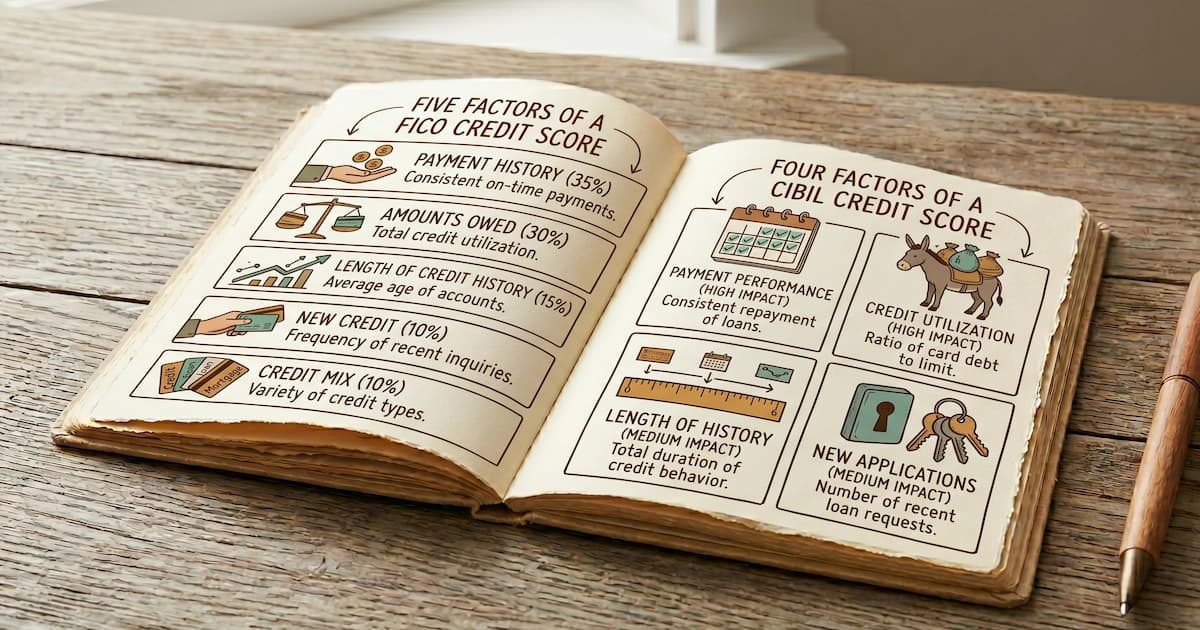
How credit scores are calculated: FICO's five published weights, why CIBIL publishes none, what both models ignore entirely, and what changed in 2026.
19 min read
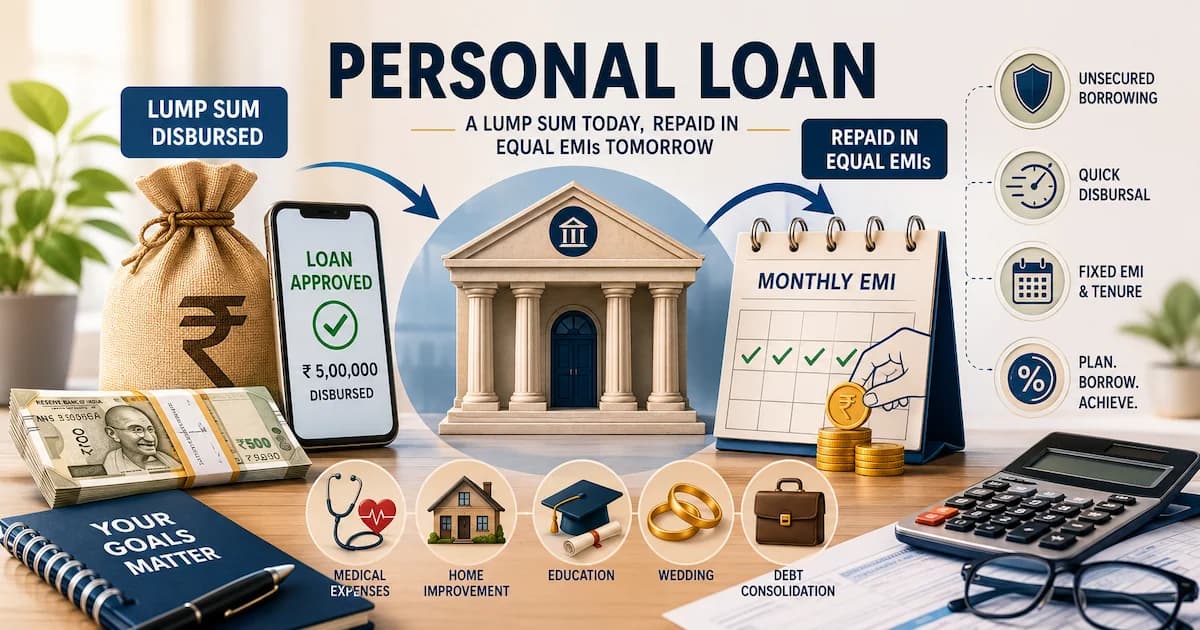
RBI barred pre-payment charges on loans sanctioned from 1 January 2026, but only on floating-rate loans. Most personal loans are fixed, so check which you hold.
11 min read

The three forms debt consolidation takes in India and the US, and the conditions under which it saves money rather than just rearranging it.
11 min read