How Long to Pay Off a Credit Card? The Math (₹ and $)

By Tapabrata Biswas · Updated July 13, 2026 · 12 min read
Written and fact-checked by Tapabrata Biswas. How I write
A ₹50,000 credit card balance at 40% clears in about 14 years on the minimum payment (paying nothing at all takes it somewhere different and worse), in 21 months on a fixed ₹3,500 a month, and in 11 months on a fixed ₹5,500 a month. The balance is the same. The rate is the same. All that changed is the size of the payment and whether it shrinks as the balance falls.
This guide runs the actual math for both markets: how long a card takes to clear at different payment levels, why the minimum is the slowest possible choice, when in the month to pay, and how it all works in rupees (Indian card rates of 36% to 42%) and dollars (a US average around 22% on balances carrying interest, per the Federal Reserve G.19 release). This is educational, not personal advice; for a plan built around your own numbers, a credit counsellor or financial adviser is the right call.
How long does it take to pay off a credit card?
The time to pay off a credit card comes down to three numbers: your balance, your APR, and how much you pay each month. Lock the first two, and the payment is the only lever that actually moves the timeline.
The math is the same loan-amortization formula used for a home loan, just at a much higher rate. For a fixed monthly payment, the number of months to clear the balance is:
N = -log(1 - (r × Balance / Payment)) / log(1 + r)
Here r is the monthly rate (APR divided by 12), and the formula only works when the payment is bigger than one month's interest, or the balance never falls. Run a $5,000 balance at 22% through it at a few payment levels and the lever becomes obvious.
| Monthly payment | Time to clear | Interest paid |
|---|---|---|
| Minimum (about 2% + interest) | ~30 years | ~$10,800 |
| $150 | ~4.4 years | ~$2,900 |
| $250 | ~2.2 years | ~$1,350 |
| $400 | ~1.3 years | ~$700 |
The jump from the minimum to even a modest fixed payment is not gradual, it's a cliff. To run your own balance, rate, and payment (and to compare cards if you carry more than one), our debt-payoff calculator does the month-by-month simulation in rupees or dollars. The APR itself compounds daily, which our explainer on how credit card interest works breaks down.
Why does paying only the minimum trap you for years?
The minimum payment keeps you in debt for years because it's a shrinking percentage of the balance, so it falls as fast as the balance does. Most cards set it at 2% to 5% of the outstanding amount plus interest, with a small floor. It's a moving target, not a fixed sum.
Watch a ₹1,00,000 balance at 40%, paying the 5% minimum, with nothing new charged.
| Month | Starting balance | Interest | Min payment | Principal paid | Ending balance |
|---|---|---|---|---|---|
| 1 | ₹1,00,000 | ₹3,333 | ₹5,000 | ₹1,667 | ₹98,333 |
| 12 | ₹83,200 | ₹2,773 | ₹4,160 | ₹1,387 | ₹81,813 |
| 60 | ₹47,200 | ₹1,573 | ₹2,360 | ₹787 | ₹46,413 |
| 120 | ₹22,300 | ₹743 | ₹1,115 | ₹372 | ₹21,928 |
Total payoff time runs to about 216 months, or 18 years, and total interest to roughly ₹1,72,000, about 1.7 times the amount you borrowed. The US version is just as stark: a $5,000 balance at 22% on a 2% minimum takes about 30 years to clear and costs about $10,800 in interest, which is why every US statement carries a CARD Act "minimum payment warning" box showing how much longer the minimum takes than a 3-year payoff.
The design is deliberate. A bigger minimum would clear balances faster but cut the issuer's interest income; a smaller one would never reduce the principal. The 2% to 5% band keeps you current while keeping the balance revolving.
How much faster does paying more finish it?
Holding the payment at a fixed amount, even a little above the minimum, collapses the timeline because the payment no longer shrinks with the balance. The same ₹1,00,000 at 40%, paid at a flat ₹5,000 a month, clears in about 30 months for roughly ₹50,000 in interest. Against the minimum-payment plan, that's ₹1,22,000 saved on an identical balance and rate.
The mechanic: early on, most of a fixed payment covers interest; as the balance falls, the interest slice falls with it, so each later payment retires more principal. The minimum never reaches that crossover because it keeps stepping down. The full comparison, in both currencies:
| Strategy | India: ₹1,00,000 @ 40% | US: $5,000 @ 22% |
|---|---|---|
| Minimum (2% to 5% of balance) | 18 years / ₹1,72,000 interest | 30 years / $10,800 interest |
| Fixed ₹5,000 / $200 monthly | 30 months / ₹50,000 interest | 32 months / $1,580 interest |
| Fixed ₹7,500 / $300 monthly | 17 months / ₹26,000 interest | 19 months / $920 interest |
| Fixed ₹10,000 / $400 monthly | 12 months / ₹17,000 interest | 14 months / $660 interest |
When is the best time to pay, the due date or the statement date?
The best time to pay depends on your goal: pay by the due date to avoid interest and late marks, but pay before the statement closing date to lower the balance your card reports as credit utilization. These are two different dates doing two different jobs, and most people only know the first one.
Your issuer reports your balance to the credit bureaus at the close of the billing cycle, not on the due date. So a payment made before the statement closes shrinks the figure that gets reported. Experian's own example: a $2,000 balance reported at 40% utilization drops to 20% if you pay $1,000 down before the cycle closes. Utilization under 30% is generally called healthy, and our guide to credit utilization makes the case for keeping it under 10%. Paying after the statement closes but before the due date still avoids interest, it just does little for the utilization number the bureaus see.
Should you pay your card in full every month?
Paying your full statement balance by the due date means you owe zero interest, and it does more for your credit score than carrying a balance ever could. The belief that revolving a small balance builds credit is a myth; it just costs you interest at 22% or more.
What actually helps your score is a low reported utilization plus a record of on-time payments, both of which you get by paying in full and on time. When you clear a balance, your utilization drops, but the score change waits for your next statement to be reported, so it can lag by days or even weeks. Paying in full is simply the interest-free way to use a card: swipe through the month, pay the statement balance by its due date, owe nothing extra.
Paying off several cards, and consolidation
With more than one card, the order you attack them in decides how much interest you pay, and swapping card debt for a lower-rate loan can help if the cards then stay shut. Two methods dominate, both covered in depth in our snowball vs avalanche piece and the step-by-step debt snowball method.
The avalanche method pays every card's minimum, then throws every spare rupee at the highest-APR card, which minimizes total interest. The snowball method targets the smallest balance first, which produces quick visible wins that research links to better follow-through. On three Indian cards at 42%, 36%, and 32% with a ₹15,000 monthly budget, the avalanche route saves about ₹5,000, roughly 12%, over the snowball. Where the rates are close, that gap shrinks toward zero and the choice becomes behavioral.
Consolidation is the third lever. Indian personal loans run about 11% to 18% and US personal loans about 10% to 17%, both far below card rates, so moving a balance onto one can cut interest sharply, especially when your monthly budget is small. The catch is that the loan does not close the cards. If they get used again, you're left owing the loan and new card debt too, which is the single most common reason consolidation backfires.
What are the current credit card rates?
As of May 2026, the Federal Reserve's G.19 release put the US average credit card rate at 20.94% across all accounts and 22.15% on accounts actually carrying interest. For anyone paying only a minimum, that second figure is the one that bites. It's near the top of the series' 30-plus-year history, up from around 12% in 2015.
In India, cards typically charge 3% to 3.75% a month, which works out to roughly 36% to 46% a year, with the minimum amount due set around 5% of the outstanding under the Reserve Bank of India's card rules. Those rules require that the minimum avoid negative amortization and that issuers warn cardholders the minimum stretches repayment over years. The practical takeaway for an Indian cardholder: paying only the minimum stops the late-payment penalty, but it does not stop the interest, which keeps compounding at 3% or more a month while you also lose the interest-free grace period on new purchases.
What this post deliberately does not cover
To keep the scope clear:
- The deeper interest mechanics (daily compounding, the grace period, how APR becomes a daily rate) are in how credit card interest works.
- Choosing between payoff strategies for several cards is in debt snowball vs avalanche.
- Which balance-transfer or low-interest card to pick is a product-selection question this educational post stays out of.
- Preventing the debt in the first place is in building an emergency fund.
- This is general education, not financial advice. For a payoff plan built around your income, rates, and goals, a credit counsellor or a qualified financial adviser is the right professional.
Frequently asked questions
How long does it take to pay off $5,000 in credit card debt on the minimum payment? At around 22% APR with a 2% minimum payment (about $100 the first month, falling as the balance drops), roughly 30 years and about $10,800 in total interest. A fixed $200 a month clears the same $5,000 in about 32 months for about $1,600 in interest. The minimum payment is built to keep the balance revolving for years because it shrinks along with the balance, so a fixed payment that does not scale down is the single biggest way to speed things up.
When is the best time to pay your credit card? It depends on your goal. To avoid interest and late marks, pay at least the minimum by the due date, and pay the full statement balance to owe no interest at all. To lower your credit utilization, pay before the statement closing date, because your issuer reports the balance at the close of the billing cycle to the bureaus, not the balance on the due date. A payment made before the cycle closes shrinks the balance that gets reported, which can lower your utilization ratio and help your score.
Does carrying a small balance help your credit score? No. Carrying a balance from month to month does not build or help your credit score; it just costs you interest. The score benefit comes from a low reported utilization and a history of on-time payments, both of which you get by paying your statement balance in full and on time. Paying in full is the interest-free way to use a card, and it keeps your utilization low. The idea that you must revolve a balance to build credit is a persistent myth.
Should I take a personal loan to pay off credit card debt? It depends on the rate gap. Indian credit cards charge roughly 36% to 42% a year while personal loans run 11% to 18% at most banks, a large saving. US cards average around 22% while personal loans run about 10% to 17%. The math favors consolidation when the loan rate is at least 5 to 7 percentage points lower. The risk is behavioral: a personal loan does not close the cards, so if they get used again you end up owing the loan and fresh card debt both.
Is it better to pay off the card or save the money? In most cases the card comes first. A 36% Indian card or a 22% US card gives you a guaranteed return equal to its rate for every rupee or dollar you put against the balance, well above what a savings account or most investments return after tax. The usual exception is a small starter emergency fund, around ₹15,000 to ₹50,000 or $500 to $1,000, kept aside first so a surprise expense does not push the balance straight back up.
In summary
The one number that decides how long a credit card takes to clear is the payment, and specifically whether it's fixed or a shrinking percentage. A flat ₹5,000 instead of the 5% minimum turns an 18-year payoff into a 30-month one on a ₹1,00,000 balance, and the same lever works in dollars. Around it sit two quieter habits that cost nothing: pay before the statement closes to keep your reported utilization low, and pay the statement balance in full by the due date to owe no interest.
The most expensive misconception in this whole topic is that the minimum payment is a safe, normal way to use a card. It's the one option engineered to keep you paying for decades. Plug your real balance and payment into the debt-payoff calculator once, see the payoff date and the total interest, and the case for a fixed payment makes itself.
Sources
- Federal Reserve, G.19 Consumer Credit Release (average credit card APRs): federalreserve.gov/releases/g19/current
- Reserve Bank of India, Master Direction, Credit Card and Debit Card Operations: rbi.org.in
- Consumer Financial Protection Bureau, CARD Act minimum-payment disclosure (Regulation Z, Appendix M1): consumerfinance.gov
- Experian, When to pay your credit card bill and credit utilization: experian.com

You might also like
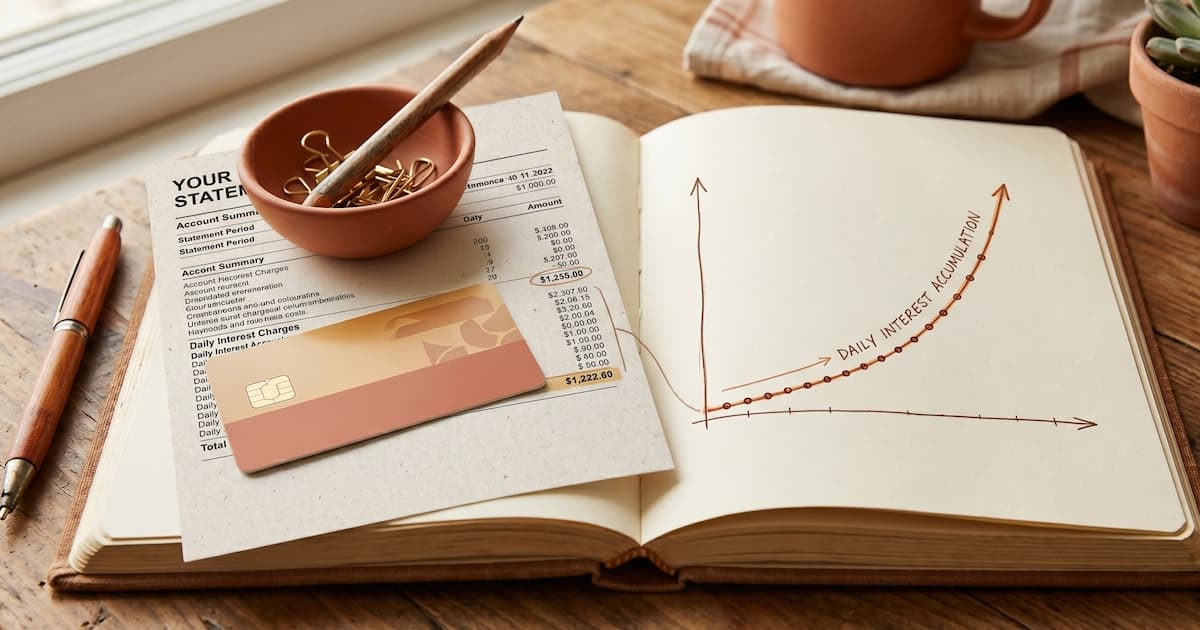
Credit card interest is charged daily on your average daily balance once you carry a balance. The real math, grace periods, and the minimum trap, in ₹ and $.
13 min read
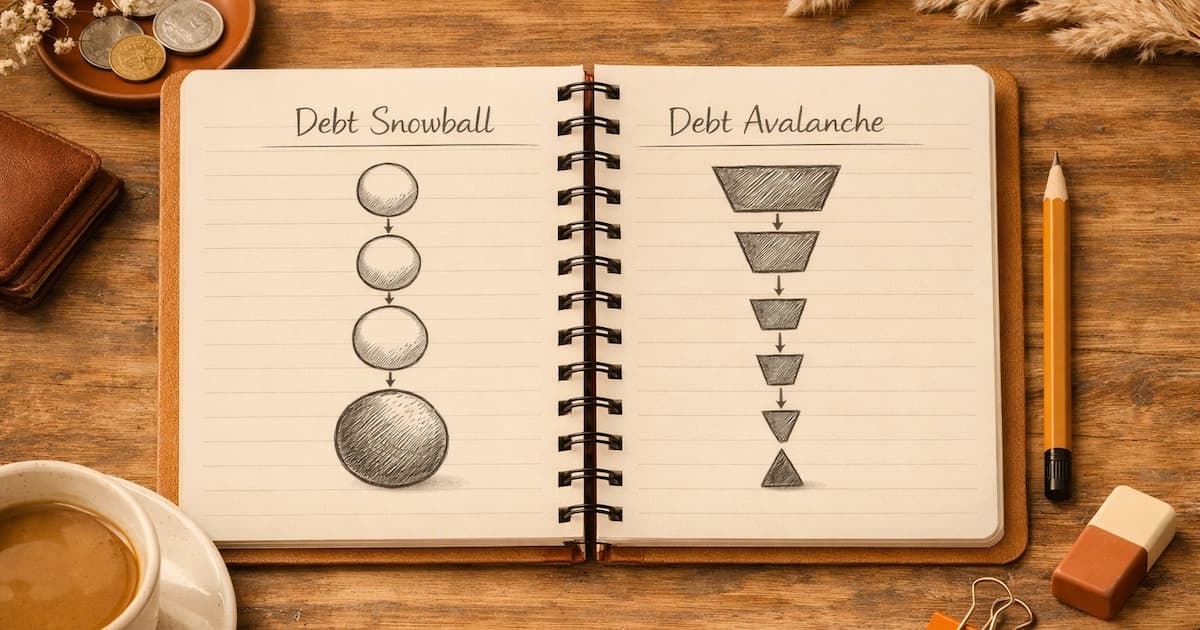
How each method works, the maths on which saves more, the behavioural research on which one people actually finish, and how to choose.
11 min read
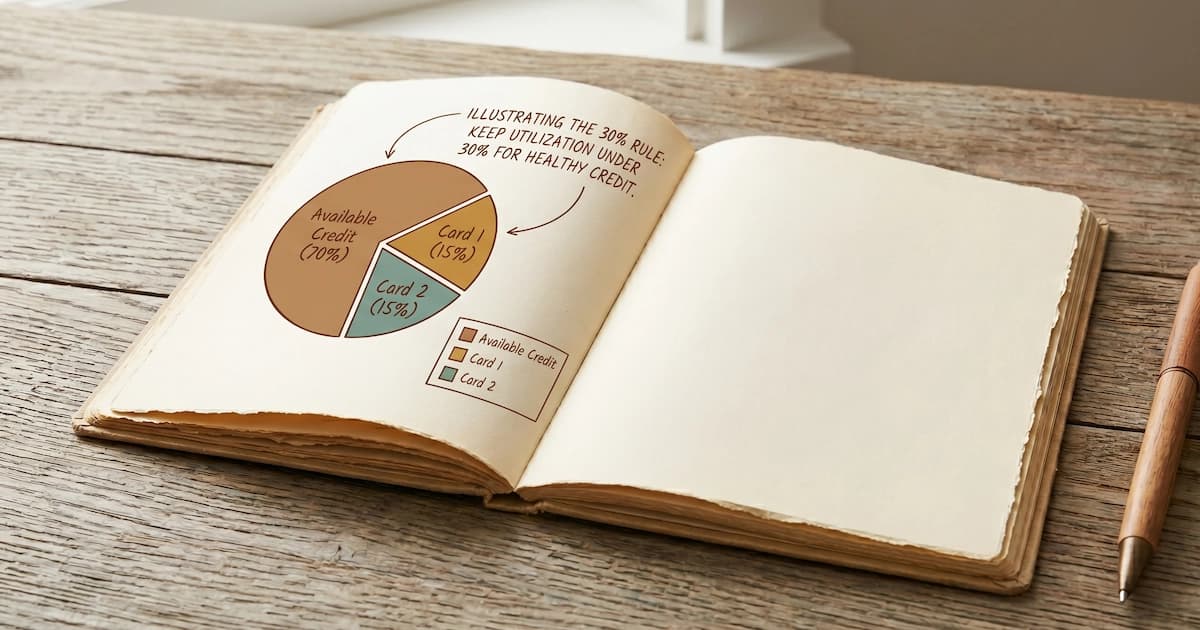
TransUnion CIBIL calls 30% a healthy ratio but sets no official cut-off, and FICO publishes none either. What the data shows, and why top scores sit under 10%.
14 min read