How to Build an Emergency Fund From Scratch

By Tapabrata Biswas · Published May 11, 2026 · 11 min read
Researched with AI assistance, reviewed and edited by Tapabrata Biswas.
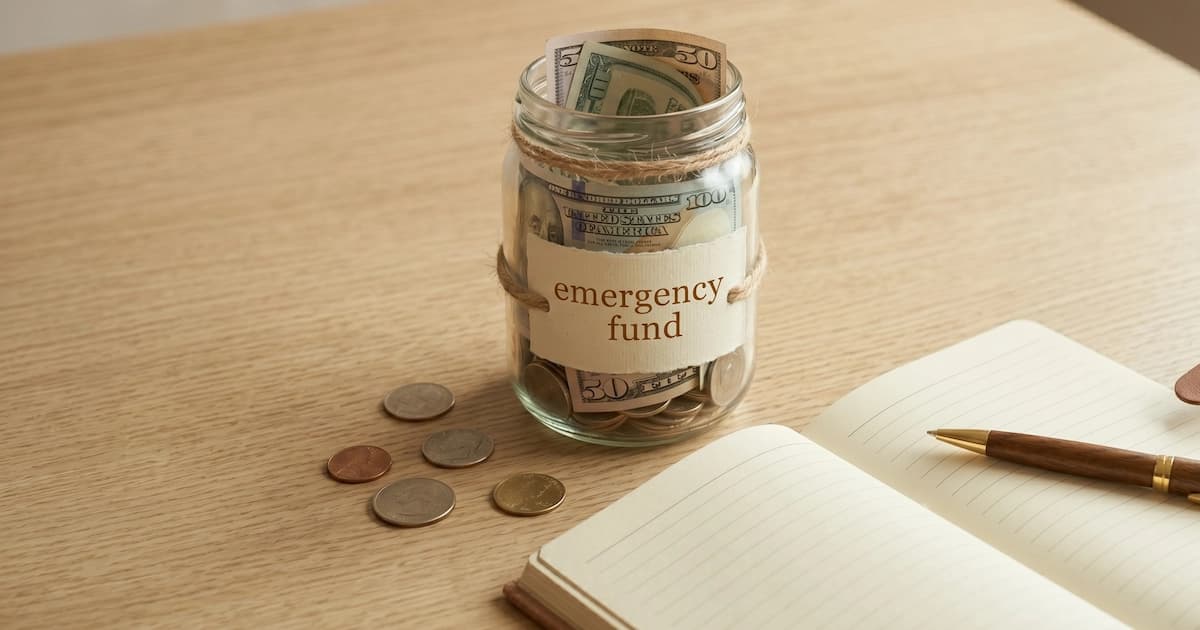
The Federal Reserve's 2024 Survey of Consumer Finances found that 32% of U.S. adults can't cover an unexpected $400 expense from cash. The threshold is small. The expense is the kind of thing that happens to most households a few times a year, a car battery, an unexpected medical bill, a flight home for a family event. The pattern that traps tight-budget households into long-running credit card debt almost always starts there: the unexpected $400 hits, the household has no buffer, the cost goes on the card at 22% APR, and the math compounds for years.
Building an emergency fund from scratch breaks that cycle. The path is straightforward, the discipline is structural rather than willpower-based, and the milestones are concrete enough to track week by week.
What an emergency fund actually does (and doesn't)
An emergency fund is money set aside specifically to cover unexpected expenses or income loss without resorting to debt. It's not a savings account for goals (vacation, down payment, holiday spending). It's not retirement money. It's not investment money. It's the buffer that absorbs shocks so the rest of the household financial picture stays stable.
Two characteristics make an emergency fund work. First, it's accessible: money you can withdraw within a day or two, not money locked in a CD or invested in volatile assets. Second, it's mentally separate: kept in a distinct account so it doesn't get treated as available spending money during a tight week.
For the deeper conceptual background, what counts as an emergency, why this category exists separately from other savings, and how the concept evolved in personal finance, see our companion piece on what is an emergency fund.
The four stages of building an emergency fund
Most personal finance educators describe building an emergency fund as a single goal: "save 3-6 months of expenses." That framing produces drop-off because the target feels enormous from $0. The structurally sound version breaks it into four stages, each with a defined milestone and a behaviour change at the boundary.
Stage 1: the first $400
This is the most important threshold. The Federal Reserve uses $400 as the headline metric for household financial fragility, and crossing it removes most of the small-emergency credit-card-debt risk. The first $400 prevents a flat tire from becoming six months of compounding card debt.
For a household saving $25 per paycheck biweekly, $400 takes 16 weeks. For $50 per paycheck, 8 weeks. The exact target matters less than the discipline of getting there without dipping in.
Until this stage is complete, all extra savings goes to the emergency fund. Other priorities, extra debt payment, longer-term goals, sinking funds, wait. The single $400 buffer matters more than any other use of money the household isn't already obligated to spend.
Stage 2: $1,000 starter fund
After $400, the next milestone is $1,000. Dave Ramsey's Baby Step 1 uses this number; the Consumer Financial Protection Bureau's emergency fund research describes amounts in this range as the "starter" buffer that handles most non-catastrophic emergencies.
At $25 per paycheck, $1,000 takes about 10 months from $0. At $50 per paycheck, 5 months. The math is mechanical; the household just has to honour the transfer.
Once the $1,000 starter fund is in place, the financial behaviour at this household shifts. Decisions about extra debt payment vs further saving start making sense. The household's emergency-fund-to-monthly-expenses ratio is still small (maybe 20-30% of one month), but the immediate fragility is gone.
Stage 3: three months of essential expenses
The third stage is building toward three months of essential expenses, the "essential" qualifier matters. This isn't three months of total spending; it's three months of the bills that absolutely must be paid even if income stops. Rent or mortgage, utilities, basic groceries, insurance, minimum debt payments, transportation. Discretionary spending, eating out, subscriptions, travel. Those don't need to be in the calculation.
For a household with $2,200/month in essential expenses, the three-month target is $6,600. Reaching that from $1,000 at 10% of net income takes 12-18 months for most households.
This is where many households start splitting the savings transfer: half to emergency fund, half to other priorities (debt payoff above the 15% APR threshold, or longer-term savings goals). The exact split depends on the household's debt situation and financial goals.
Stage 4: six months for higher-risk situations
The full six-month emergency fund is the standard recommendation for higher-risk situations: single-income households, households with variable or commission-based income, households with dependents, households with specialised careers where job replacement might take longer than average. For dual-income salaried households with no specialised role, three months is often enough.
Reaching six months from three months takes another 12-18 months at the same savings pace. For households who don't fit the higher-risk categories, it's reasonable to stop at three months and direct subsequent savings to retirement, investment, or other goals.
Where to keep the emergency fund
Two characteristics matter: separation and yield.
Separation comes first. The emergency fund should sit in an account that isn't visible during routine checking. A savings account at a separate bank works best. Many people use a high-yield savings account at an online bank (Marcus, Ally, Capital One 360, Wealthfront, Discover) precisely because logging into a different bank's app to access the money creates the friction that prevents accidental spending.
Yield comes second. As of 2026, online high-yield savings accounts pay roughly 4%, while traditional brick-and-mortar bank savings accounts pay 0.01-0.5%. On a $5,000 emergency fund, that's the difference between $200/year in interest and $25/year. Real money, but secondary to the separation principle.
What doesn't work for an emergency fund: certificates of deposit (penalties for early withdrawal defeat the "accessible" requirement), money market mutual funds (technically accessible but the friction is too high for a true emergency), investments in stocks or volatile assets (the value can drop right when you need the money), or cash at home (low security, no yield, easily spent).
What to do when life interrupts the plan
Three patterns interrupt every emergency-fund building plan at some point.
The first is an actual emergency mid-build. A car repair, a medical bill, a job loss before the fund is fully built. Use the fund as designed. That's what it exists for. After the emergency, restart the transfer at the same amount: don't try to "catch up" by saving more, which usually produces a cash crisis and abandonment. Resume normal pace.
The second is a temporary income drop. Reduce the transfer amount; don't pause it entirely. Going from $50/paycheck to $25/paycheck keeps the habit alive. Going from $50/paycheck to $0 requires a willpower act later to restart, which most households don't take.
The third is a non-emergency that feels emergency-adjacent. A friend's wedding, a holiday gift run, an opportunity to attend an event. These aren't emergencies. The hardest discipline of building an emergency fund is keeping it separate from goal-based or sinking-fund spending. Build a separate account for those expenses (a "miscellaneous" sinking fund, $25-$50/month) so the emergency fund doesn't get raided for them.
A simple worked example
Consider a household earning $3,500 net per month, paid biweekly ($1,615/paycheck after taxes), with $0 in savings, no high-interest debt, and $2,100/month in essential expenses.
The plan:
- Open a high-yield savings account at an online bank
- Set automatic transfer: $50 per paycheck on the day after payday
- Don't touch the savings except for true emergencies
Stage 1 (first $400): 8 paychecks, about 4 months. Done.
Stage 2 ($1,000 starter fund): 12 paychecks more, about 6 months. By month 10, the household has $1,000 in liquid emergency savings and hasn't felt any meaningful spending change.
Stage 3 (three months of essentials, $6,300): At $50/paycheck = $1,300/year, this would take another 4 years from $1,000: too long. Most households at this point step up the transfer (to $100 or $150 per paycheck if income permits) or temporarily redirect other found savings (tax refunds, work bonuses, side income) to the fund. Realistic timeline at $100/paycheck: 24 more months. Total time from $0 to three-month fund: about 34 months.
The numbers feel slow at first. They compound faster than expected because life happens, tax refunds, raises, occasional bonuses, and most of those land into the fund instead of into spending if the structure is in place.
Common mistakes when building an emergency fund
Three patterns repeat across failed emergency-fund building attempts.
The first is keeping the fund in checking. Money in the same account as spending money tends to be treated as available. Use a separate bank.
The second is "borrowing" from the fund for non-emergencies. The car repair is an emergency. The new phone is not. Each non-emergency withdrawal makes the next one easier. The fund only works if the discipline holds across years.
The third is starting too aggressively. A household saving 25% of net income in month one usually produces a cash crisis by month three and abandons the entire plan. Start at 5% of net income, step up after three successful cycles, and don't get demoralised by the slow pace at the beginning. The compounding from raises and tax refunds usually shortens the timeline more than expected.
What experts say
The Consumer Financial Protection Bureau's emergency fund guide is the most comprehensive plain-language resource on building an emergency fund. It includes worksheets for calculating essential monthly expenses and tracking progress.
The Federal Reserve's Economic Well-Being of U.S. Households report tracks the $400 unexpected expense metric over time and links emergency fund presence to broader financial well-being scores.
NerdWallet's emergency fund calculator is a free tool for estimating the appropriate target amount based on household situation.
For the conceptual background on what counts as an emergency fund and why it sits as a distinct savings category, see our companion piece on what is an emergency fund. For the broader framework of automated monthly saving that makes the build durable, see how to save money every month. To see how long your specific 3-month, 6-month, and 12-month targets will take to reach at your current pace, run the numbers in our emergency fund calculator.
Frequently asked questions
How do I start an emergency fund with no savings at all? Open a separate high-yield savings account at an online bank, set up a recurring transfer of $25-$50 per paycheck on the day after payday, and don't touch it. The first $400 is the most important. That's the threshold the Federal Reserve uses to measure household financial fragility, and crossing it removes most small-emergency credit-card-debt risk. At $25 per paycheck biweekly, you cross $400 in 16 weeks.
Where should I keep my emergency fund? A high-yield savings account at an online bank: separate from the bank where your checking account lives. The separation matters more than the interest rate. Online banks typically pay 4%+ in 2026 (versus 0.01-0.5% at traditional banks), so the interest is a meaningful bonus, but the structural reason for the separation is friction: a savings balance sitting in the same banking app as your spending money tends to feel available.
Should I build an emergency fund or pay off debt first? Most experts recommend a small starter emergency fund first ($1,000), then aggressive paydown of any debt above 15% APR, then growing the emergency fund to 3-6 months of expenses. The reasoning: without the buffer, the next unexpected expense goes back on the credit card and the debt cycle restarts. The first $1,000 breaks that cycle; everything after is normal financial progression.
How long does it take to build a full emergency fund? The full 3-6 month emergency fund typically takes 18-36 months for households saving steadily at 10% of net income. The first $1,000 takes 4-6 months. The full 3-month fund takes another 12-18 months. The full 6-month fund takes another 12-18 months on top of that. Most households hit a meaningful intermediate milestone (one month of essential expenses) within the first year.
In summary
Building an emergency fund from scratch is a four-stage path: $400 first (breaks the small-emergency credit-card-debt cycle), $1,000 starter fund next, three months of essential expenses after that, and six months for higher-risk households. The structure is automated transfers from a separate high-yield savings account, started at a small amount that won't fail in month one (5% of net income works for most), and stepped up gradually over time.
The single most useful starting move tonight: open one high-yield savings account at any online bank, and set a $25 recurring transfer for your next payday. The first $25 changes the structure of your finances more than any of the dollars that follow it, because all the dollars that follow are easier once the first transfer is running.
Sources
- Consumer Financial Protection Bureau, An Essential Guide to Building an Emergency Fund: consumerfinance.gov/an-essential-guide-to-building-an-emergency-fund
- Federal Reserve, Economic Well-Being of U.S. Households: federalreserve.gov/publications/report-economic-well-being-us-households.htm
- NerdWallet, Emergency Fund Calculator: nerdwallet.com/article/banking/emergency-fund-calculator
- Investopedia, Emergency Fund: investopedia.com/terms/e/emergency_fund.asp


You might also like

An emergency fund is savings held apart from goals and investments. What counts as an emergency, and why other money decisions sit on top of it.
10 min read

Where the idea came from, how to set up the automatic transfer, and why saving before spending changes the arithmetic and not the willpower.
10 min read
The structural system that produces monthly savings without willpower or month-end leftovers. The transfer order, the buffer, and what to automate.
10 min read