Debt Snowball vs Avalanche: Which Is Actually Better?

By Tapabrata Biswas · Updated July 4, 2026 · 11 min read
Researched with AI assistance, reviewed and edited by Tapabrata Biswas.
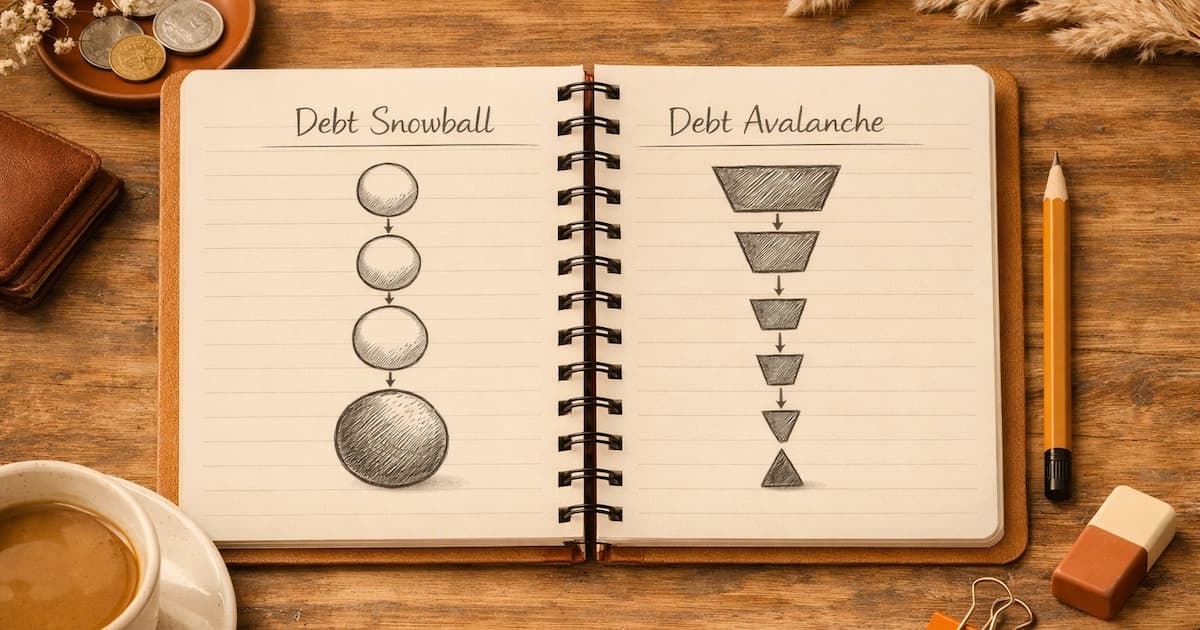
A 2012 Northwestern Kellogg School of Management study found that participants using the debt snowball method were significantly more likely to complete debt payoff than those using debt avalanche: even though avalanche is mathematically the better strategy. That's the central paradox of debt-payoff methods: the optimal strategy on paper isn't the optimal strategy in practice if it's the one that gets abandoned in month nine.
Households with multiple debts face a strategic question: in what order should the debts be paid off? The two most widely-recommended methods give different answers, both defensible. The choice between them is one of the more interesting trade-offs in personal finance because it pits mathematical optimisation against behavioural durability.
Avalanche is mathematically better in every scenario where interest rates differ. It saves more total interest, period. But behavioural research finds that more people complete the snowball method than the avalanche method, and a finished snowball saves more money than an abandoned avalanche. The right answer depends not just on the numbers but on which method you'll actually stick with for two to five years.
How the debt snowball works
The debt snowball method, popularised by Dave Ramsey, orders debts from smallest balance to largest, regardless of interest rate. The household pays the minimum payment on every debt and directs all extra payment capacity to the smallest debt until it's eliminated. Then the freed-up payment from the eliminated debt rolls over to the next-smallest debt, accelerating its payoff. Each eliminated debt grows the "snowball" of payment capacity directed at the next one.
Consider an example household with these debts:
| Debt | Balance | APR | Minimum Payment |
|---|---|---|---|
| Credit card A | $400 | 22% | $25 |
| Credit card B | $1,200 | 18% | $35 |
| Personal loan | $3,500 | 11% | $90 |
| Car loan | $8,000 | 6% | $180 |
Snowball order: Credit card A → Credit card B → Personal loan → Car loan (smallest to largest balance, ignoring rates).
Why it appeals: the first debt is eliminated quickly: usually within 1-3 months for most household budgets. The visible progress of an entire account closing creates motivation that sustains the multi-year payoff timeline. The "snowball" momentum is psychological more than financial.
According to Ramsey Solutions, the method works "because personal finance is 80% behaviour and only 20% head knowledge." The implicit argument is that the motivational structure of the snowball outweighs the mathematical inefficiency. For the full step-by-step mechanics and a rolled-payment worked ledger in dollars and rupees, see how the debt snowball method works.
How the debt avalanche works
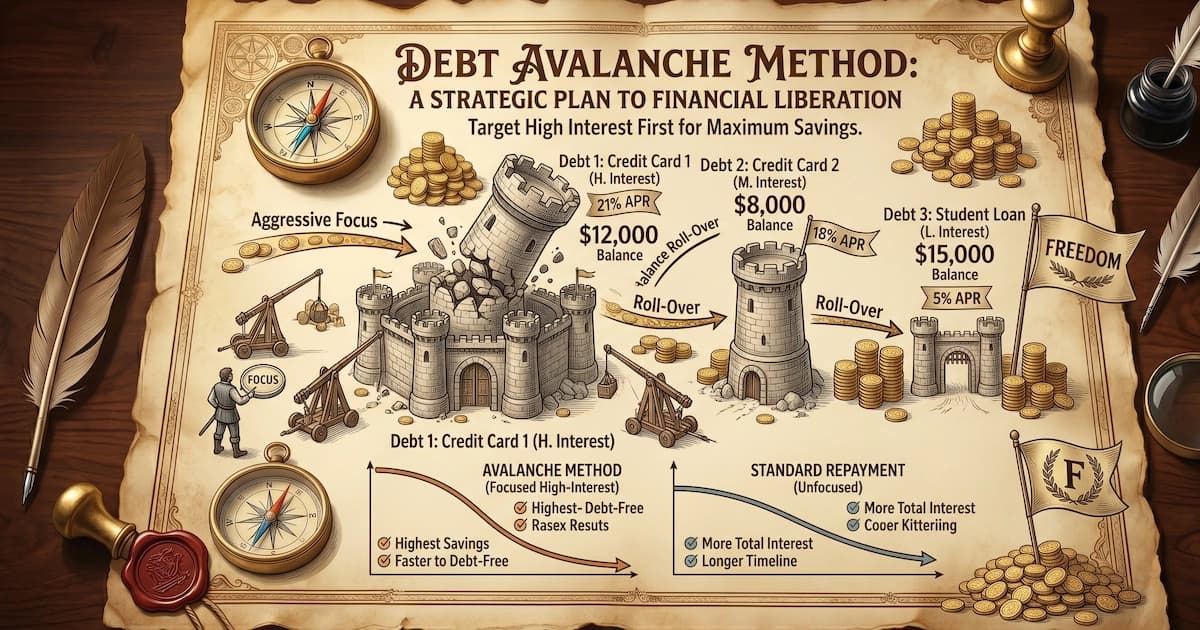
The debt avalanche method orders debts from highest interest rate to lowest, regardless of balance. The household pays the minimum payment on every debt and directs all extra payment capacity to the highest-rate debt until it's eliminated. Then the freed-up payment rolls over to the next-highest-rate debt.
Same example debts in avalanche order: Credit card A (22%) → Credit card B (18%) → Personal loan (11%) → Car loan (6%): highest rate to lowest.
In this specific example the order happens to match the snowball because the smallest balance also has the highest rate. In real households this isn't usually the case: typical debt mixes have a small medical bill at 0% APR mixed with a large credit card at 22%, where snowball would pay the medical bill first and avalanche would pay the credit card first.
Why it appeals: avalanche minimises total interest paid. Every dollar of extra payment goes to the debt costing the most per day in interest, which is mathematically optimal. The understanding behind the method is covered in our piece on APR vs interest rate. For the full mechanics and a worked example of the avalanche on its own, see how the debt avalanche method works.
The math: how much avalanche actually saves
The interest savings depend on the specific mix of debts and the extra payment capacity, but a representative scenario shows the pattern.
A household with $13,100 total debt ($400 + $1,200 + $3,500 + $8,000 from above), with $400/month available for extra payments above minimums:
- Snowball payoff: approximately 32 months. Total interest paid: approximately $2,150.
- Avalanche payoff: approximately 31 months. Total interest paid: approximately $2,020.
In this specific example (where snowball and avalanche order happen to align), the difference is small, about $130. In scenarios where the smallest debt has a low interest rate and a larger debt has a much higher rate, the difference can be $500 to $2,000+ over the payoff timeline.
The math always favours avalanche when interest rates differ. The size of the advantage depends on the size of the rate spread. To see the exact gap on your own debts, run them through our debt snowball vs avalanche calculator, which reports the months and total interest for both methods side by side.
The behavioural research: which one people actually finish
The 2012 study by researchers at Northwestern University's Kellogg School of Management examined real-world debt payoff behaviour and found that participants using the snowball method were significantly more likely to complete debt payoff than those using avalanche. Other studies have found similar effects.
The behavioural mechanism: the early small wins of the snowball method (an entire account closed within 60-90 days) create the dopamine-and-motivation feedback loop that sustains long-term discipline. Avalanche participants typically don't see a single debt account close for 6-18 months, depending on the size of their highest-rate debt, which means they're paying minimums on multiple accounts for a long time without visible progress.
That's the core trade-off. Avalanche is mathematically optimal but behaviourally fragile. Snowball is behaviourally durable but mathematically suboptimal.
The right answer depends on which method the household will actually finish. A finished snowball saves more money than an abandoned avalanche; a finished avalanche saves more than a finished snowball.
The hybrid approach
Many practitioners use a hybrid that captures most of the benefits of both.
The first move is to pay off any debts under $500 first. That clears out the small accounts quickly, reduces the cognitive load of tracking multiple accounts, and creates the early-win motivation that makes the long timeline sustainable. Most $500 debts can be cleared within 1-2 months of focused payment.
The second move is to switch to avalanche for the remaining debts. With the small accounts cleared, the remaining debts are large enough that the rate-based ordering matters. From here, attack the highest-rate debt first.
This hybrid captures most of the snowball's behavioural benefit (early visible wins, reduced cognitive load) while preserving most of the avalanche's mathematical advantage (high-rate debts get cleared as quickly as possible). Most personal finance writing now recommends some version of this hybrid for households with mixed debt types.
How to set up either method step by step
The first step is listing every debt. Account name, current balance, interest rate (APR), minimum monthly payment, and due date for each. A spreadsheet or notebook works fine.
The second step is calculating your total monthly debt budget. Add up all minimum payments, then add the extra amount you can direct toward debt payoff each month. This total stays constant throughout the payoff timeline: as debts are eliminated, the freed-up minimum payments roll into the active debt.
The third step is choosing your method. Snowball: order by balance, smallest first. Avalanche: order by APR, highest first. Hybrid: under-$500 debts first, then avalanche for the rest.
The fourth step is directing all extra payment to the target debt. Pay minimums on all other debts. Pay everything else above minimums to the target debt.
The fifth step is rolling the freed-up payment into the next target when a debt is eliminated. That's the "snowball" effect that both methods benefit from. The total monthly payment stays the same; the destination shifts.
The sixth step is tracking progress visibly. A simple chart or spreadsheet showing balances declining each month creates motivation. Many households find that printable debt-tracker thermometers or progress charts (filling in coloured boxes as balances drop) provide more sustained motivation than spreadsheet numbers alone.
What both methods require to work
Four conditions matter for either method to succeed.
A budget is the first. Without a zero-based budget or some equivalent structure, the "extra" payment capacity that powers either method tends to disappear into other spending. Both methods require a budget that protects the debt-payoff line.
Stopped accumulation is the second. Adding new debt while paying down old debt is the most common reason both methods fail. Cutting up credit cards (or freezing them in a literal block of ice, a Dave Ramsey suggestion that some households find effective) prevents the accumulation that undoes payoff progress.
A small emergency fund first is the third. Most experts recommend $1,000 in emergency savings before aggressive debt payoff. Without it, the next emergency goes back on the credit card and the cycle restarts.
Patience for the timeline is the fourth. Real debt payoff takes 18-60 months for most households. Both methods require sustained effort across that timeline; both methods fail if abandoned mid-stream.
Common mistakes when paying off debt
Four patterns trip households up regularly when they pay down multiple debts.
The first is switching methods after starting. A snowball and avalanche have different debt orderings; switching mid-way usually means restarting the mental tracking from scratch. Pick one and finish.
The second is not snowballing the freed-up payment. When a debt is eliminated, the minimum that was being paid on it should roll into the next debt. Households who instead absorb the freed payment back into general spending dramatically extend their payoff timeline.
The third is accumulating new debt during payoff. Either method fails immediately if the household keeps adding new credit card charges that don't get paid off in the same month.
The fourth is ignoring promotional 0% APR balances. A balance that's at 0% promotional APR for 12 months effectively isn't accruing interest: pure avalanche would deprioritise it. But missing the promotional period end (when the rate jumps to 24%+) makes the situation much worse. Treat 0% promotional balances with their post-promotional rate, or ensure they're paid off before the promotional period ends.
What experts say
Investopedia's debt snowball overview and debt avalanche overview cover the mechanics of each method in detail.
The Consumer Financial Protection Bureau's guidance on credit counselling doesn't promote either method but describes the broader debt-management framework that both methods sit within. Ramsey Solutions is the canonical modern source for the snowball method specifically.
For the underlying mechanics of APR and interest rates that determine which method saves more, see our companion piece. For the broader credit and debt context that any debt payoff plan operates within, see our credit reports overview.
Frequently asked questions
What is the difference between debt snowball and debt avalanche? Debt snowball pays off debts in order from smallest balance to largest balance, regardless of interest rate. Debt avalanche pays off debts in order from highest interest rate to lowest, regardless of balance. Snowball produces faster early wins (smaller debts disappear first); avalanche produces lower total interest paid (highest-interest debt gets attacked first).
Which is mathematically better, snowball or avalanche? Avalanche is mathematically better in every case where interest rates differ. By paying down the highest-rate debt first, you minimise total interest paid over the payoff timeline. Depending on the specific mix of debts, avalanche typically saves $200 to $2,000 in total interest compared to snowball: often more for households with significant credit card debt at high APRs.
Why do experts recommend the snowball if avalanche saves more money? Behavioural research repeatedly finds that more people complete the snowball method than the avalanche method. The early small-debt wins create motivation that sustains the multi-year discipline of debt payoff. Avalanche is mathematically optimal but only if completed; many people who start with avalanche abandon it before finishing, which costs more in interest than snowball would have.
Can I combine the snowball and avalanche approaches? Yes, and many households do. A common hybrid: pay off any debts under $500 first (regardless of rate) to clear out the small ones quickly and reduce the cognitive load of tracking multiple accounts, then switch to avalanche for the remaining debts. This captures most of the snowball motivation benefit while preserving most of the avalanche math advantage.
In summary
Debt snowball and debt avalanche are the two most widely-recommended methods for ordering debt payoff. Snowball pays the smallest balance first; avalanche pays the highest rate first. Avalanche saves more money mathematically, typically $200 to $2,000 over a typical payoff timeline, but snowball is more durable behaviourally because the early small-debt wins create motivation that sustains the multi-year discipline. The right answer depends on which method the household will actually finish. Either method requires a budget, stopped accumulation, a small emergency fund first, and the patience for an 18-60 month timeline.
Pick the method you'll honestly stick with for two years. The mathematically optimal strategy isn't actually optimal if it's the one that gets abandoned at month nine. A finished snowball beats an abandoned avalanche, every time, on every dimension that matters.
Either method needs a budget underneath it, so it's worth seeing which budgeting approach fits your household to fund the payoff.
Sources
- Investopedia, Debt Snowball: investopedia.com/terms/d/debt-snowball.asp
- Investopedia, Debt Avalanche: investopedia.com/terms/d/debt-avalanche.asp
- Ramsey Solutions, Debt Snowball Plan: ramseysolutions.com/debt/get-out-of-debt-with-the-debt-snowball-plan



You might also like
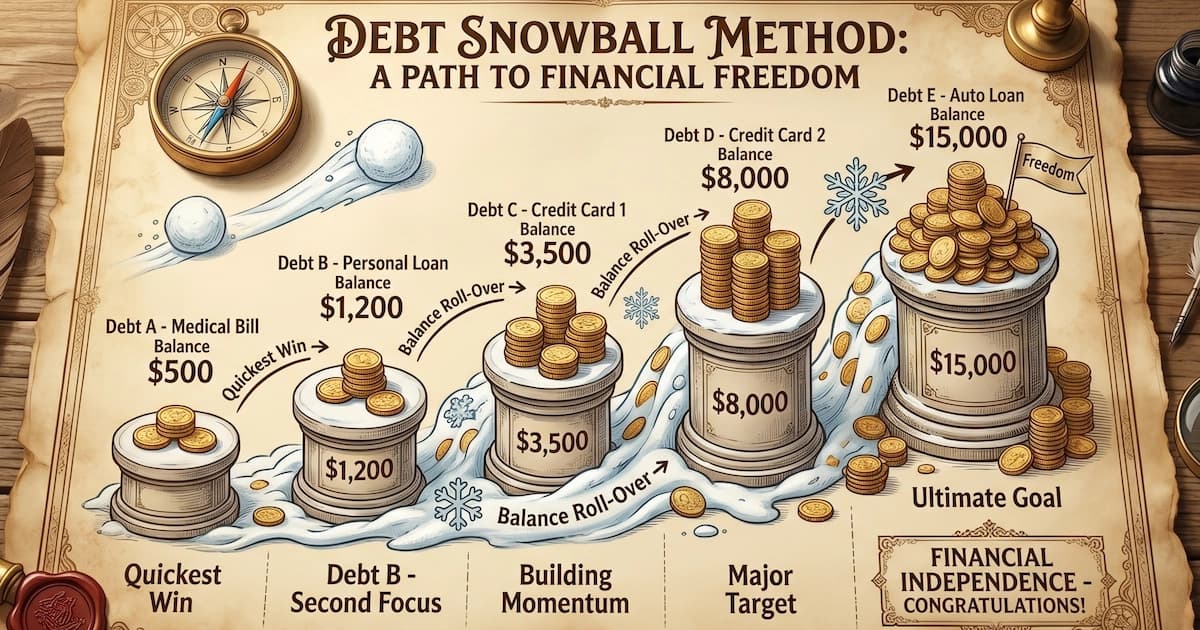
Pay the smallest balance first, roll each payment forward, and stay motivated. Worked payoff examples in both rupees and dollars.
12 min read
The debt avalanche saves the most interest, except when it barely does. Two worked examples with real month-by-month math, for India and the US.
10 min read

APR is the rate plus fees, but the rules exclude a specific list. What India's Key Facts Statement requires, and why credit cards sit outside it.
14 min read