Sunk Cost Fallacy: Definition, Examples & How to Avoid It

By Tapabrata Biswas · Updated July 4, 2026 · 12 min read
Written and fact-checked by Tapabrata Biswas. How I write
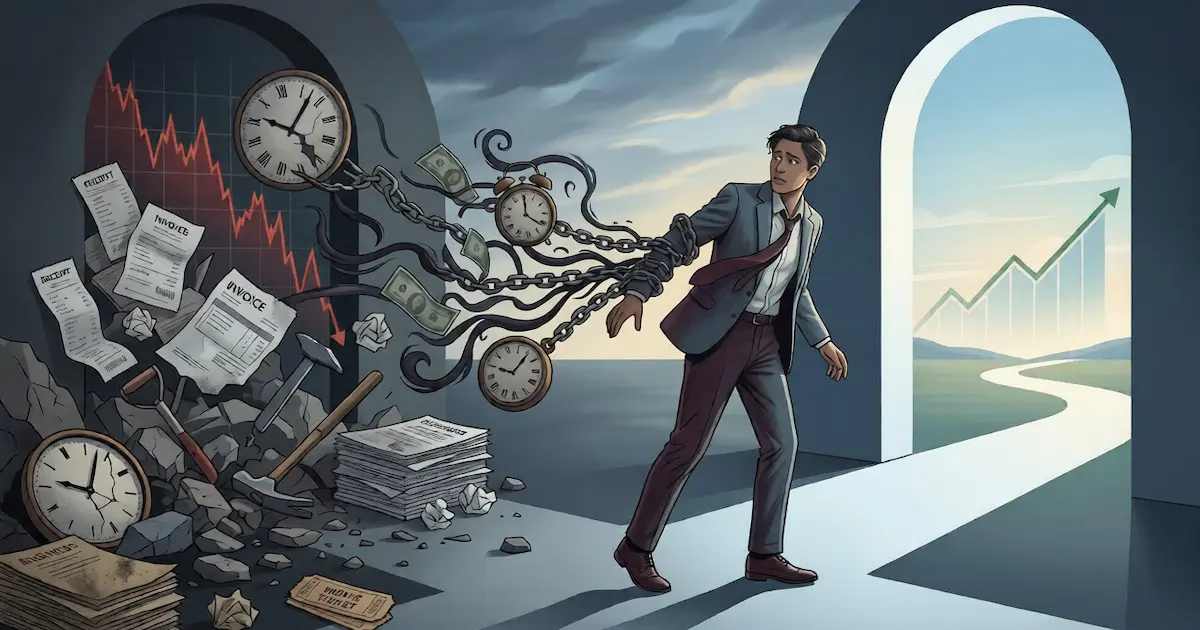
A sunk cost is money, time, or effort you have already spent and cannot get back. The sunk cost fallacy is the mistake of continuing something only because of that past investment, and not judging it on the future costs and benefits alone. Put more bluntly, it is throwing good money after bad, and almost everyone does it, from the person finishing a film they hate to two governments funding a jet that could never pay for itself.
That jet is the reason the bias has a nickname. Britain and France spent an estimated $2.8 billion developing the Concorde and kept funding it for decades after it was clear it would never be commercially profitable, because walking away would have meant admitting the spent billions were lost. This guide covers what a sunk cost is versus the fallacy, the examples that make it click, the psychology behind it, how it plays out in investing, and the one test that breaks it.
What is the sunk cost fallacy?
The sunk cost fallacy is the tendency to keep investing in something because of what you have already put in, even when the costs of continuing now outweigh the benefits. It is a cognitive bias, an automatic quirk in how people weigh decisions and not a reasoning style you can simply switch off with willpower.
The principle it breaks is simple. Once money, time, or effort is spent and cannot be recovered, it should have no bearing on what you do next. The only things that rationally matter for a forward-looking decision are the future costs of continuing, the future benefits of continuing, and what else you could do with those same resources. Past spending is none of those. It is gone whether you stop or carry on.
What is a sunk cost?
A sunk cost is a cost that has already been incurred and cannot be recovered by any action you take now. A non-refundable flight, the tuition already paid on a degree, the years spent building a business, the money poured into a stock: all sunk, because no future choice brings them back.
Economists have a name for the rule that you should ignore them: the "bygones principle." Bygones are bygones, so a rational decision compares only future costs to future benefits. Notice the two ideas are different. A sunk cost is a neutral fact about the past. The sunk cost fallacy is the error of letting that fact steer the future. You can have sunk costs without the fallacy, as long as you leave them out of the decision.
Sunk cost fallacy examples
The bias is easiest to recognise across the areas of life where it strikes. These are the main ones, grouped by category.
Everyday money
- Sitting through a film or concert you are not enjoying because you already paid for the ticket.
- Overeating at an all-you-can-eat buffet to "get your money's worth," which only adds discomfort to a cost that is already spent.
- Keeping a gym membership or subscription you never use because cancelling would "waste" the months already paid.
Relationships
Staying in an unhappy relationship or marriage largely because of the years already invested, "we have been together eight years," "I gave this my best decade." The mind treats those years like a sunk cost that leaving would waste. This is a description of the bias, not relationship advice, but it is the single most relatable place people meet it.
Career and education
Finishing a degree or costly course you no longer want because of the fees and years already spent, or staying in a draining job because you have "put in five years here." Every extra term or year spent on a path you would not choose today is a fresh sunk cost being created.
Business and investing
This is where the fallacy is most expensive. The Concorde is the flagship: an estimated $2.8 billion spent, funding continued for decades, purely because stopping would have realised the loss. In markets, the everyday version is holding a losing stock "until it gets back to what I paid," or putting more capital into a failing business "because we have already invested so much." More on the money version below.
Why we fall for it: the psychology
The cleanest proof of the bias came from a 1985 experiment by Hal Arkes and Catherine Blumer, published in Organizational Behavior and Human Decision Processes. They sold theatre season tickets at three randomly assigned prices: full price ($15), a small discount ($13), and a large discount ($8). Everyone had access to the same plays. Yet over the first half of the season, the people who paid full price attended more performances, dragging themselves to shows they did not really want to see, just so their higher ticket price would not feel wasted. The engine of the fallacy, Arkes and Blumer argued, is mainly the desire not to appear wasteful.
Several forces stack on top of that urge. Loss aversion, the finding that a loss hurts about twice as much as an equal gain feels good, makes admitting a loss painful enough to avoid. A sense of personal responsibility pushes people to justify their original choice rather than reverse it. And over-optimism whispers that this time it will turn around. When those combine inside an organisation and people keep pouring resources into a failing course of action to prove the first decision was right, psychologists call the escalated version "escalation of commitment," a close cousin of the individual sunk cost fallacy.
The bias is well travelled. Arkes and Blumer's finding has replicated across countries, including India, across decision types from military procurement to R&D, and even in children as young as six. It is one of the best-documented departures from rational choice in all of behavioural economics.
The sunk cost fallacy in investing
For investors, the sunk cost fallacy usually wears one of two disguises, and both are expensive.
The first is holding a loser to break even. An investor buys a stock at ₹1,000, watches it fall to ₹600, then ₹300. The forward-looking question is "knowing what I know now, would I buy this at ₹300?" The sunk cost question is the one most people actually ask: "can I wait until it gets back to ₹1,000 so I do not have to book a loss?" The ₹1,000 entry price has become an anchor, and the money still tied up keeps underperforming while a better use of it compounds elsewhere.
The second is averaging down into a falling position, buying more of the losing stock to lower the average cost. Done to a genuinely improving company it can be sound, but done to justify the original call it just enlarges the loss: an investor who buys more at ₹600 and again at ₹300 to "lower the average" can turn a modest loss into a much larger one. This is exactly the pattern behind a lot of India's derivatives losses; SEBI found that 93% of individual F&O traders lost money between FY22 and FY24, and refusing to exit a losing trade because of what is already in it is a big part of why.
Behind both is a bias we cover in depth separately. Loss aversion is the engine, and the portfolio-level version, selling winners too early while clinging to losers, is the disposition effect documented by Shefrin and Statman in 1985. Our guide to loss aversion unpacks that parent bias, and mental accounting explains why a paper loss feels different from a realised one even though the money is the same.
How to avoid the sunk cost fallacy
You cannot delete an automatic bias, but you can build habits that route around it. Five that behavioural-finance research and the strongest guides converge on:
- Run the fresh-start test. Ask: "If I were deciding today, with nothing already committed, no money spent, no time invested, no history, would I choose to start this now?" If the honest answer is no, the forward-looking move is to stop, whatever you have already put in. This is the single most effective reframe, because it strips out the past-spending anchor.
- Decide on the future only. Compare the future costs of continuing against the future benefits. Past spending is a bygone; write it off in your head before you weigh the choice.
- Set exit rules in advance. Before you buy the stock or start the project, define what "this is not working" looks like, a loss threshold, a deadline, a milestone. Rules set in a calm moment are far easier to follow than a decision made while the sunk-cost feeling is loudest.
- Get an outside view. Someone with no stake in your past spending will judge the decision on its future merits, which is exactly what you are struggling to do.
- Reframe quitting as repositioning. Stopping a failing commitment is not waste; it frees your remaining money, time, and energy for something with a better return. The waste was the sunk cost, and that already happened.
A worked example ties it together. An investor holds a stock bought at ₹1,000, now ₹300, on a ₹5 lakh position. The fresh-start question is not "will it recover?" but "if I had this cash today, would I buy this stock at ₹300 over an index fund?" If the answer is no, the past loss is already gone either way, and the only real choice is whether the remaining money keeps underperforming or moves somewhere better.
Frequently asked questions
What is the sunk cost fallacy in simple terms? The sunk cost fallacy is continuing to spend money, time, or effort on something only because of what you have already put in, rather than because it makes sense going forward. You finish a bad film because you bought the ticket, or hold a losing stock because you "can't sell at a loss now". The money and time already spent are gone either way, so a clear-eyed decision looks only at future costs and future benefits. It was named by researchers Hal Arkes and Catherine Blumer in 1985.
What is the difference between a sunk cost and the sunk cost fallacy? A sunk cost is the thing: money, time, or effort you have already spent and cannot recover, like a non-refundable ticket or the years spent on a degree. The sunk cost fallacy is the mistake: letting that unrecoverable spending drive a forward-looking decision. Economists say sunk costs are "bygones" and should be ignored when you decide what to do next; the fallacy is failing to ignore them.
What is an example of the sunk cost fallacy? The famous one is the Concorde. Britain and France kept funding the supersonic jet for decades despite knowing it would never be commercially profitable, because so much had already been spent, which is why the bias is also called the "Concorde fallacy". Everyday versions: sitting through a film you dislike because you paid for it, overeating at a buffet to "get your money's worth", or holding a falling stock because you have "already lost too much to sell now".
Why is it called the Concorde fallacy? Because the Anglo-French Concorde project is the textbook case. The two governments spent an estimated $2.8 billion developing the jet and kept going long after the economics were hopeless, rather than accept the money already spent as lost. Biologists Richard Dawkins and T. R. Carlisle coined the term "Concorde fallacy" in a 1976 Nature paper describing the same pattern in animal behaviour, and it stuck for the human version too.
How is the sunk cost fallacy different from loss aversion? Loss aversion is the broader tendency to feel a loss about twice as intensely as an equal gain. The sunk cost fallacy is one thing that tendency causes. Walking away from a failed commitment forces you to admit the loss ("I lost ₹50,000"), while continuing lets the loss stay notional ("it might still recover"). Loss aversion makes the not-yet-realised path feel less painful, so people keep going. In short, sunk cost behaviour is loss-aversion-driven denial. Our guide to loss aversion covers the parent bias.
What is the sunk cost fallacy in a relationship? It is staying in an unhappy relationship, marriage, or job mainly because of the years already invested: "we have been together eight years", "I gave this career my best decade". The same bias that makes an investor hold a losing stock treats those invested years like a sunk cost that would be "wasted" by leaving. This is general education, not relationship advice; the point is only that the mind treats sunk time like sunk money.
How do you avoid the sunk cost fallacy? Use the fresh-start test: if you were deciding today with nothing already committed, would you start this now? Decide only on future costs versus future benefits and treat the past spending as gone. Set exit rules in advance (a stock-loss threshold, a project deadline) before emotion is involved, get a view from someone with no stake, and reframe stopping as repositioning rather than waste.
In summary
A sunk cost is what you have already spent and cannot recover; the sunk cost fallacy is letting that spent-and-gone amount drive what you do next. It runs from the trivial, a film you sit through because you paid, to the vast, a supersonic jet funded for decades past all reason. The psychology is mostly a refusal to look wasteful, powered by loss aversion, and economists' answer is blunt: past spending is a bygone, so decide on the future alone. When you feel the pull to continue only because of what is already in, run the fresh-start test. If you would not start it today, the money and time already spent are not a reason to keep going; they are the reason to stop before you add more.
For the biases that sit closest to this one, see loss aversion, mental accounting, and, for the fear-of-missing-out version that pulls investors the other way, FOMO investing. The full map of how these biases connect sits in behavioral finance explained.
Sources
- Hal R. Arkes and Catherine Blumer, The Psychology of Sunk Cost, Organizational Behavior and Human Decision Processes 35(1), 1985 (the seminal study and the theatre-ticket experiment)
- Richard Dawkins and T. R. Carlisle, Parental investment, mate desertion and a fallacy, Nature, 1976 (origin of the term "Concorde fallacy")
- Hershel Shefrin and Meir Statman, The Disposition to Sell Winners Too Early and Ride Losers Too Long, Journal of Finance, 1985
- Securities and Exchange Board of India (SEBI), Study on Individual Traders in the Equity F&O Segment (2024) and investor-education material: sebi.gov.in
- U.S. Securities and Exchange Commission, Behavioral biases in investing: investor.gov

You might also like
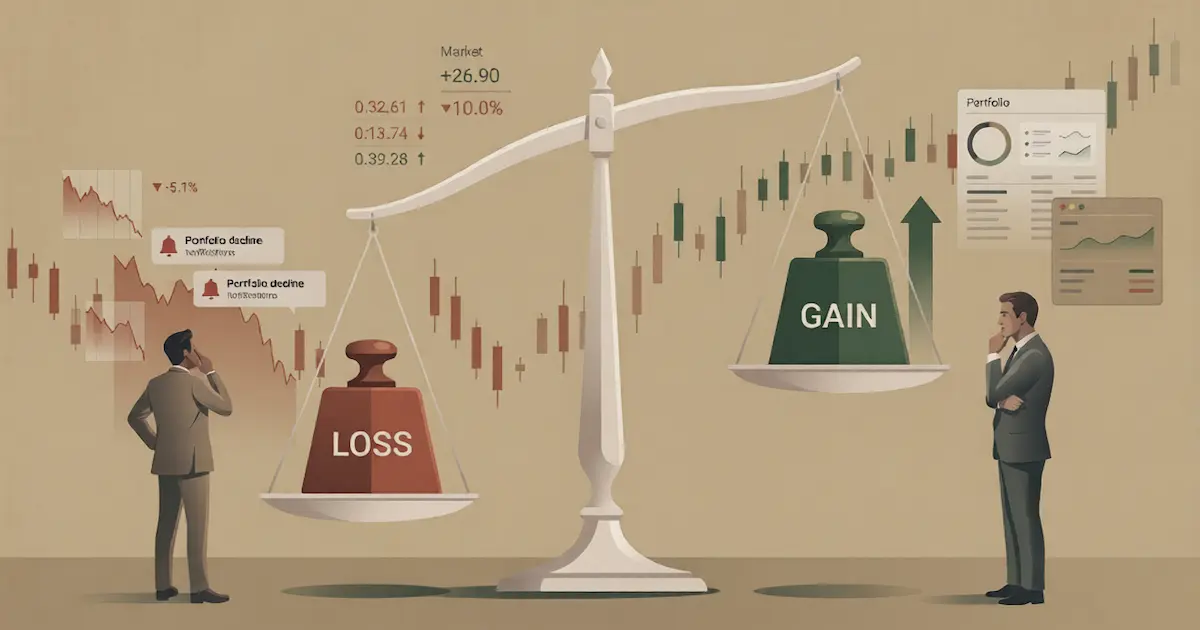
Loss aversion is feeling losses about twice as intensely as equal gains. The 2.25 ratio, examples, loss vs risk aversion, and how it quietly hurts returns.
14 min read
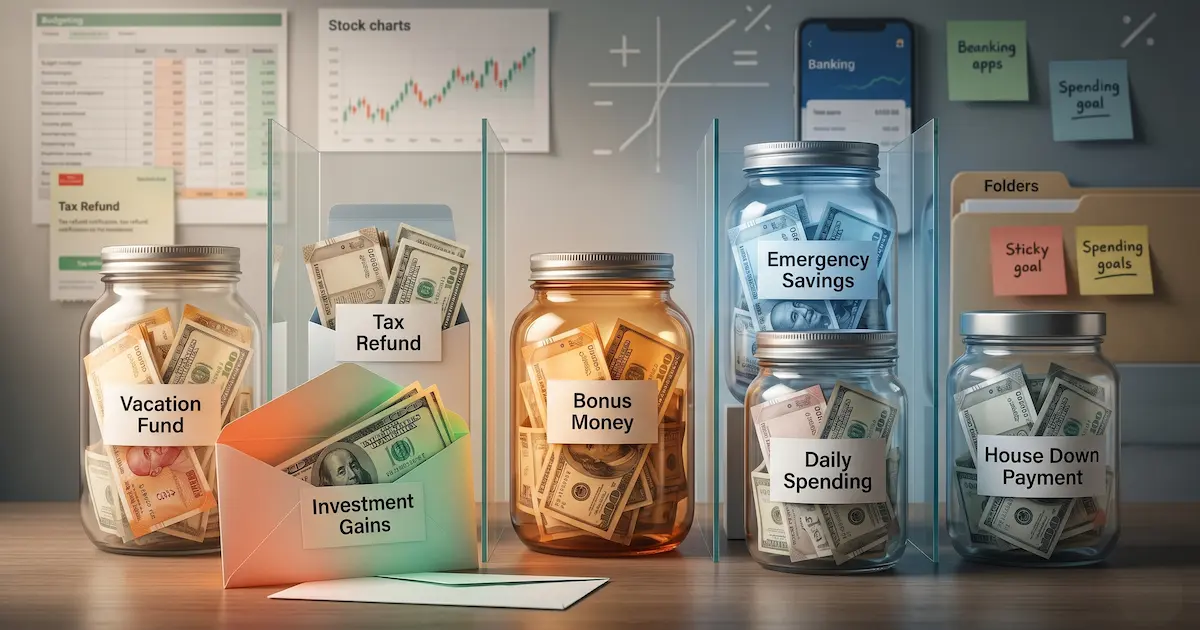
Mental accounting is why a bonus feels different from salary, though every rupee spends the same. Real examples, the investing trap, and how to beat it.
14 min read

Buying because other people are profiting. The warning signs, real examples from GameStop to India's F&O market, and how to step back.
15 min read