Mental Accounting: Definition, Examples & How to Beat It

By Tapabrata Biswas · Updated July 5, 2026 · 14 min read
Written and fact-checked by Tapabrata Biswas. How I write
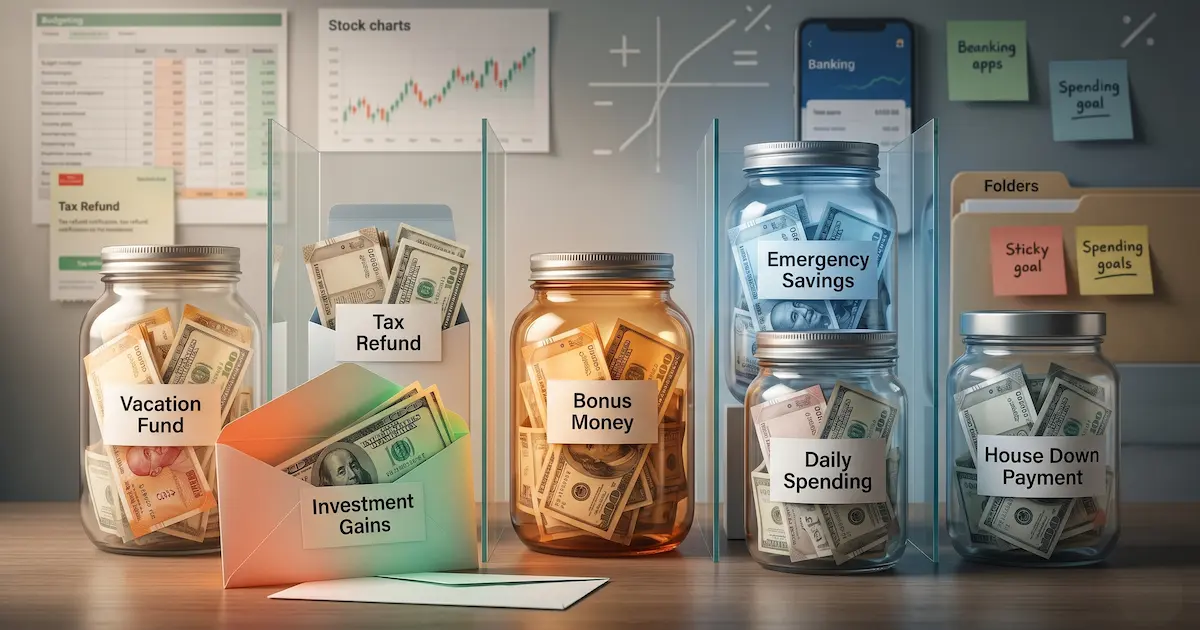
Mental accounting is why a Rs 50,000 tax refund gets spent on a family trip that the same Rs 50,000 of salary would never fund. The money is identical. The mental label is not, and the label is what drives the decision.
Economists call the underlying principle fungibility: one unit of a currency is worth exactly the same as any other unit, no matter how you got it. A Rs 500 note is a Rs 500 note whether you earned it, found it, won it, or were gifted it. The bank does not ask. The shop does not ask. The math does not care. In practice, people care a great deal, and economist Richard Thaler spent decades documenting exactly how. He named the pattern mental accounting and won the 2017 Nobel Prize in Economics partly for it.
This guide covers what mental accounting is, a categorised bank of real examples, how it quietly reshapes an investment portfolio, the single costliest version of it, the India-specific traps, and how people undo the expensive version while keeping the useful one. Every example in this guide is educational, not personal advice about your money.
What is mental accounting?
Mental accounting is the tendency to treat money differently depending on where it came from or what it is meant for, even though every rupee or dollar is worth exactly the same. It is a concept from behavioural economics, introduced by Richard Thaler in his 1980 paper "Toward a Positive Theory of Consumer Choice" and set out in full in his 1999 paper "Mental Accounting Matters".
The principle it violates is fungibility. A household with Rs 10,000 in a checking account and Rs 10,000 in a labelled "vacation fund" is, in pure economic terms, a household with Rs 20,000. Splitting the money into two mental buckets should not change how any of it gets spent. It reliably does.
Thaler described three moving parts to mental accounting. The first is how an outcome is perceived, whether a cost registers as a painful loss or a pleasant discount. The second is how money gets assigned to accounts, so both where money comes from and what it goes toward carry labels. The third is how often each account is reviewed, whether daily, monthly, or once a year, which changes how a gain or a loss feels at the time. Put together, those three parts explain why the same Rs 1,000 can feel agonising in one context and trivial in another.
Mental accounting examples
A classic example of mental accounting is spending a tax refund or bonus more freely than an identical amount of salary. The refund lands in a mental "windfall" account, and windfall money follows looser rules than earned money, even though both buy the same groceries.
The most famous demonstration came from Amos Tversky and Daniel Kahneman in 1981. They asked people to imagine arriving at a theatre having lost a ticket they had already paid $10 for. Only 46% said they would buy another. A second group imagined losing a $10 bill on the way in, with the ticket still to buy. This time 88% said they would go ahead and buy it. The loss is exactly $10 either way. The difference is that the lost ticket gets booked to the "theatre night" account, which now feels like it costs $20, while the lost cash gets booked to the general fund and barely registers.
The same pair found that about 68% of people would drive 20 minutes to save $5 on a $15 calculator, but far fewer would make the identical trip to save $5 on a $125 jacket. Five dollars is five dollars. It just feels bigger against a small purchase than a large one.
A handful of patterns recur across the research:
| Where the money comes from or sits | How people treat it | Why it leaks money |
|---|---|---|
| Tax refund, bonus, lottery, gift (a "windfall") | Spent freely on treats that salary would never fund | A refunded rupee spends exactly like an earned one |
| A gift card or store credit | Spent more loosely than the same value in cash | Both are worth the same at the till |
| Paying by credit card or UPI and not cash | The tap feels painless, so the basket grows | The amount leaving your net worth is identical |
| An investment gain ("house money") | Risked more aggressively than the original capital | A gained rupee is as real as an invested one |
| Savings at 7% while a card runs at 40% | Held in separate "savings" and "debt" buckets | Netted together, the pair loses money every month |
| Dividends versus selling shares | Dividends get spent, shares get held | Selling shares makes an identical "homemade dividend" |
The payment-method row is the one most people underrate. Drazen Prelec and Duncan Simester ran an auction experiment in 2001 and found that bidders were willing to pay substantially more when told to pay by card than by cash. Parting with physical notes triggers a small "pain of paying" that a card tap or a UPI scan does not. The purchase costs the same. The wallet just does not flinch.
How mental accounting affects your investing
In investing, mental accounting shows up as the "house money" effect: once a position shows a gain, people risk that gain more freely than their original capital, as if it were the casino's money rather than their own. Thaler and Eric Johnson demonstrated this in a 1990 study, where people who had just booked a gain accepted bets they would have turned down from a standing start.
A subtler version is how investors treat dividends versus share sales. Many people happily spend dividend income but will not sell an equal value of shares to fund the same purchase, because dividends sit in an "income" account while the shares sit in a "capital" account. Financially the two are identical. Selling Rs 10,000 of shares creates a "homemade dividend" worth exactly Rs 10,000. Malcolm Baker, Stefan Nagel, and Jeffrey Wurgler found that household consumption tracks dividend income far more closely than it tracks capital gains, which is mental accounting in the raw. Hersh Shefrin and Meir Statman had explained the same preference back in 1984 as a self-control device: spending only the dividend keeps people from dipping into the capital.
The bucketing also appears as "money I can afford to lose" versus "money I cannot", held as if they were two portfolios and not one. Netted together they carry a single risk level, but the labels lead people to over-risk the fun bucket and under-optimise the safe one. It feeds the disposition effect too, the habit of clinging to losing positions to avoid closing a losing "account". That overlaps with loss aversion and the sunk cost fallacy, two separate biases worth reading alongside this one.
The costliest version: saving while carrying debt
The most expensive form of mental accounting is holding savings that earn a low rate while carrying debt at a much higher rate, because the two sit in separate mental accounts. "Savings" feels like something to protect. "Debt" feels like an unrelated problem. Netted together, the arithmetic is brutal.
Take an Indian household with Rs 1,00,000 in a fixed deposit paying 7% and Rs 1,00,000 outstanding on a credit card charging 40% a year (Indian card rates commonly run 36% to 42%). The deposit earns Rs 7,000 over the year. The card costs Rs 40,000. The two mental accounts, kept apart, bleed roughly Rs 33,000 every year. Clearing the card with the deposit would be worth close to a guaranteed 40%, and almost nothing in any market pays that. Yet the wall between "savings" and "debt" keeps many households from making the move even when the math is plain.
It is not only an Indian pattern. The US Consumer Financial Protection Bureau has documented that a large share of households carrying credit-card balances also hold savings that exceed those balances. The mental separation is what stops the two from meeting.
Is mental accounting good or bad?
Mental accounting is not purely a flaw. The same instinct that makes windfall money feel disposable can be aimed on purpose to make savings feel untouchable, which is one of the most effective savings tools there is. It turns costly only when the walls between accounts hide a net loss, like saving at 7% while borrowing at 40%. Pointed the right way, those walls do real work.
Three everyday tools run on deliberate mental accounting. A sinking fund, a separate account labelled "house deposit" or "car repair", gets raided far less often than the same money sitting unlabelled in checking. Envelope budgeting splits cash or digital balances into category buckets, so overspending in one shows up immediately. And India's lock-in instruments, PPF with its 15-year term and EPF until retirement, are mental accounting hardened into law: the "retirement" label and the withdrawal penalty reinforce each other.
The honest rule of thumb is short. Keep the walls that protect a goal from yourself. Knock down the walls that hide a net loss.
Mental accounting in India: bonuses, gift money, and goal SIPs
A distinctly Indian example of mental accounting is the Diwali bonus that gets spent on things a normal month's salary never would. The bonus arrives labelled as festival money, so it goes on clothes, gadgets, or gold that the household had been putting off, even though the rupees are ordinary rupees. Gift money follows the same script. Shagun, Rakhi cash, and other cash gifts land in a "spendable" account while salary sits in a "careful" one.
The constructive Indian version is the goal-based SIP. Splitting investments into separate folios labelled "child's education" and "retirement" is textbook mental accounting, and it works, because the labels make each pot harder to raid for something unrelated. The instinct is the same one behind the Diwali splurge. It just gets aimed at a goal and not away from one.
How to beat the costly version of mental accounting
People reduce the costly side of mental accounting by treating money as fungible again, looking at one total rather than a scatter of labelled pots. A few habits turn up among the people who avoid the worst of it.
They net their accounts before deciding. Seeing "savings at 7%" and "card debt at 40%" as one number and not two makes the leak obvious. They judge a whole portfolio's risk together rather than bucket by bucket, so a "fun money" punt gets weighed against everything else they own. They pre-decide what happens to a windfall before it lands, since the windfall account only opens once the money is already sitting in checking. One template that shows up in US research from Empower is a fixed split of a bonus agreed in advance, say part to debt, part to savings, and part to genuine fun. And they keep the helpful buckets, the goal savings jars, while dropping the harmful walls, the debt-versus-savings blindness.
None of this leans on willpower in the moment, which is the point. Mental accounting is durable precisely because it runs automatically. The way to beat the costly version is to design the accounts on purpose rather than let them form themselves.
Frequently asked questions
What is mental accounting in simple terms? Mental accounting is the habit of treating money differently based on its source, its intended use, or where it is sitting, even though all money is functionally identical (a property economists call fungibility). A Rs 50,000 tax refund often gets spent on treats that the same Rs 50,000 of salary never would. A gift card gets spent more loosely than the same value in cash. The concept was introduced by economist Richard Thaler in 1980 and developed in his 1999 paper "Mental Accounting Matters". Thaler won the 2017 Nobel Prize in Economics partly for this work.
What is an example of mental accounting? The most common example is spending a windfall (a tax refund, bonus, lottery win, or gift) more freely than an equal amount of salary, because it lands in a mental "windfall" account with looser spending rules. The most famous experiment is Tversky and Kahneman's 1981 theatre-ticket study: after imagining they had lost a paid-for $10 ticket, only 46% of people said they would buy another, but after imagining they had lost a $10 bill, 88% said they would still buy the ticket. The $10 loss is identical; only the mental account differs.
Who developed the mental accounting theory? Economist Richard Thaler developed mental accounting. He introduced the idea in his 1980 paper "Toward a Positive Theory of Consumer Choice", named and expanded it in his 1985 paper in Marketing Science, and set out the full framework in "Mental Accounting Matters" (1999). The concept builds on the prospect theory of Daniel Kahneman and Amos Tversky. Thaler was awarded the 2017 Nobel Memorial Prize in Economic Sciences, in part for this body of work.
Is mental accounting good or bad? Both, depending on how it is used. It is costly when the walls between accounts hide a net loss, such as keeping savings at 7% while carrying credit-card debt at 40%. But the same instinct, used on purpose, is one of the most effective savings tools available: labelling money "house deposit" or "retirement" makes it far harder to raid. Sinking funds, envelope budgeting, and lock-in instruments like PPF and EPF all run on deliberate mental accounting. The rule of thumb is to keep the walls that protect a goal and remove the walls that hide a loss.
How is mental accounting different from the sunk cost fallacy? They are related but distinct. Mental accounting is about labelling money by source or purpose and treating identical money differently. The sunk cost fallacy is about continuing something because of money or time already spent and unrecoverable. Mental accounting can feed the sunk cost fallacy (a losing investment sits in its own 'account' that people refuse to close at a loss), but they are separate biases. Our companion guide covers the sunk cost fallacy in full.
How does mental accounting affect investing? In several ways. The "house money" effect leads investors to risk gains more aggressively than original capital, as if the gain were free money. Investors also spend dividends freely but resist selling an equal value of shares, because dividends sit in an "income" account and shares in a "capital" account, even though selling shares creates an identical "homemade dividend". And splitting a single portfolio into "safe" and "risky" buckets leads people to over-risk the fun money and under-optimise the rest. Research by Baker, Nagel, and Wurgler found consumption tracks dividend income far more closely than capital gains.
What are the three components of mental accounting? In his 1999 paper, Thaler described three parts. First, how outcomes are perceived and experienced, so whether a cost registers as a loss or a discount changes the decision. Second, how money is assigned to accounts, meaning both where money comes from and what it is spent on carry labels. Third, how often each account is evaluated (daily, monthly, or yearly), which changes how a gain or loss feels. Together these three parts explain why the same Rs 1,000 can feel painful in one setting and trivial in another.
In summary
Mental accounting is the gap between how money actually works, where every rupee is interchangeable, and how the mind files it, by source and purpose. It shows up as freely spent windfalls, looser card spending, over-risked "house money", and the expensive habit of saving at 7% while borrowing at 40%. The same instinct, used deliberately, powers sinking funds, envelope budgeting, and PPF-style lock-ins. Mental accounting sits inside a wider cluster of money biases covered in our behavioural finance guide, alongside loss aversion and anchoring bias. The trick is not to erase the mental walls, but to choose where they go.
Sources
- Richard H. Thaler, Toward a Positive Theory of Consumer Choice, Journal of Economic Behavior and Organization, Vol. 1, No. 1 (March 1980)
- Richard H. Thaler, Mental Accounting and Consumer Choice, Marketing Science, Vol. 4, No. 3 (1985)
- Richard H. Thaler, Mental Accounting Matters, Journal of Behavioral Decision Making, Vol. 12, No. 3 (September 1999)
- Amos Tversky and Daniel Kahneman, The Framing of Decisions and the Psychology of Choice, Science, Vol. 211 (1981). Source of the theatre-ticket and calculator experiments.
- Richard H. Thaler and Eric J. Johnson, Gambling with the House Money and Trying to Break Even, Management Science, Vol. 36, No. 6 (June 1990)
- Drazen Prelec and Duncan Simester, Always Leave Home Without It: A Further Investigation of the Credit-Card Effect on Willingness to Pay, Marketing Letters, Vol. 12 (2001)
- Malcolm Baker, Stefan Nagel, and Jeffrey Wurgler, The Effect of Dividends on Consumption, Brookings Papers on Economic Activity (2007)
- Hersh M. Shefrin and Meir Statman, Explaining Investor Preference for Cash Dividends, Journal of Financial Economics, Vol. 13 (1984)
- Nobel Prize in Economic Sciences 2017, Richard H. Thaler: Facts, nobelprize.org
- Consumer Financial Protection Bureau, Research Reports, consumerfinance.gov


You might also like
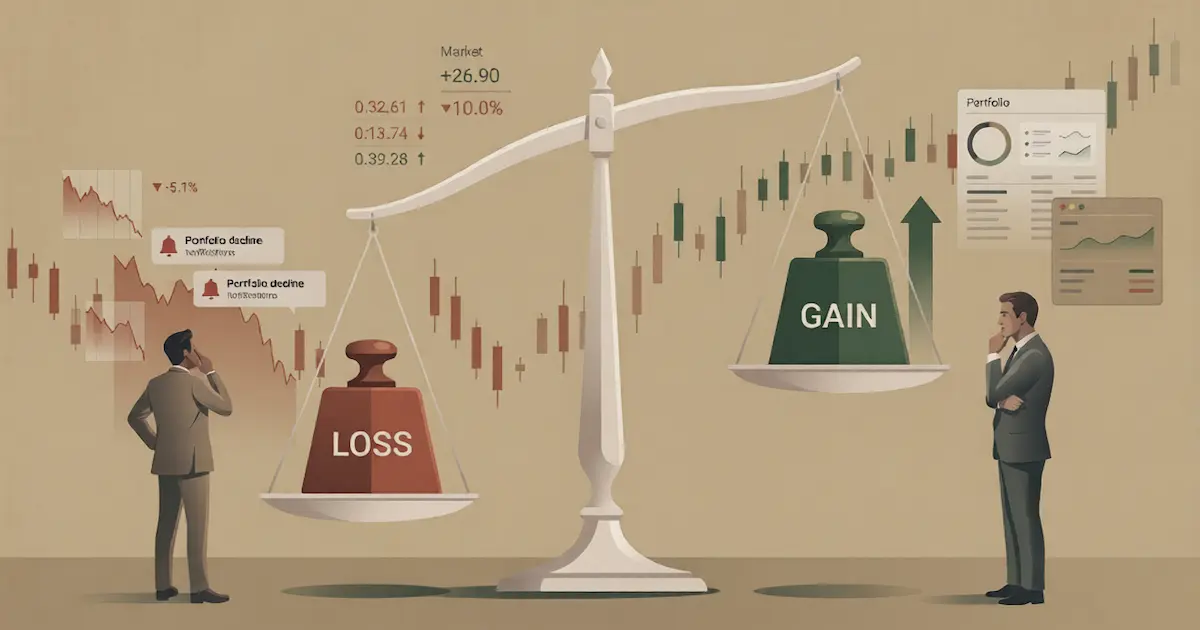
Loss aversion is feeling losses about twice as intensely as equal gains. The 2.25 ratio, examples, loss vs risk aversion, and how it quietly hurts returns.
14 min read
A sunk cost is money already spent and unrecoverable. The fallacy is continuing only because of it, how to avoid it, and why Concorde is the classic case.
12 min read

A sinking fund is money set aside monthly for a known future expense. The missing layer between a budget and an emergency fund, explained plainly.
9 min read