What Is the Envelope Budgeting Method: A Beginner's Guide

By Tapabrata Biswas · Published May 10, 2026 · 10 min read
Researched with AI assistance, reviewed and edited by Tapabrata Biswas.

The envelope budgeting method survives in 2026 because it works on a part of the brain that swiping a card doesn't reach. The friction of pulling cash out of a labelled envelope and watching the stack get smaller produces a behavioural response that "you're at 78% of your grocery budget" notification simply doesn't.
The method itself is one of the oldest budgeting systems in personal finance, predating spreadsheets, apps, and even modern banking. The core idea is simple: divide your monthly spending into labelled envelopes, one per category, and when an envelope is empty, spending in that category stops. It shows up in personal finance writing under different names (cash envelopes, the envelope system, sometimes "the envelope method") but the principle is the same.
What is the envelope budgeting method?
The envelope budgeting method is a cash-allocation system where each spending category gets its own envelope, the envelope is filled with the budgeted amount at the start of the month (or paycheck), and spending in that category comes out of the envelope until it's empty. Once empty, spending stops. There's no swiping a card and worrying about it later, because the constraint is physical.
According to Investopedia's overview of envelope budgeting, the system "is a budgeting method that involves dividing cash into separate envelopes that represent specific spending categories." The mechanic is the same whether the envelope holds cash or whether the "envelope" is a digital sub-account or app category.
The defining feature is the hard cap. A traditional budget might say "I plan to spend $400 on groceries this month" and treat that as a guideline. An envelope budget puts $400 in the grocery envelope on the 1st, and when it hits zero on the 23rd, the household either eats from the pantry, transfers from another envelope, or stops grocery spending until the 1st. The cap is real, not aspirational.
This is one of several methods covered in our broader personal finance basics writing. Where zero-based budgeting emphasises assigning every dollar and the 50/30/20 rule emphasises percentages, the envelope method emphasises constraint.
Where the method came from
The envelope system has no single inventor. Variations of it appear in household finance writing going back more than a century, predating modern banking infrastructure. Before direct deposit, debit cards, and online bill pay, household money management was inherently cash-based: payday meant cashing a paycheck and physically dividing the money for rent, food, and other expenses. The envelope system formalised what people were already doing.
Modern personal finance popularisation came from Dave Ramsey, whose Financial Peace University programme has taught the cash-envelope system to millions of households since the 1990s. Ramsey Solutions describes it as one of their core budgeting tools, particularly recommended for households trying to break out of credit card overspending.
The digital era nearly killed the literal cash envelope, but several apps revived it in software form. Goodbudget (formerly Easy Envelope Budget Aid) is the best-known digital envelope app. Several traditional banks and neobanks now offer "buckets" or "vaults" that function as digital envelopes inside a single account.
How it actually works
A working envelope budget has three components: the categories, the funding, and the rule.
The categories cover variable spending: groceries, eating out, entertainment, fuel, personal spending, gifts, hobbies. Fixed bills (rent, utilities, insurance, minimum debt payments) don't get envelopes because they don't vary; they pay automatically from the main account.
The funding happens at the start of the month or each paycheck. If your grocery budget is $500 and you fund monthly, you put $500 in the grocery envelope on the 1st. If you fund per paycheck (every two weeks), you put $250 in the grocery envelope on payday and refill again two weeks later.
The rule is the hard cap: when the envelope is empty, spending in that category stops until the next funding date. The household can move money between envelopes (taking $20 from entertainment to cover a grocery shortfall), but the total of all envelopes doesn't change. New money only arrives at the next funding date.
That's it. The mechanics are deliberately simple. The discipline is in honouring the constraint when an envelope runs out before the calendar does.
Setting one up step by step
The first step is listing your variable spending categories. Look at the last 2-3 months of bank and card statements. Identify the categories where your spending varies month to month. Common envelopes: groceries, eating out, entertainment, fuel, personal spending (each adult gets one), gifts, household supplies, hobbies. Aim for 6-10 envelopes; more than that becomes administrative.
The second step is setting the amount per envelope. Use a realistic average from your statements rather than an aspirational lower number. If you historically spend $480 on groceries, budget $480, not $350 with a hope you'll change behaviour. The first envelope cycle is for measurement; you can tighten amounts in month two once you see how the constraint changes behaviour.
The third step is choosing your funding cadence. Monthly is simpler conceptually. Per-paycheck (usually every two weeks) is less likely to leave the household empty in week four because the funding is spread out. Households living close to the line often prefer per-paycheck.
The fourth step is deciding cash, digital, or hybrid. Cash works best for envelopes where the urge to overspend is strongest (eating out, entertainment, personal spending). Digital works for anything paid by card (online groceries, fuel via card, subscriptions). Many households run a hybrid: cash for a few high-discipline categories, digital for the rest.
The fifth step is funding the envelopes on day one. Move the budgeted amount into each envelope. For cash envelopes, withdraw the cash and physically distribute it. For digital envelopes, transfer to sub-accounts or set the amounts in your app. Each spending decision then pulls from the relevant envelope until it's empty.
Cash, digital, or hybrid: which works for which household
Cash envelopes work best for spending that happens at physical points of sale where the cash itself can be handed over: restaurants, grocery stores, gas pumps where pre-paid amounts are accepted, in-person entertainment. The friction of pulling out cash and counting it is part of the constraint.
The downsides are real: cash is hard to track if lost, doesn't earn interest, can't be used online without an extra step, and is increasingly inconvenient as more vendors go cashless.
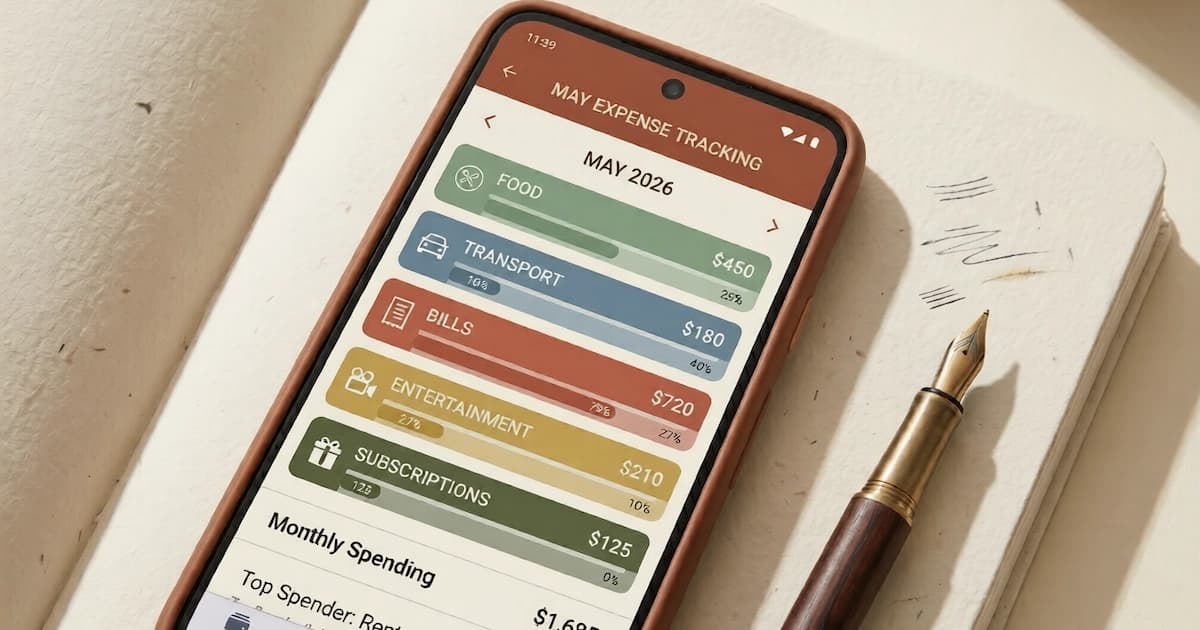
Digital envelopes (apps like Goodbudget, EveryDollar, or YNAB; sub-accounts at banks like Ally, Capital One 360, Monzo, or Starling) work for everything cash works for plus online spending and recurring subscriptions. The constraint is enforced by the app showing the envelope balance dropping with each card transaction.
The downside is the loss of the physical cue. Some practitioners report that swiping a card "feels" different from handing over cash, even when both come from the same envelope. The constraint is mathematically identical; psychologically it's weaker.
Hybrid envelopes combine both: cash for the 2-3 categories where overspend is most common, digital for everything else. That's the most common pattern among long-term envelope-method users.
Where the envelope method works best
The method has clear strengths in three specific situations.
Households recovering from credit card overspending are the most common fit. Cash envelopes physically prevent swipe-and-figure-it-out-later spending.
Households with one or two specific overspend categories are the second. A household that handles 90% of its budget fine but keeps blowing the eating-out line can use a cash envelope for eating out specifically, leaving everything else digital. Targeted use beats whole-budget conversion.
Couples wanting transparent personal-spending boundaries are the third. Each adult getting an equal cash envelope for personal spending eliminates a common source of friction, "what did you spend $80 on?", by making the limit visible and the contents none of the other partner's business.
Where it doesn't work
Three situations make the envelope method a poor fit.
Online-heavy spending households struggle. A household whose groceries arrive by Amazon Fresh, whose entertainment is mostly streaming subscriptions, and whose transport is rideshare apps will struggle to use cash envelopes meaningfully. Digital envelopes work but lose much of the physical-constraint advantage.
High-income households where the cap doesn't bind get little benefit. If your grocery envelope is $800 and you never come close, the envelope adds friction without adding value. The method works because the constraint bites; without that, it's bookkeeping.
Highly variable income complicates funding. If income arrives in lumps rather than predictably, funding fixed envelope amounts each cycle becomes harder. Variable-income households often combine envelopes with a zero-based approach where envelope amounts are recalculated each cycle based on actual income.
Common mistakes
Three patterns trip people up regularly when they set up envelope budgeting for the first time.
The first is having too many envelopes. Twelve envelopes on month one is too many. Start with five or six on the highest-variance categories; expand only if you discover gaps.
The second is aspirational amounts. Setting envelopes lower than your historical spending in the hope that the cap will change behaviour produces month-one collapse. Use real averages first; tighten in month two.
The third is borrowing from the wrong envelopes repeatedly. Pulling from the grocery envelope to cover an entertainment overrun every month is a sign that entertainment is underfunded. Repeated borrowing in the same direction is data, not failure.
What experts say
Investopedia covers the mechanics and notes that the method's main strength is enforcing a hard cap on variable spending. Ramsey Solutions provides a step-by-step setup guide and is the modern reference point for the cash-envelope version.
The Consumer Financial Protection Bureau doesn't endorse a specific budgeting method but its general guidance on building spending awareness aligns with the envelope method's emphasis on category-level visibility.
Frequently asked questions
What is the envelope budgeting method in one sentence? The envelope budgeting method is a system where you divide your monthly spending money into category labelled envelopes, groceries, transport, eating out, and once an envelope is empty, spending in that category stops until the next budget cycle.
Do I have to use physical cash for envelope budgeting? No. The original method used physical cash envelopes, but most modern practitioners use digital equivalents, a budgeting app like Goodbudget, separate sub-accounts at a bank like Ally or Monzo, or simple spreadsheet tracking. The principle (a hard cap per category) matters more than the medium.
What categories should I have envelopes for? Variable spending categories where impulse and overspend are most likely: groceries, eating out, entertainment, fuel, personal spending, gifts. Fixed bills like rent, utilities, and minimum debt payments don't need envelopes because they don't vary; they get paid by direct debit or transfer.
Is the envelope method good for couples? It works well for couples who have agreed on shared categories and separate personal-spending envelopes. The shared envelopes (groceries, household) work like any single-person envelope; the personal envelopes give each adult discretion without negotiation. Disagreements usually come from envelopes being too small, not from the system itself.
In summary
The envelope budgeting method is a cash-allocation system where variable spending categories each get their own envelope, the envelopes are funded at the start of each cycle, and spending in a category stops when its envelope is empty. The method came out of pre-banking-era household finance, was popularised in the modern era by Dave Ramsey, and now exists in cash, digital, and hybrid forms. It works best for households recovering from credit card overspending, households with one or two specific overspend categories, and couples wanting clear personal-spending boundaries.
The simplest test of whether envelope budgeting will work for a particular household isn't the income level or the spending categories. It's how the household feels in week three of a month when an envelope hits zero. Households who treat the empty envelope as the system functioning as designed stick with the method. Households who treat the empty envelope as an obstacle to override usually drift back to a less-constrained method within two cycles.
If envelopes don't suit how you spend, it's worth reading how this method compares to the others before you settle on one.
Sources
- Investopedia, Cash Envelope System: investopedia.com/terms/c/cash-envelope-system.asp
- Ramsey Solutions, Envelope System Explained: ramseysolutions.com/budgeting/envelope-system-explained
- Consumer Financial Protection Bureau: consumerfinance.gov

You might also like
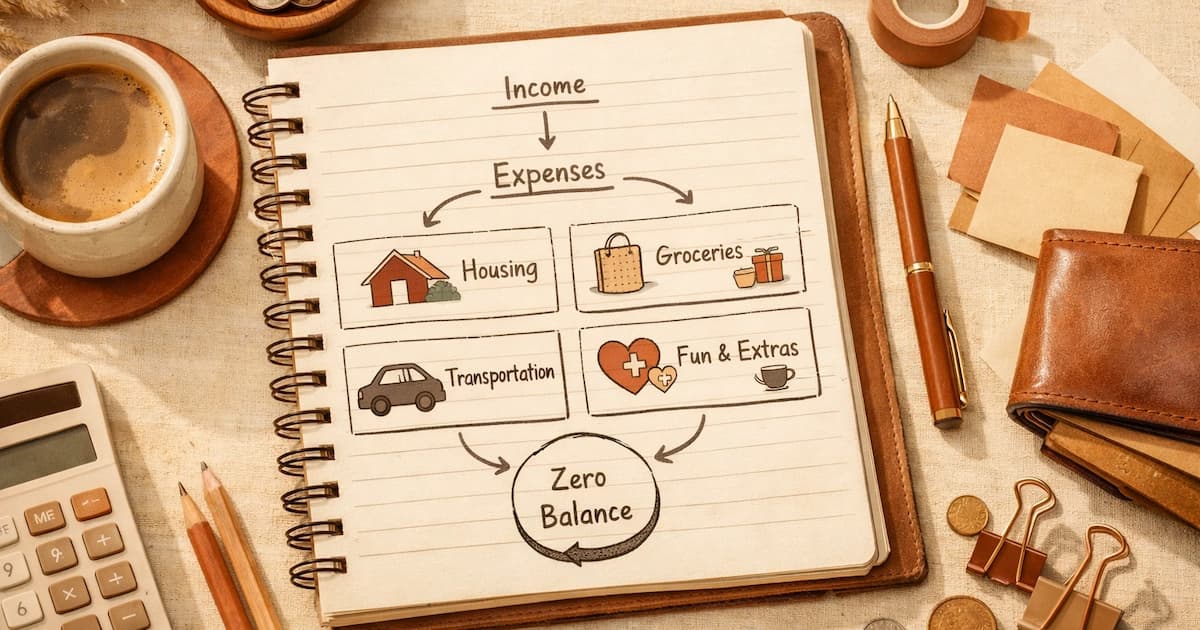
Give every rupee a job until income minus spending is zero. The five steps, a worked example in rupees and dollars, and where it breaks down.
14 min read
The rule everyone can recite leaves three things unresolved: which net income to use, where debt sits, and what to do when needs already eat 70%.
11 min read

Personal finance basics explained in plain English: income, saving, debt, credit, and investing, the small set of concepts every adult tends to encounter.
10 min read