What Is a Sinking Fund: A Plain English Explanation

By Tapabrata Biswas · Published May 11, 2026 · 9 min read
Researched with AI assistance, reviewed and edited by Tapabrata Biswas.

Most household budget collapses happen on the same predictable expenses every year: annual insurance premiums in March, vacation in July, holiday spending in December, vehicle registration in some random month. None of these are emergencies. The household knew about every one. But because the money wasn't set aside in advance, each one arrives as a budget shock that gets paid for with credit cards, raided emergency funds, or skipped savings transfers.
The sinking fund is the structural fix. It's a savings category designed specifically for known future expenses: small monthly amounts that accumulate over months until the bill arrives, then deplete on schedule. Personal finance educators describe it as the missing layer between basic budgeting and the emergency fund.
What is a sinking fund?
A sinking fund is money set aside in small monthly amounts to cover a specific known future expense. The term originates in corporate finance, where it described funds set aside by companies for retiring outstanding debt. The personal finance adaptation uses the same mechanism, set aside small amounts over time to handle a large expense when it arrives, applied to household categories.
According to Investopedia's overview, in a personal finance context a sinking fund is "a fund that an individual sets aside to save up for a known future expense, like a vacation, a wedding, or a major purchase."
The defining features of a sinking fund are three. First, the expense is known in advance, not a surprise. Second, the expense is dated. There's a target month or season when the money will be deployed. Third, the contributions are sized backward from the target: total amount needed divided by months until needed equals the monthly contribution.
A $1,200 annual car insurance premium due every December becomes a $100/month sinking fund starting in January. A $2,400 summer vacation in July becomes a $200/month sinking fund starting the previous August. A $600 gift budget for the December holidays becomes a $50/month sinking fund starting in January. Same total cost, no budget shock when the bill arrives.
How sinking funds fit alongside other savings categories
Most household savings ends up split across three structural categories.
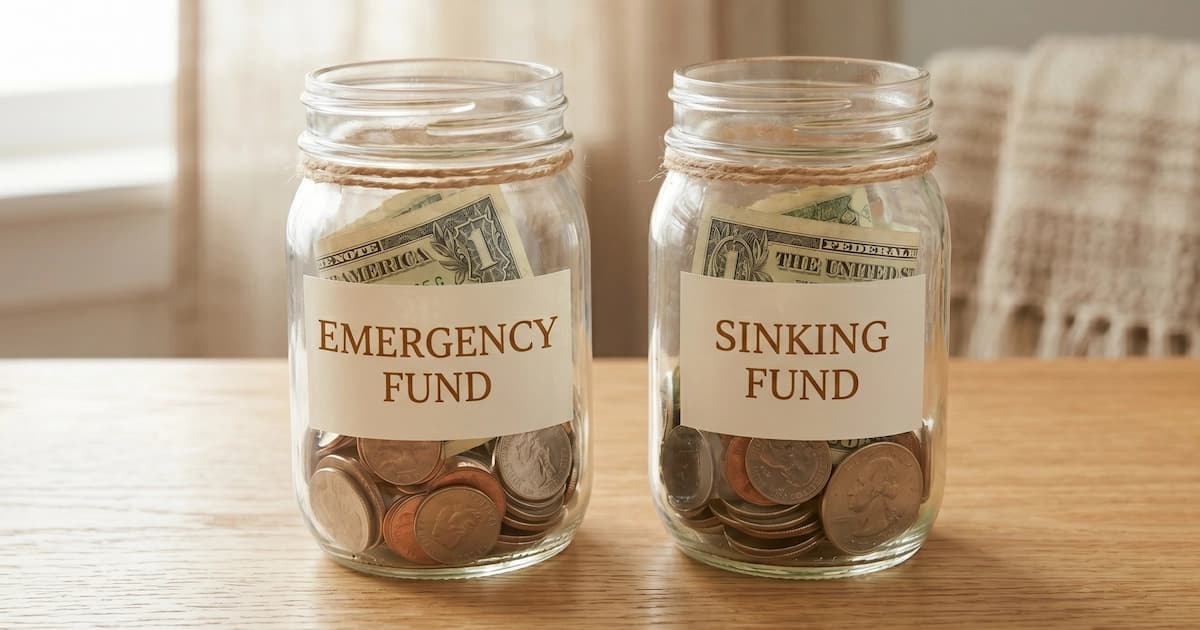
The emergency fund covers unexpected expenses or income loss. It sits in a separate account, only gets touched for genuine emergencies, and aims for 3-6 months of essential expenses long-term. Covered in detail in our piece on what is an emergency fund.
Sinking funds cover known future expenses. They sit in dedicated accounts or sub-accounts, get deployed on schedule, and exist for as long as the underlying recurring expense exists.
Long-term savings cover goals beyond emergencies and routine recurring expenses: retirement, house down payments, education savings, investments. These typically use different account types (Roth IRA, 401(k), brokerage account, dedicated high-yield savings) and have multi-year horizons.
The three categories serve different jobs. Mixing them in one account often produces the situation where the "savings balance" looks healthy but every sinking fund expense raids the emergency fund, leaving the household effectively unprotected even though the total dollar amount looks substantial.
Common sinking fund categories
Most households end up with 4-8 active sinking funds at any given time. The categories that show up most often:
Holiday spending: gifts, decorations, travel, special meals. The December crunch is one of the most predictable household budget pressures, and a $50-$100/month sinking fund starting in January eliminates it entirely.
Vacation: flights, lodging, food, activities. Monthly contributions sized to the planned trip cost divided by months until the trip.
Annual insurance premiums: auto and home insurance often offer a discount for paying annually instead of monthly. The discount only works if the household can pay the lump sum, which a sinking fund makes possible.
Vehicle registration and maintenance: annual registration fees, scheduled maintenance (tires, brakes, oil changes), and the inevitable surprise repair. Even though specific repairs are technically unexpected, the category is predictable enough to fund over time.
Home maintenance: for homeowners, the rule of thumb is 1% of home value per year. A $400,000 home means a $4,000/year sinking fund, or about $333/month. Covers routine maintenance plus the eventual roof, HVAC, and water heater replacements.
Gifts: birthdays, weddings, baby showers across the year. Sized to typical annual gift spending divided by 12.
Tax preparation: for households who use a paid preparer or accountant, the $200-$500 annual fee is small enough to fund at $20-$40/month and arrives reliably each spring.
Pet care: annual vet visits, grooming, occasional medical surprises. Sized to typical annual pet spending divided by 12.
The exact list depends on the household. Pick categories large enough to cause budget stress when they arrive, small enough not to be true emergencies, and predictable enough to fund over time.
How to set up a sinking fund
The mechanics are straightforward.
Identify the expense and its target date. "$2,400 vacation in July."
Calculate months until needed. "It's now October. That's 9 months until July."
Divide the total by months. "$2,400 ÷ 9 = $267/month."
Set up an automatic transfer. "$267 transfers automatically from checking to the sinking fund account on the day after each payday, split as needed across paychecks."
When the expense arrives, transfer from the sinking fund to checking and pay the bill. The fund returns to $0, ready to start the next cycle if the expense recurs.
For households with multiple sinking funds, the simplest setup uses a single high-yield savings account at an online bank that supports named "buckets" or "vaults": Ally, Capital One 360, Monzo, Chime, and several others. Each sinking fund gets its own bucket within the same account; the total balance is one number but each bucket tracks separately.
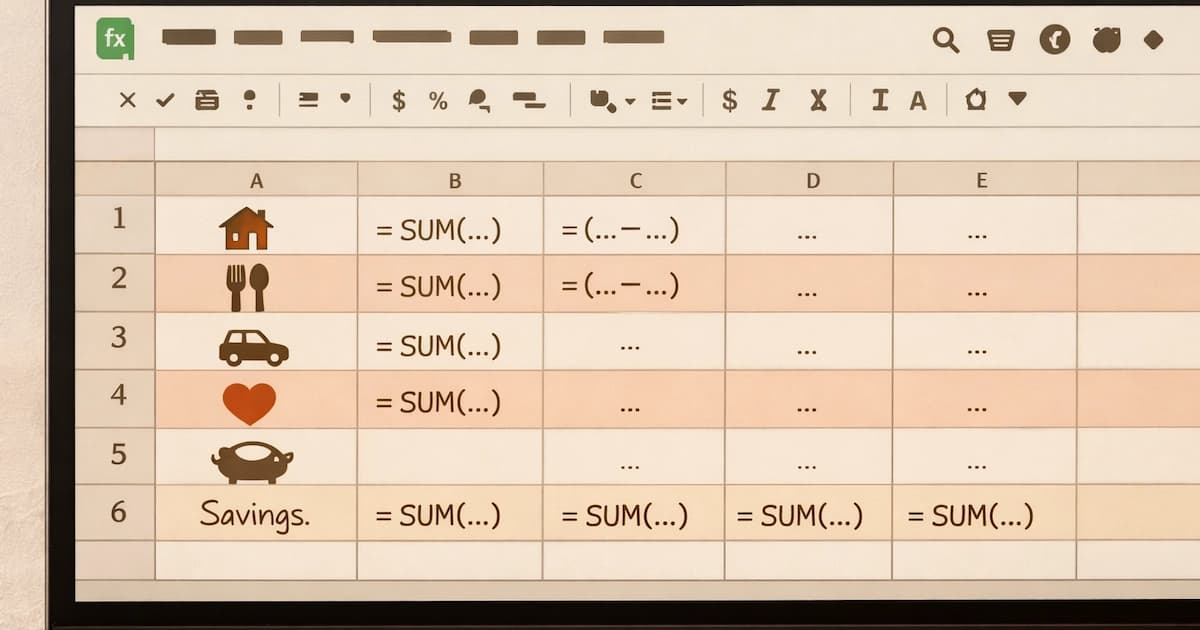
For households whose bank doesn't support buckets, the simplest workaround is a spreadsheet tracking how much of the savings account balance belongs to each sinking fund. The math works the same; the friction is slightly higher.
A simple worked example
Consider a household setting up sinking funds for the typical recurring annual expenses they encounter.
Annual recurring expenses identified:
- Holiday spending: $1,200/year
- Summer vacation: $2,400/year
- Auto insurance (annual payment): $1,500/year
- Vehicle registration: $300/year
- Vehicle maintenance reserve: $1,200/year
- Gifts (birthdays + weddings): $720/year
- Tax preparation: $300/year
Total annual: $7,620.
Monthly sinking fund contributions: $7,620 ÷ 12 = $635/month.
Setup: open a high-yield savings account if not already in place. Create 7 named buckets (one per category). Set up an automatic transfer of $635 from checking to the savings account on the day after each payday (split as needed across paychecks). When each annual expense arrives, transfer the appropriate amount from the relevant bucket back to checking and pay.
The household's regular budget no longer takes hits when these expenses arrive. The annual auto insurance bill that used to derail the March budget now arrives at the same time as a $1,500 transfer from the auto-insurance bucket: net zero impact on the working budget.
The total $635/month is meaningful but predictable, which is the whole point. Predictable monthly outflows are easier to budget for than unpredictable annual ones.
Common misconceptions about sinking funds
Three patterns trip people up when they first encounter the sinking fund concept.
The first is conflating sinking funds with the emergency fund. They're different categories with different purposes. A vacation isn't an emergency. An annual insurance premium isn't an emergency. The emergency fund is for genuine surprises; sinking funds are for known recurring expenses. Mixing them defeats both.
The second is creating too many sinking funds. A household with 15 active sinking funds for every minor recurring expense usually finds the administrative burden defeats the benefit. 4-8 active funds for the largest predictable expenses is the durable target. Smaller recurring expenses (under $200/year) can absorb into the regular budget without needing their own fund.
The third is treating the sinking fund as savings that earns interest. A high-yield savings account at 4% is the standard home, but the fund's job isn't growth. It's preservation until deployment. Don't put sinking fund money into stocks or volatile assets; the fund needs to be the right amount on the date the expense arrives, regardless of market conditions.
What experts say
Investopedia's overview of sinking funds covers both the corporate finance origin and the personal finance application.
For the related concept of the emergency fund and how the two categories differ, see our companion piece on sinking fund vs emergency fund. For the broader monthly savings framework that funds both, see how to save money every month. To work out the monthly contribution any specific sinking fund needs, run the numbers in our savings goal calculator, or use the emergency fund calculator for the parallel emergency-reserve targets.
Frequently asked questions
What is the simplest definition of a sinking fund? A sinking fund is money set aside in small monthly amounts to cover a specific known future expense. The term comes from corporate finance (where it described funds for retiring debt over time), but in personal finance it now describes the same mechanism applied to household expenses: vacation, holiday spending, annual insurance, vehicle registration, and similar large-but-expected costs.
How is a sinking fund different from an emergency fund? An emergency fund covers unexpected expenses; a sinking fund covers expected ones. The car battery that dies suddenly is an emergency fund use. The vacation you're planning for July is a sinking fund use. The yearly insurance premium that arrives every December is a sinking fund use. Mixing the two often produces a household that "has savings" but pulls from the emergency fund every time a sinking-fund category comes due.
How many sinking funds should I have? Most households operate with 4-8 active sinking funds at any given time. Common categories: holiday spending, vacation, vehicle maintenance, annual insurance premiums, vehicle registration, gifts (birthdays + weddings), home maintenance, and tax preparation. The exact number depends on which expenses are large enough to deserve their own line versus small enough to absorb in the regular budget.
Where should I keep my sinking funds? A high-yield savings account is the most common choice: same as the emergency fund, often in the same account using sub-accounts or "buckets" if the bank supports them. Some online banks (Ally, Capital One 360, Monzo, Chime) offer named buckets within a single savings account, which makes tracking each sinking fund's balance straightforward without opening multiple accounts.
In summary
A sinking fund is a savings category designed for known future expenses: small monthly contributions that accumulate to cover a specific bill on a specific date. The mechanism turns annual expenses (insurance, vacation, holiday spending, vehicle registration) into predictable monthly outflows the household can budget around, instead of unpredictable shocks that derail the regular budget or raid the emergency fund.
The single most useful next step: list the three biggest recurring expenses your household has been blindsided by in the last 12 months. Add up their total annual cost, divide by 12, and start that monthly transfer to a separate account this week. The next time those bills arrive, the budget shock will be gone.
Sources
- Investopedia, Sinking Fund: investopedia.com/terms/s/sinkingfund.asp
- US Securities and Exchange Commission, Sinking fund, Investor.gov glossary: investor.gov, for the original bond-finance meaning the household version borrows from
- Consumer Financial Protection Bureau, Consumer tools: consumerfinance.gov/consumer-tools



You might also like
Three different things are called a sinking fund, and one is on your society maintenance bill. What separates the two savings jobs, and what one account hides.
13 min read

An emergency fund is savings held apart from goals and investments. What counts as an emergency, and why other money decisions sit on top of it.
10 min read
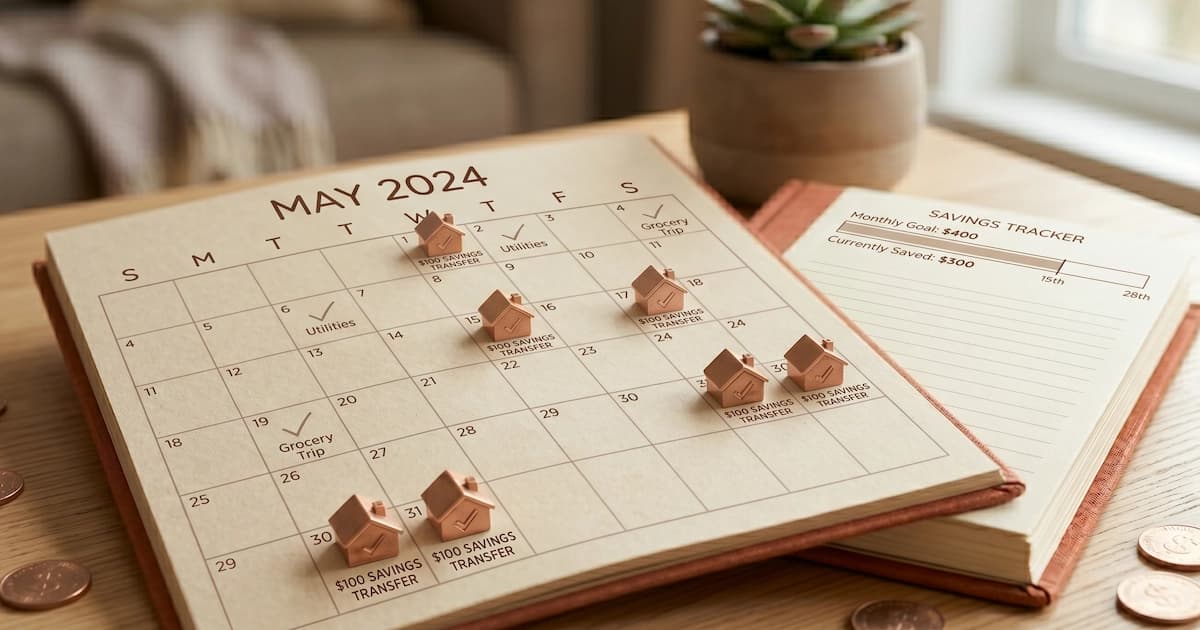
The structural system that produces monthly savings without willpower or month-end leftovers. The transfer order, the buffer, and what to automate.
10 min read