Pillar 8
Government Schemes
India's government runs more than a dozen savings, insurance, and pension schemes: Public Provident Fund, Sukanya Samriddhi Yojana, NPS, EPF, the Pradhan Mantri Bima schemes, and others. Each has different eligibility, returns, lock-in periods, and tax treatment. This section explains what each scheme actually is, who can use it, and how the mechanics work. These are research-led explainers, not recommendations.
11 articles
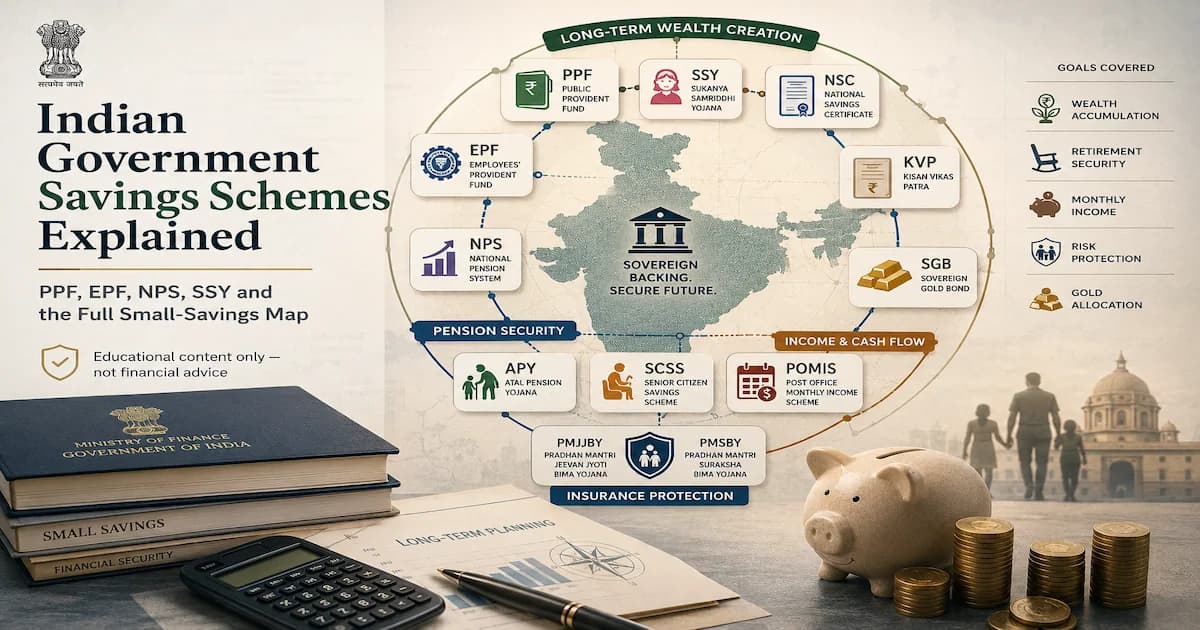
PPF, EPF, NPS, SSY, APY, SCSS, POMIS, NSC, KVP, SGB and the Bima schemes, with current rates, tax treatment, and where each one actually fits.
14 min read
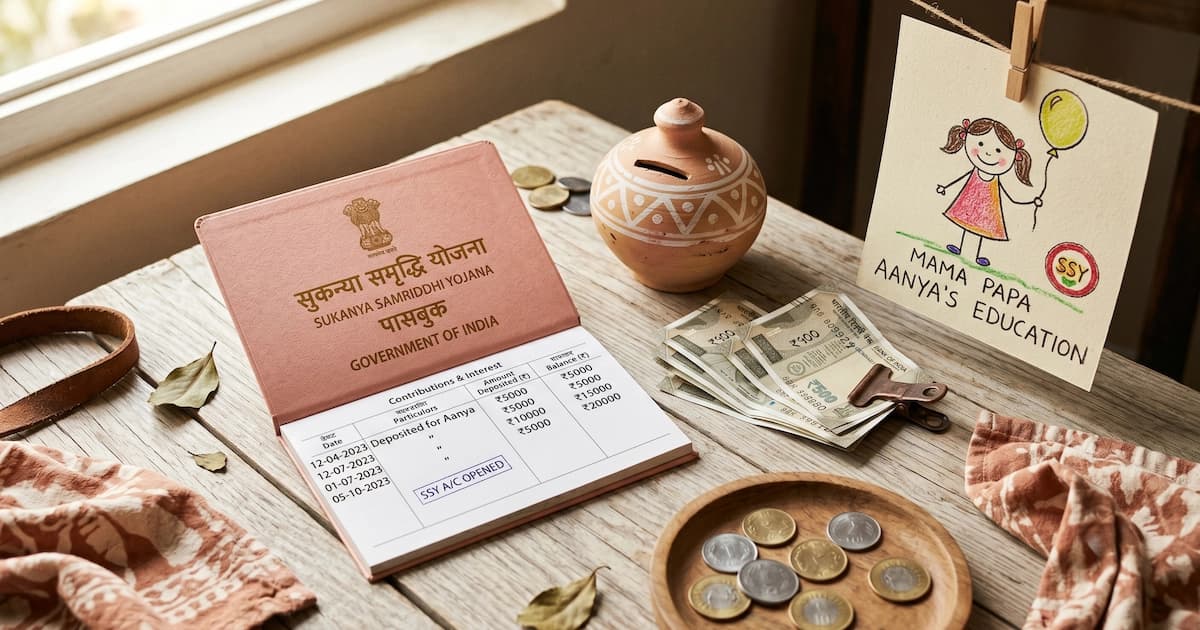
Sukanya Samriddhi pays 8.2% for a girl child under 10. The 15-year contribution, 21-year maturity, withdrawal at 18, and EEE tax, with an example.
13 min read

The Sovereign Gold Bond scheme closed to new subscription in February 2024, and from April 2026 only original subscribers holding to maturity stay tax-exempt.
17 min read

SCSS pays 8.2% for the Oct-Dec 2026 quarter, held since April 2023. The ₹30 lakh cap, quarterly payout, 5+3 year lock-in, 80C, and the new ₹1 lakh TDS rule.
16 min read
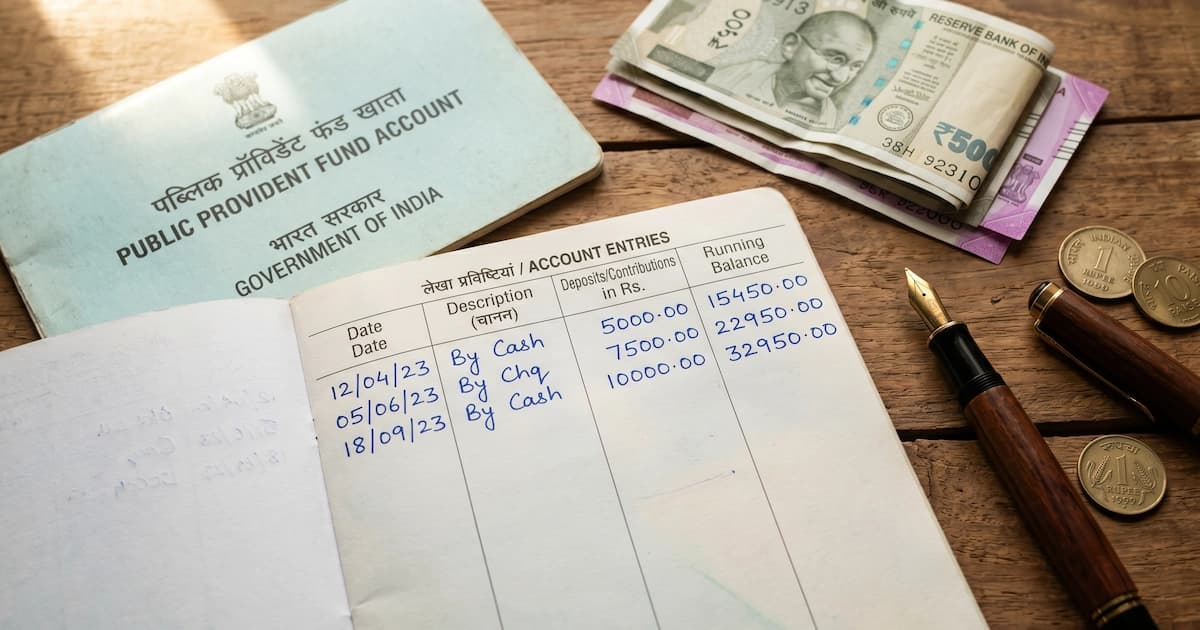
PPF pays 7.1% for Oct-Dec 2026, unchanged since 2020. See the Rs 500 to Rs 1.5 lakh limits, EEE tax, 15-year lock-in, withdrawal rules and a maturity example.
16 min read

POMIS pays 7.4% a year credited monthly. A Rs 9 lakh deposit gives Rs 5,550 a month for five years. Payout table, limits and tax treatment.
14 min read
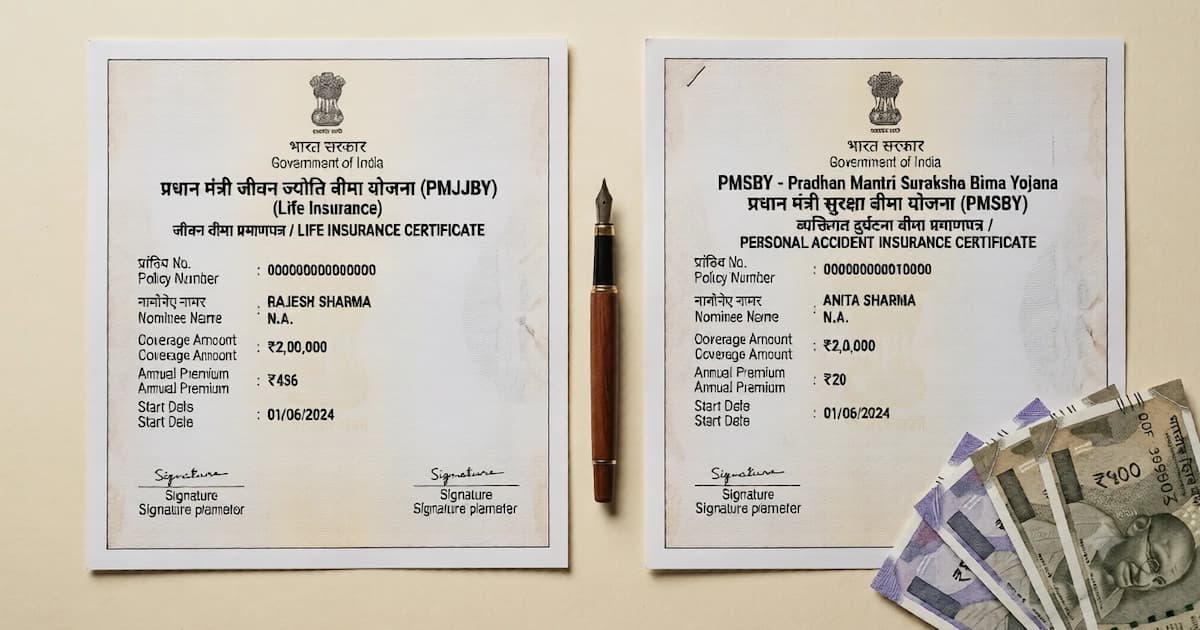
PMJJBY vs PMSBY on cover, premium and claims, plus what the scheme rules actually say about refunds, leaving, and the 30-day lien most pages skip.
20 min read
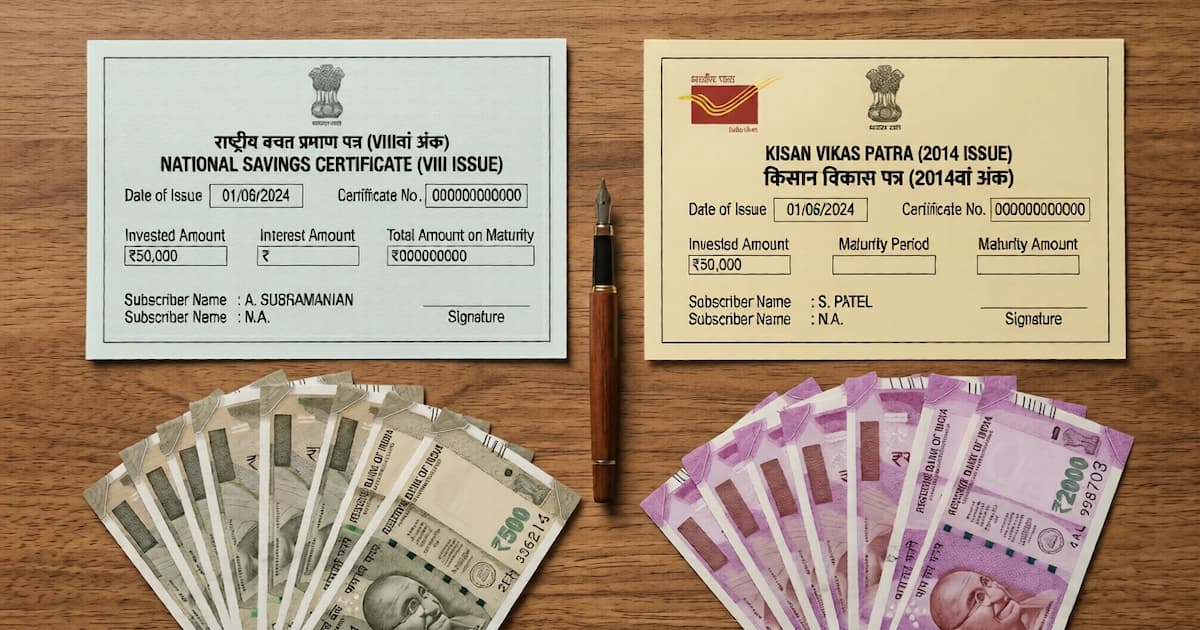
NSC pays 7.7% with an 80C tax break; KVP pays 7.5% and doubles your money in 115 months. Current Oct-Dec 2026 rates, tax, and a worked comparison.
15 min read

NPS entry now runs to age 85, and non-government exits need only 20% annuity since December 2025. What the new tax regime allows, and what it takes away.
14 min read
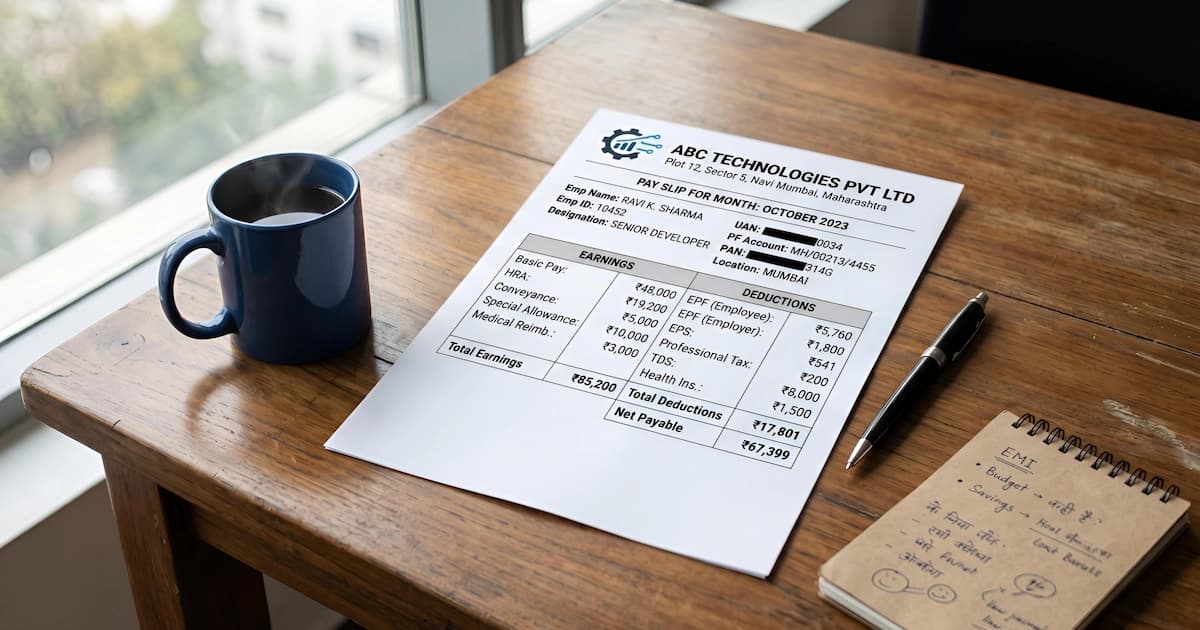
What is EPF? The 8.25% FY 2025-26 interest rate, the 12% + 12% contribution split, the new EPF Scheme 2026 withdrawal rules, and the tax treatment explained.
19 min read

Income tax payers cannot join APY since 1 October 2022, and having filed once counts. The contribution chart, the guarantee, and what the nominee gets.
14 min read