Sovereign Gold Bond (SGB): Status, Tax, and Redemption

By Tapabrata Biswas · Updated July 17, 2026 · 17 min read
Researched with AI assistance, reviewed and edited by Tapabrata Biswas.
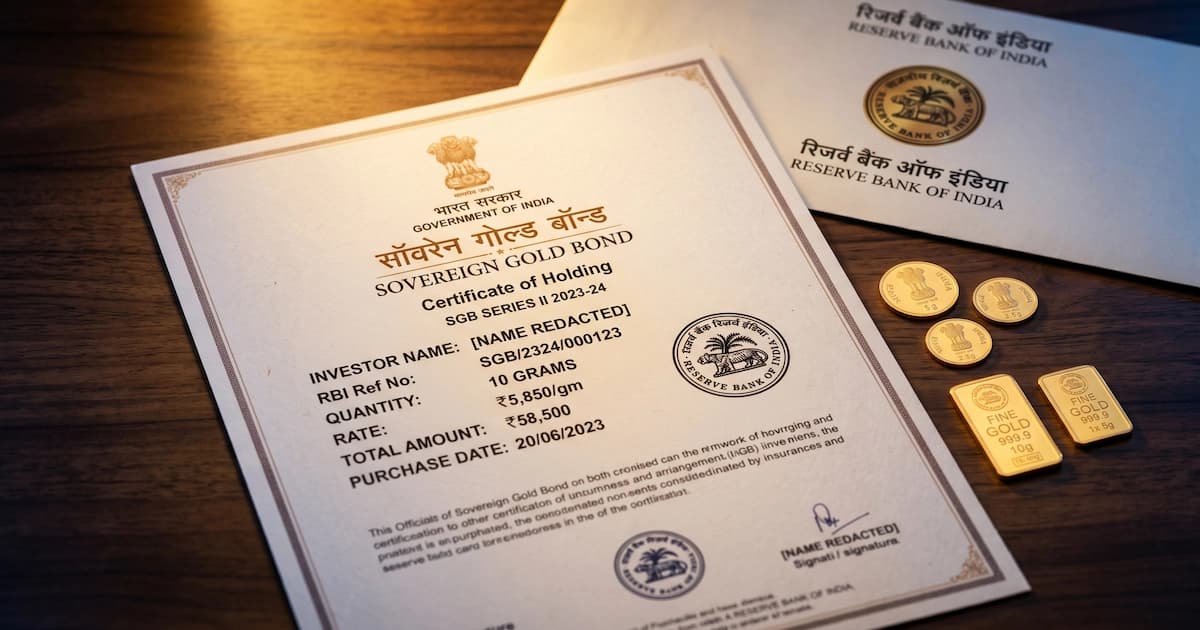
On 14 July 2026, three days ago, the RBI set the premature redemption price for SGB 2020-21 Series IV at ₹14,307 a gram. The original subscribers paid ₹4,852. That's a gain of roughly 195% on the gold price alone, before counting eight half-yearly coupons. The article reporting it told readers the gain was tax-exempt. It isn't, and hasn't been since 1 April 2026.
That gap between what the pages say and what the law now does is the reason this post exists. Two things happened to the Sovereign Gold Bond, and almost nothing on the first page of search results has absorbed the second. The scheme stopped issuing new bonds in February 2024. Then, from April 2026, the tax exemption that made it famous was narrowed to people who bought at the original issue and hold to maturity. Put those together and you get the thing nobody says out loud: since you can no longer subscribe at original issue, nobody who buys an SGB today can ever qualify for the tax break. This post covers the issuance status, what the bond actually is, who still gets the exemption, how premature redemption works now, why these bonds trade below gold, and where SGB sits against the alternatives. It explains the instrument. It isn't investment or tax advice, and the tax position on this page is unsettled enough in places that a Chartered Accountant is the right check on your own situation.
Can you still buy a Sovereign Gold Bond?
No new Sovereign Gold Bond has been issued since February 2024, so the scheme is closed to fresh subscription and the only way to acquire one is to buy an existing bond from another holder on the exchange. The RBI's SGB page ends at 2023-24 Series IV, priced in a press release dated 9 February 2024. There's no FY 2026-27 issuance calendar because there are no issues to calendar.
The government's own words are unusually direct. At the post-Budget briefing on 1 February 2025, Economic Affairs Secretary Ajay Seth said SGBs had been a fairly high-cost borrowing and that the government had chosen not to follow that path. Asked whether the scheme was being discontinued, Finance Minister Nirmala Sitharaman answered: yes, in a way.
Read that carefully, because the distinction matters. Nobody abolished the Sovereign Gold Bond. The government simply declined to keep pricing it, and the reason is arithmetic. When you borrow in grams of gold, you owe the gold price back. Gold rose more than 70% after February 2024, and the liability rose with it. Official figures given in Parliament put the programme at roughly ₹72,275 crore raised and 146.96 tonnes of gold across 67 tranches since 2015, with about 18.81 tonnes redeemed as of mid-2025. A scheme designed partly to curb gold imports watched those imports climb anyway. Revival hasn't been ruled out and Budget 2026 didn't bring it back, so the honest description is discontinued in practice and paused on paper.
There's a lesson buried in that which no explainer teaches: a government scheme can end not because it failed its users but because it succeeded too well against the issuer. SGB holders did well. That's precisely why there are no more SGBs.
What is a Sovereign Gold Bond?
A Sovereign Gold Bond is a government security denominated in grams of gold, issued by the RBI on behalf of the Government of India, which pays a fixed 2.5% annual coupon on top of returning the prevailing gold value at redemption. It's a sovereign obligation, not a fund unit or a claim on somebody's vault.
The mechanics, from the RBI's SGB FAQ, which remains authoritative on how the bond works even though its tax section is years out of date:
| Feature | Rule |
|---|---|
| Coupon | 2.5% a year on the initial investment, credited semi-annually |
| Tenor | 8 years, with early redemption to the RBI allowed after year 5 |
| Pricing agency | India Bullion and Jewellers Association (IBJA), 999 purity |
| Issue price | Simple average of the closing gold price of the last 3 business days of the week preceding the subscription period |
| Online discount | ₹50 a gram below nominal value for online applicants |
| Limits | 1 gram minimum; 4 kg per individual, 4 kg per HUF, 20 kg for trusts, per financial year |
Two details are worth pinning down because the field routinely fudges them. The pricing agency is IBJA, an Indian body, not the London-based LBMA that several summaries name. And the issue-price window is the last three business days of the week preceding the subscription period, which is a narrower and different window than the "three days before the subscription" most pages paraphrase it into.
The coupon is the structural feature that made SGB unusual. Physical gold pays nothing while it sits. A gold ETF pays nothing and charges you a fee. SGB paid you 2.5% a year for holding gold exposure, which is why it dominated every comparison table written between 2015 and 2024.
Who still gets the tax-free redemption?
From 1 April 2026, the capital-gains exemption on SGB redemption applies only to an individual who subscribed at the original issue and held the bond continuously until redemption at maturity, according to tax analysts reading the amended Section 70(1)(x). Everyone else now pays.
The sequence is worth getting right, because most write-ups compress it into something inaccurate. The Income Tax Act 2025 didn't narrow anything: it carried the old blanket exemption forward from Section 47(viic) of the 1961 Act into its own Section 70(1)(x). The Finance Act 2026, which received presidential assent on 30 March 2026, then amended that section, effective 1 April 2026, the very day the new Act commenced. The broad version never actually operated. The Budget memorandum's wording is that the amendments take effect from 1 April 2026 and apply to tax year 2026-27 onward, as reported by Taxguru. The government has framed the change as a clarification aligned to an existing Department of Economic Affairs memorandum, not as a new restriction.
Where that leaves each situation:
| What you do with the bond | Tax from 1 April 2026 |
|---|---|
| 2.5% coupon | Taxable at slab rates as income from other sources, no TDS |
| Redeem at maturity, original subscriber, held throughout | Exempt |
| Redeem at maturity, bought on the exchange | Taxable, 12.5% long-term |
| Redeem early to RBI after year 5, any holder | Taxable |
| Sell on the exchange, held over 12 months | Taxable, 12.5% long-term, no indexation |
| Sell on the exchange, held 12 months or less | Taxable at slab rates |
Two rows deserve emphasis. Premature redemption is now taxable even for an original subscriber, because the exemption requires holding continuously to maturity, and the Income Tax Department's guidance quoted by NISM says premature redemption after the lock-in is not eligible. That reverses what the RBI's own FAQ still tells readers. And the exchange-sale rows use a 12-month long-term threshold, where physical gold gets 24 months, because an SGB trades as a listed security. The general machinery behind those rates, including why indexation vanished in Budget 2024, sits in our capital gains guide, and the slab rates that hit the coupon are in the income tax slabs post.
Now the part that ties the whole page together. Issuance stopped in February 2024, so there is no original issue to subscribe to. Everyone who acquires an SGB from now on is, by definition, a secondary-market buyer. And secondary-market buyers are exactly who the amendment excludes. The tax-free Sovereign Gold Bond is a closed club with a fixed membership list, and the list stopped taking names in February 2024.
Why "tax year 2026-27" isn't the return you're filing now
The Income Tax Act 2025 abolished the term assessment year and replaced it with tax year, where tax year 2026-27 means the financial year 2026-27, so the change bites redemptions from 1 April 2026 and shows up in returns filed in 2027. This terminology shift has caused real confusion, including among tax publishers.
The return being filed this July covers FY 2025-26, which ran under the old Section 47(viic). Under that provision, redemptions were exempt, including premature ones and including bonds bought on the exchange. So a reader filing right now applies the old rule correctly, while a reader redeeming next month applies the new one. Both are true at the same time, which is why pages saying the change "does not apply to AY 2026-27" are technically right under the old vocabulary and badly misleading in effect. The rule is live. It just hasn't met a filing deadline yet.
One genuinely unsettled point: whether a premature redemption completed before 1 April 2026 keeps its exemption. Some commentators treat it as clearly exempt; others call the position disputed. Nobody has a primary ruling. If that's your situation, it's a question for a CA, not for an article.
What premature redemption looks like now
Premature redemption lets an SGB holder return the bond to the RBI after the fifth year, but only on a coupon payment date, and the RBI sets the price from the IBJA gold average of the three business days before repayment. The process has a deadline most holders miss.
You have to approach your bank, SHCIL office, post office, or agent thirty days before the coupon payment date, and the request is only entertained if it reaches them at least one day before that date. Miss the window and you wait six months for the next coupon date.
The numbers on offer are striking. For SGB 2020-21 Series IV, redeemed early on 14 July 2026, the RBI set ₹14,307 a gram against an original issue price of ₹4,852, a gain of about ₹9,455 a gram or roughly 195%, per the RBI notification as reported by Upstox. An earlier one is confirmable directly from the RBI: 2020-21 Series IX redeemed at ₹13,381 a gram on 5 January 2026.
What makes the July example worth dwelling on is the date. That redemption happened after 1 April 2026, so under the amended section the gain is taxable, even for the person who bought at ₹4,852 in 2020 and did nothing wrong. The article announcing the price told readers the opposite, quoting the RBI's stale boilerplate about the 1961 Act. A holder reading it would have redeemed expecting nothing to be due. That's not a hypothetical risk with this rule; it's happening in published coverage now.
Why SGBs trade below the gold price
Sovereign Gold Bonds often trade at a discount to spot gold on the exchange, because each series is thinly traded, money in a longer-dated bond carries an opportunity cost, and since April 2026 a secondary buyer's redemption is taxable. The discount used to be a quirk. It's now partly rational.
On 18 March 2026, 24-carat gold sat around ₹15,775 a gram while SGB series traded between roughly ₹14,903 and ₹15,706 on the BSE and NSE, per market data compiled by Business Upturn, putting the widest series about 5% below gold. Series closer to maturity track gold more tightly, since there's less waiting to discount.
The tax change reaches into that price. Before April 2026, secondary buyers were reportedly paying a premium over the bond's gold value precisely to inherit a tax-free redemption. That premium was buying a benefit the amendment has now removed, which is why commentators expected the change to compress secondary-market pricing. A bond whose redemption is taxable in your hands is simply worth less to you than one whose redemption isn't, and the market prices that difference.
SGB, gold ETF, physical gold, and digital gold
The four ways an Indian household holds gold differ on income, cost, regulation, and access, and the SGB's position among them changed twice: once when issuance stopped and again when the exemption narrowed. Tax rates for the non-SGB options live in our capital gains guide so the numbers stay in one place and can't drift apart.
| Factor | SGB | Gold ETF | Physical gold | Digital gold |
|---|---|---|---|---|
| Can you buy it new? | No, secondary market only | Yes | Yes | Yes |
| Income while held | 2.5% coupon | None | None | None |
| GST on purchase | None | None | 3% | 3% |
| Making charges | None | None | 5% to 15% on jewellery | None |
| Ongoing cost | None | Expense ratio | Locker or storage | Dealer spread |
| Lock-in | 8-year tenor, exit from year 5 or via exchange | None | None | None |
| Liquidity | Thin, wide spreads | Intraday | High | Platform-dependent |
| Regulator | RBI and Government of India | SEBI | None (hallmarking aside) | Effectively none |
That last column is the one people skip. Digital gold sits in a gap between the RBI's remit and SEBI's, which means the platform holding your gold isn't supervised the way a bank or a fund is. It's the least-regulated option on the table and the most heavily marketed. Our three-way comparison sets the regulation and the tax treatment of all three side by side.
The comparison tables written before 2024 all end with SGB on top, and they were right at the time: a coupon plus a tax-free exit is hard to beat. Both halves of that advantage have since been fenced off for new entrants. What's left for someone buying today is gold exposure, a 2.5% coupon, a taxable redemption, and a thin market. That's a different instrument from the one those tables were describing.
What this post does not cover
This explains what a Sovereign Gold Bond is, its current issuance status, and how the April 2026 rules changed its taxation. It doesn't tell you whether to hold, redeem, or sell, and it doesn't rank gold against other assets or suggest how much of anything belongs in a portfolio; where gold sits in an overall allocation is a question for diversification and for a SEBI-registered adviser. SGB contributions never qualified for a Section 80C deduction, so that route doesn't apply here. Rates for physical gold and gold ETFs are deliberately left to the capital gains guide, and where SGB sits among the other government schemes is in the Indian government savings schemes overview.
A word on the sourcing, because this is a YMYL page. The exact enacted text of the amended Section 70(1)(x) could not be read directly: the Income Tax Department, Budget, and Gazette routes were all blocked or unavailable, so the wording described here comes from tax publishers reading the amendment, since the bare Act was unreachable. The direction of the change is consistent across every source. The precise application to your bond, your acquisition route, and your redemption date is a question for a Chartered Accountant, and given the RBI's own FAQ is currently wrong on this, that's not a formality.
Frequently asked questions
Can you still buy a Sovereign Gold Bond in 2026? Not a new one. The RBI's last tranche was 2023-24 Series IV, issued in February 2024, and no fresh tranche has been announced since. The RBI's own SGB page carries no issuance calendar for FY 2026-27. The only way to acquire an SGB now is to buy an existing one from another holder on the NSE or BSE secondary market. Existing bonds continue to pay the 2.5% coupon and redeem on their original schedule, so the scheme is winding down; it was never formally cancelled. The government has never used the word abolished; it declined to keep issuing on cost grounds.
Is SGB redemption still tax-free? Only for a narrow group, from 1 April 2026. The Finance Act 2026 amended Section 70(1)(x) of the Income Tax Act 2025 so the exemption applies to an individual who subscribed at the original issue and held the bond continuously until redemption at maturity, according to tax analysts reading the amended provision. Anyone who bought the bond on the exchange is taxable on redemption even if they hold it to the full eight years. The RBI's own FAQ still describes redemption as exempt and cites the 1961 Act, but that page has not been updated. Confirm your own position with a Chartered Accountant.
Is premature redemption after 5 years tax-free? No, not from 1 April 2026. Redeeming early to the RBI on a coupon date after year five is now taxable, even for an original subscriber, because the amended exemption requires the bond to be held continuously until redemption at maturity. The Income Tax Department's guidance, as quoted by NISM and other tax commentators, states that premature redemption after the lock-in is not eligible for the exemption. This reverses what most pages, including the RBI's own FAQ, still say. Whether premature redemptions completed before 1 April 2026 remain exempt is genuinely disputed among tax commentators, so a CA is the right check.
How is an SGB taxed if I sell it on the exchange? An SGB sold on the NSE or BSE is taxed as a listed security, which means a 12-month long-term threshold, where physical gold gets 24 months. Held more than 12 months, the gain is long-term and taxed at 12.5% without indexation, since Budget 2024 removed indexation. Held 12 months or less, the gain is short-term and taxed at your slab rate. This treatment has not changed and applies regardless of whether you were the original subscriber. Exchange sales have always been taxable; only redemption ever carried the exemption.
Why do SGBs trade below the gold price? SGBs often trade at a discount to spot gold on the exchange. On 18 March 2026, 24-carat gold was around ₹15,775 a gram while SGB series traded between roughly ₹14,903 and ₹15,706 on the BSE and NSE, per Business Upturn's market data, putting some series about 5% below gold. Two forces drive it: each series trades thinly, so spreads are wide, and money locked into a longer-dated bond carries an opportunity cost. Since April 2026 there is a third reason, and it is rational: a secondary buyer's redemption is now taxable, so the bond is genuinely worth less to them than gold parity.
Does the April 2026 tax change affect the ITR I am filing now? No. The Income Tax Act 2025 replaced the term assessment year with tax year, and tax year 2026-27 means the financial year 2026-27. The return being filed in July 2026 covers FY 2025-26, which still runs under the old Section 47(viic), where redemptions including premature and secondary ones were exempt. The narrowed rule applies to redemptions on or after 1 April 2026, which get reported in 2027. Several pages have misread the terminology and concluded the change is not live yet. It is live; it simply has not reached a filing season.
Why did the government stop issuing Sovereign Gold Bonds? Cost. SGBs turned out to be expensive borrowing because the government owes the gold price at redemption, and gold rose sharply. Economic Affairs Secretary Ajay Seth said at the February 2025 post-Budget briefing that SGBs had been a fairly high-cost borrowing and the government had chosen not to follow that path. Asked directly whether the scheme was being discontinued, Finance Minister Nirmala Sitharaman said yes, in a way. Government figures put the programme at about ₹72,275 crore raised across 67 tranches since 2015. Revival has not been ruled out, but no timeline has been given.
Sources
- Reserve Bank of India, Sovereign Gold Bond Scheme tranche list and press releases (rbi.org.in)
- Reserve Bank of India, SGB FAQ: coupon, tenor, pricing, limits and redemption process (authoritative on mechanics; its tax section predates the 2024 and 2026 changes) (rbi.org.in)
- Reserve Bank of India, Premature redemption price, SGB 2020-21 Series IX, 5 January 2026 (rbi.org.in)
- Taxguru, Capital gains exemption and the secondary-market buyer of Sovereign Gold Bonds (Finance Act 2026 amendment to Section 70(1)(x)) (taxguru.in)
- National Institute of Securities Markets, How Budget 2026 changes Sovereign Gold Bond taxation (nism.ac.in)
- ClearTax, Capital gains tax on Sovereign Gold Bonds (cleartax.in)
- Income Tax Department, Objective and scope of the Income Tax Act 2025 (tax year replaces assessment year) (incometax.gov.in)



You might also like
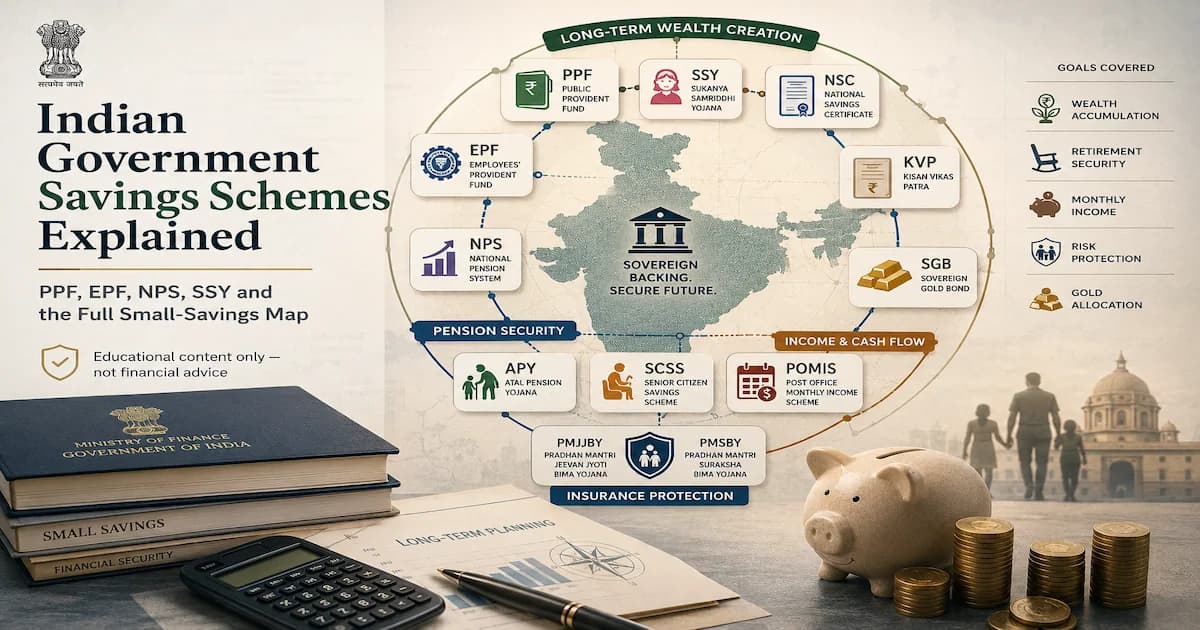
PPF, EPF, NPS, SSY, APY, SCSS, POMIS, NSC, KVP, SGB and the Bima schemes, with current rates, tax treatment, and where each one actually fits.
14 min read
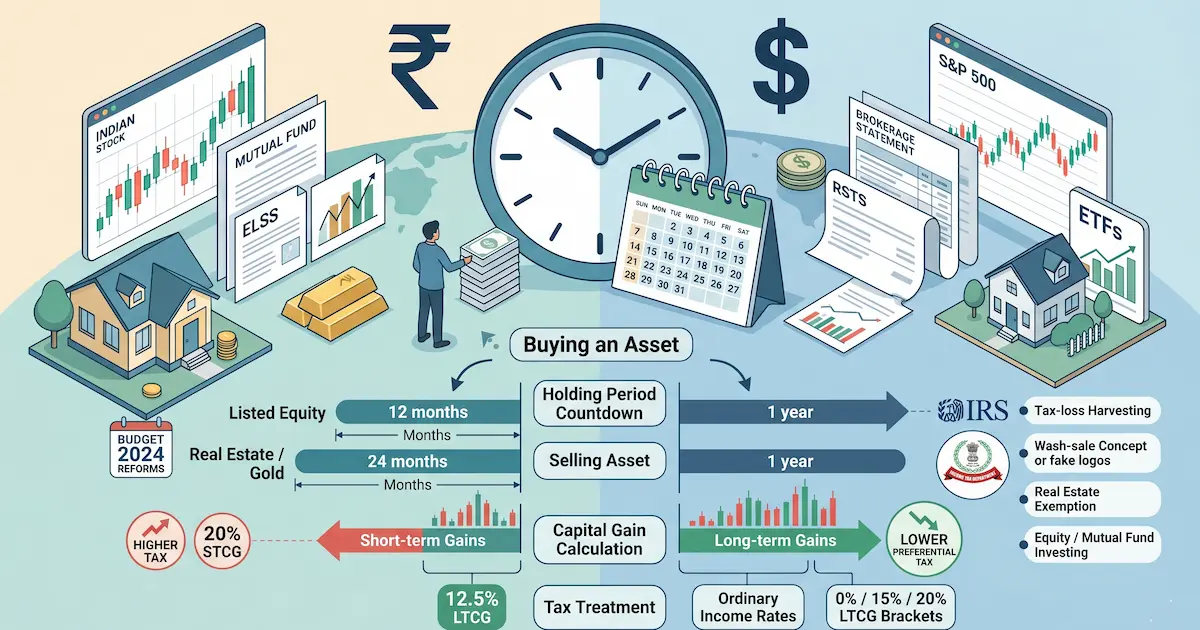
Short versus long-term rates in India and the US: the 12.5% LTCG and Rs 1.25 lakh exemption, the US 0/15/20% brackets, and the new sections.
20 min read
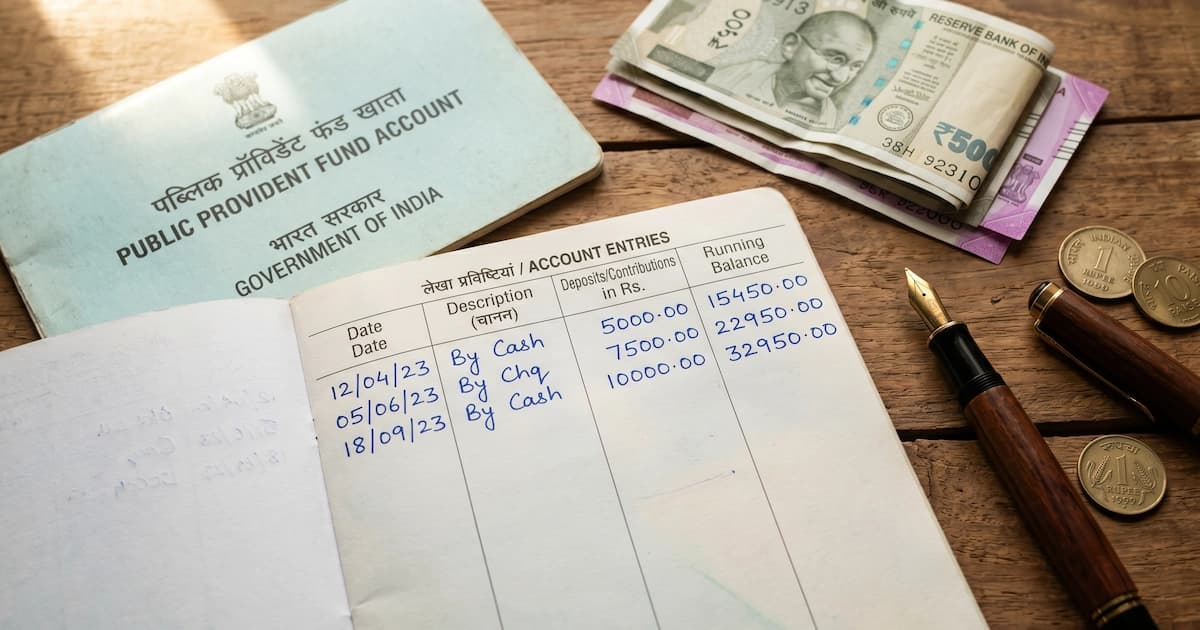
PPF pays 7.1% for Oct-Dec 2026, unchanged since 2020. See the Rs 500 to Rs 1.5 lakh limits, EEE tax, 15-year lock-in, withdrawal rules and a maturity example.
16 min read