Senior Citizen Savings Scheme (SCSS) 2026: 8.2% Rate

By Tapabrata Biswas · Updated July 6, 2026 · 16 min read
Written and fact-checked by Tapabrata Biswas. How I write

The Senior Citizen Savings Scheme pays 8.2% a year for the October to December 2026 quarter, and it has held that rate since April 2023. That makes it the highest-paying option in India's small-savings basket, level with Sukanya Samriddhi Yojana and comfortably above PPF at 7.1%. For a retiree with a lump sum sitting in a low-interest savings account, the pull is obvious: a government-backed 8.2%, paid out as regular income, with the capital handed back in full at the end.
This guide leads with the number people search for most, the current rate, then works through the parts that decide whether SCSS fits you: who can open one, the ₹30 lakh ceiling, how the quarterly payout actually reaches your account, the tax and the recently-raised TDS threshold, the penalties if you exit early, and how SCSS stacks up against POMIS and a senior-citizen bank FD for the same job.
What is the Senior Citizen Savings Scheme?
The Senior Citizen Savings Scheme is a government-backed small-savings deposit for Indians aged 60 and above that pays a fixed quarterly interest and returns the full principal at maturity. It was launched in 2004 and now runs under the Senior Citizens' Savings Scheme Rules, administered through India Post and authorised banks.
Three things set SCSS apart from the other Pillar 8 schemes. It pays interest out every quarter instead of compounding it, so it behaves like an income product, not a growth one. It is age-gated, open only to seniors and a few early-retiree categories. And it carries the highest small-savings rate with one of the shortest lock-ins, 5 years, where PPF locks money for 15.
The scheme is deliberately plain. You deposit a lump sum, you receive interest four times a year, and you get your money back at the end. There is no market risk and no rate risk once you are in, because the rate on your opening date stays fixed for the whole term.
What is the SCSS interest rate today?
The SCSS interest rate is 8.2% per annum for the October to December 2026 quarter (Q3 of FY 2026-27). The Ministry of Finance announced the small-savings rates on 30 September 2026 and left them unchanged, so 8.2% has now held for nine consecutive quarters since April 2023.
Small-savings rates are reset every quarter, but the number that matters to you is the one on your opening day. Once your account is open, that rate is locked for the full 5-year term regardless of what the government does later. The next review is due at the end of September 2026 for the October to December quarter.
| Period | SCSS rate |
|---|---|
| Oct to Dec 2026 (current) | 8.2% |
| Apr 2023 to Jun 2026 (all quarters) | 8.2% |
| Jan to Mar 2023 | 8.0% |
| Oct to Dec 2022 | 7.6% |
| Apr 2020 to Sep 2022 | 7.4% |
The jump to 8.2% in April 2023 is why the scheme suddenly looked attractive again after years at 7.4%. That is worth knowing when you read older articles: a fair number of pages still quote 7.4%, or even an ancient 6%, and a few still show the pre-2023 ₹15 lakh limit. Both are out of date.
How much income does SCSS actually pay?
SCSS interest is calculated on your deposit, paid quarterly into your savings account, and not reinvested, so the payout is simply the deposit times the rate, divided by four. At 8.2%, every ₹1 lakh deposited pays ₹2,050 a quarter.
Interest lands on the first working day of April, July, October, and January, covering the quarter that just ended. At the current rate, the common deposit sizes pay as follows.
| Deposit | Quarterly payout | Monthly equivalent | Annual interest |
|---|---|---|---|
| ₹5,00,000 | ₹10,250 | ₹3,417 | ₹41,000 |
| ₹10,00,000 | ₹20,500 | ₹6,833 | ₹82,000 |
| ₹15,00,000 | ₹30,750 | ₹10,250 | ₹1,23,000 |
| ₹30,00,000 (maximum) | ₹61,500 | ₹20,500 | ₹2,46,000 |
Take the full ₹30 lakh at 8.2%. The annual interest is ₹2,46,000, paid as ₹61,500 every quarter, and the ₹30 lakh principal returns intact at maturity. Over the 5-year base term you draw ₹12,30,000 in interest; if you extend for the further 3 years, another ₹7,38,000, for ₹19,68,000 across the full 8 years, with your capital still whole.
A married couple can run this twice. Two ₹30 lakh accounts pay roughly ₹1,23,000 a quarter between them, about ₹41,000 a month, without ever drawing down principal. To model your own figure, the SCSS calculator gives the quarterly payout, the monthly equivalent, and the total interest for any deposit and tenure.
Who is eligible for SCSS?
SCSS is open to any resident Indian aged 60 or above, plus two early-entry categories for retirees. The age gate is the defining eligibility rule, and there is no upper age limit.
| Who qualifies | Condition |
|---|---|
| Residents aged 60+ | Standard eligibility, no upper limit |
| Retirees aged 55 to 60 | Took superannuation or voluntary retirement; account opened within one month of receiving retirement benefits; deposit capped at those benefits |
| Defence retirees aged 50+ | Same one-month window after retirement benefits |
| Not eligible | NRIs and Hindu Undivided Families (HUFs) |
The one-month window for early retirees is strict and often misread. A civilian who takes VRS at 57 has 30 days from receiving the retirement corpus to open the account, not a year. Miss it, and you wait until 60 like everyone else. A joint account is allowed only with a spouse, and the second holder's age does not matter, because the whole deposit is attributed to the first holder.
How much can you put in, and can you hold more than one account?
The SCSS maximum is ₹30 lakh per individual across all accounts combined, doubled from ₹15 lakh in Budget 2023, with a ₹1,000 minimum. You can hold more than one SCSS account, but their balances added together cannot cross ₹30 lakh in your name.
Deposits are in multiples of ₹1,000, and anything above ₹1 lakh has to go in by cheque or demand draft rather than cash. The joint-account rule is the point most people get wrong: opening a joint account with your spouse does not create ₹60 lakh of room for you. The full balance sits under the first holder's ₹30 lakh cap. The way a couple reaches ₹60 lakh is two separate single accounts, one in each name, each up to ₹30 lakh.
The Budget 2023 increase mattered most for retirees with a large corpus. Before it, a single person could park only ₹15 lakh at the SCSS rate and had to send the rest elsewhere. Doubling the cap let a retiree route far more of a provident-fund or gratuity payout into the highest-paying guaranteed scheme available to them.
What is the lock-in, and what does early exit cost?
SCSS has a 5-year base term, extendable in 3-year blocks, and premature closure is allowed with a penalty that shrinks the longer you stay. The penalty is a percentage of your deposit, and it is the main thing to weigh before committing capital you might need back.
| Event | What happens |
|---|---|
| Close before 1 year | No interest paid; any interest already credited is recovered from the principal |
| Close after 1 year, before 2 years | 1.5% of the deposit deducted |
| Close after 2 years, before 5 years | 1% of the deposit deducted |
| Extended account, after 1 year of extension | Can be closed with no penalty |
| Death of the holder | Settled to spouse or nominee with no penalty |
After the initial 5 years you have a choice: take the money back, or extend for 3 more years by applying within one year of maturity. An extended account earns whatever SCSS rate applies on the maturity date, so an account opened at 8.2% could extend at a higher or lower rate depending on where the Ministry of Finance has moved it. The extension also loosens the exit rules, since you can walk away penalty-free after one year of the new block.
Compared with PPF, whose premature-closure rule shaves 1% off interest across the entire holding, SCSS is more forgiving after the two-year mark. It is still an expensive place to park money you might need in the first year, when the interest clawback bites hardest.
How is SCSS taxed?
The SCSS deposit qualifies for a Section 80C deduction up to ₹1.5 lakh under the old tax regime, but the interest is fully taxable as income from other sources at your slab rate. SCSS does not get the tax-free treatment that PPF enjoys, so the tax side needs planning.
Two details decide your actual tax. First, the 80C deduction on the deposit is available only if you file under the old regime; under the new regime, which is the default from FY 2023-24, 80C is gone. Second, seniors can shield up to ₹50,000 of interest income under Section 80TTB, again only in the old regime, which softens the tax on smaller SCSS balances.
The recently-changed piece is TDS. As of FY 2025-26, banks and post offices deduct TDS only once a senior citizen's interest crosses ₹1 lakh in a financial year, raised from ₹50,000 in Budget 2025. That is a meaningful shift: a ₹12 lakh SCSS deposit earns ₹98,400 a year, now just under the threshold, so no TDS at all. Cross it and the rate is 10% with PAN on file, 20% without.
A worked case makes it concrete. A ₹15 lakh deposit at 8.2% earns ₹1,23,000 of interest a year, which is above the ₹1 lakh line, so 10% TDS of about ₹12,300 is deducted at source unless you file Form 15H. Form 15H tells the bank not to deduct TDS, and it is valid only if your total taxable income for the year sits below the exemption limit. The interest is still taxable either way; Form 15H only changes whether it is withheld upfront or settled when you file your return.
This is general education, not tax advice. A qualified chartered accountant can map SCSS interest against your full income and regime choice.
How and where do you open an SCSS account?
An SCSS account can be opened at any India Post office or at most public and private sector banks, using Form A and standard KYC documents. The scheme is not tied to one provider, so you can pick whichever branch is convenient.
Banks offering SCSS include SBI, PNB, Bank of Baroda, Union Bank, Canara Bank, Bank of India, Central Bank, Indian Bank, UCO Bank, and Bank of Maharashtra on the public side, and ICICI Bank, HDFC Bank, Axis Bank, and IDBI Bank among private banks. India Post offers it at every branch, which is why the post-office route carries the most search interest.
The paperwork is light. You submit Form A, PAN, Aadhaar, two passport-size photos, proof of age, and address proof, all self-attested. Early retirers in the 50-to-60 bracket also attach proof of the retirement date and the benefit amount, since their deposit is capped at what they received. Since 2025 the Department of Posts internet-banking portal lets existing post-office savings customers open, extend, and close an SCSS account online, and several banks allow the same for their net-banking users, so the in-branch visit is no longer the only path.
SCSS vs POMIS vs a senior-citizen FD
For a retiree who wants regular income from a lump sum, SCSS usually pays the most, but POMIS and a senior-citizen bank FD each win on a specific need. The right pick depends on payout frequency, deposit size, and whether you have crossed 60.
| Factor | SCSS | POMIS | Senior-citizen bank FD |
|---|---|---|---|
| Rate (Q3 FY 2026-27) | 8.2% | 7.4% | about 7.0% to 7.75%, varies by bank |
| Payout | Quarterly | Monthly | Monthly, quarterly, or cumulative |
| Maximum | ₹30 lakh per person | ₹9 lakh single, ₹15 lakh joint | No statutory cap |
| Tenure | 5 years, +3 | 5 years | 7 days to 10 years |
| Who can open | 60+ (early exceptions) | Any individual | Any adult; senior rates for 60+ |
| 80C on deposit | Yes, old regime | No | Only the 5-year tax-saver FD |
| Capital safety | Government-backed | Government-backed | Insured to ₹5 lakh per bank (DICGC) |
SCSS is the natural first choice for a senior with up to ₹30 lakh, because it pays the most and returns capital in full. POMIS is the answer when you specifically need a monthly cheque, or when you are under 60 and cannot access SCSS yet. A senior-citizen FD earns its place for money you might need on a shorter horizon than 5 years, or beyond the ₹30 lakh SCSS ceiling, where laddering FDs across banks keeps deposits inside the ₹5 lakh deposit-insurance cover. Many retirees run SCSS and POMIS together, SCSS for the bulk at the higher rate and POMIS for a steady monthly top-up.
For the wider picture, our Indian government savings schemes overview sets SCSS beside PPF, NPS, and the rest.
What this guide does not cover
SCSS interacts with your pension, other deposit income, and your regime choice in ways that are specific to your finances, and this guide stays on the scheme's own rules. It does not tell you how much of your corpus to place in SCSS, how to sequence it against an NPS annuity, or which regime minimises your tax. Those are decisions for you and a qualified adviser, working from your full income picture.
Frequently asked questions
What is the SCSS interest rate today? The SCSS interest rate is 8.2% per annum for the October to December 2026 quarter (Q3 of FY 2026-27). The government kept small-savings rates unchanged when it announced them on 30 September 2026, so SCSS has now held 8.2% since April 2023, nine straight quarters. The rate is reviewed every quarter by the Ministry of Finance, but the rate on the day you open your account is locked for the full term, so later revisions do not change an existing account.
Who is eligible for the Senior Citizen Savings Scheme? Any resident Indian aged 60 or above can open an SCSS account. There are two early-entry routes: civilian employees who took superannuation or voluntary retirement can open one between ages 55 and 60 if they do it within one month of receiving their retirement benefits and cap the deposit at those benefits; retired defence personnel can open one from age 50. NRIs and Hindu Undivided Families (HUFs) are not eligible.
Is SCSS interest paid monthly or quarterly? Quarterly, not monthly. Interest is credited on the first working day of April, July, October, and January into the savings account linked to your SCSS account. It is a common misconception that SCSS pays monthly; the monthly-income cousin is the Post Office Monthly Income Scheme (POMIS). A ₹30 lakh SCSS deposit at 8.2% pays ₹61,500 each quarter, which works out to about ₹20,500 a month if you average it.
How much can I invest in SCSS? The maximum is ₹30 lakh per individual, across all the SCSS accounts you hold combined, raised from ₹15 lakh in Budget 2023. The minimum is ₹1,000, and deposits are in multiples of ₹1,000. A joint account is allowed only with a spouse, and the whole balance counts under the first holder's ₹30 lakh limit, so a married couple can hold ₹30 lakh each in separate accounts, ₹60 lakh as a household.
What are the premature withdrawal rules for SCSS? You can close an SCSS account early, with a penalty that depends on timing. Closing within the first year pays no interest, and any interest already credited is recovered from the principal. Closing after 1 year but before 2 years deducts 1.5% of the deposit. Closing after 2 years but before 5 years deducts 1%. An account that has been extended can be closed with no penalty after one year from the extension date. On the death of the holder, the account is settled to the spouse or nominee without any penalty.
What is the tax benefit on SCSS, and is the interest taxable? The deposit qualifies for a Section 80C deduction up to ₹1.5 lakh, but only if you file under the old tax regime; 80C is not available under the new regime. The interest itself is fully taxable as income from other sources at your slab rate. Seniors can offset up to ₹50,000 of interest income under Section 80TTB (old regime). TDS is deducted only once annual SCSS interest crosses ₹1 lakh for a senior citizen, a threshold raised from ₹50,000 in Budget 2025; filing Form 15H stops TDS if your total income is below the taxable limit.
Can I extend SCSS after 5 years? Yes. After the 5-year term you can extend the account in blocks of 3 years by applying within one year of maturity. The extended account earns the SCSS rate prevailing on the maturity date, which may be higher or lower than your original rate. You can also let the account mature and take your principal back instead. An extended account has its own flexibility: it can be closed with no penalty after one year from the date of extension.
How and where do I open an SCSS account? SCSS accounts are opened at any India Post office or at authorised banks, including SBI, PNB, Bank of Baroda, Canara Bank, Union Bank, ICICI Bank, HDFC Bank, and Axis Bank. You fill Form A and submit PAN, Aadhaar, proof of age, two passport-size photos, and address proof; early retirees also submit proof of the retirement date and benefit amount. Deposits above ₹1 lakh must be by cheque or demand draft. Since 2025 the Department of Posts internet-banking portal also lets you open, extend, and close SCSS accounts online.
In summary
SCSS pays 8.2% for the October to December 2026 quarter, unchanged since April 2023, credited quarterly to your savings account with the full principal returned after the 5-year term (extendable in 3-year blocks). The ₹30 lakh per-person cap, doubled in Budget 2023, lets a couple deploy ₹60 lakh for roughly ₹41,000 a month between them, without touching capital. Interest is taxable, the deposit earns 80C only under the old regime, and the good news from Budget 2025 is that TDS now waits until interest crosses ₹1 lakh a year for seniors.
For a retiree with up to ₹30 lakh, no other guaranteed, government-backed instrument pays more with capital fully protected. Run your own numbers on the SCSS calculator, and if you want a monthly cheque and not a quarterly one, pair it with POMIS at 7.4%. For a lump sum you would rather grow than draw, PPF compounds tax-free.
Sources
- Ministry of Finance, Department of Economic Affairs, Small Savings Schemes Quarterly Rate Notifications (Oct to Dec 2026 quarter, notified 30 September 2026), dea.gov.in
- India Post, Senior Citizens Savings Scheme (SCSS), indiapost.gov.in
- Income Tax Department of India, Section 194A TDS thresholds and Section 80TTB, incometax.gov.in
- myScheme, Government of India, Senior Citizen Savings Scheme, myscheme.gov.in
- Reserve Bank of India, Master Direction on Government Small Savings Schemes, rbi.org.in



You might also like

POMIS pays 7.4% a year credited monthly. A Rs 9 lakh deposit gives Rs 5,550 a month for five years. Payout table, limits and tax treatment.
14 min read
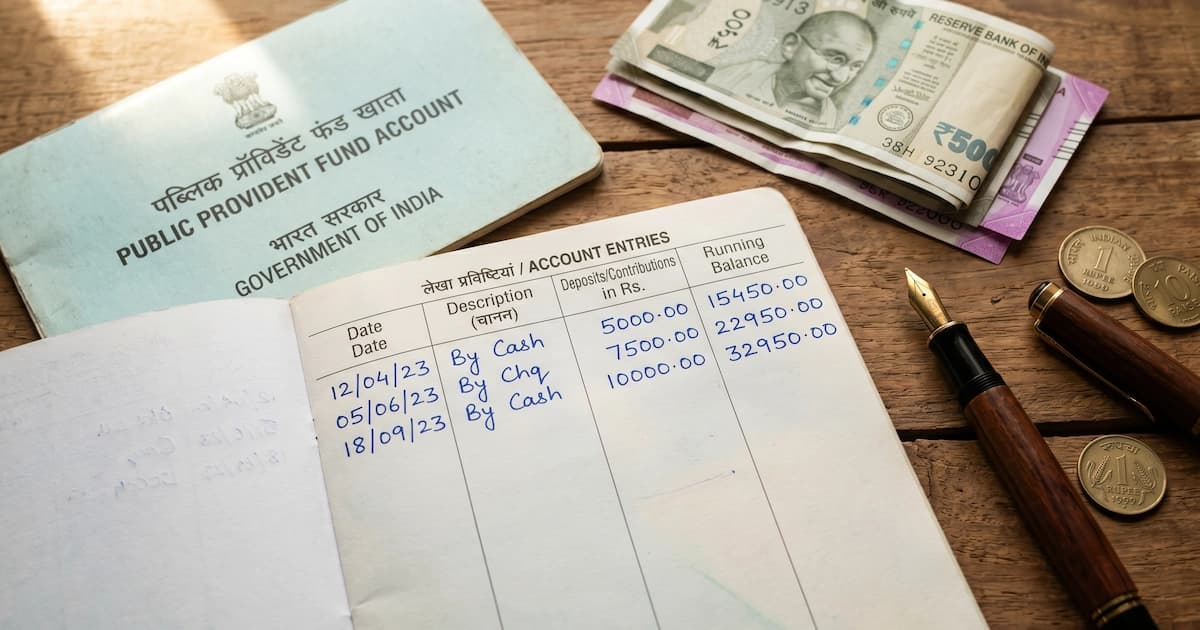
PPF pays 7.1% for Oct-Dec 2026, unchanged since 2020. See the Rs 500 to Rs 1.5 lakh limits, EEE tax, 15-year lock-in, withdrawal rules and a maturity example.
16 min read

NPS entry now runs to age 85, and non-government exits need only 20% annuity since December 2025. What the new tax regime allows, and what it takes away.
14 min read