Post Office Monthly Income Scheme 2026: 7.4% Interest Rate

By Tapabrata Biswas · Updated July 5, 2026 · 14 min read
Researched with AI assistance, reviewed and edited by Tapabrata Biswas.

The Post Office Monthly Income Scheme pays 7.4% a year as a monthly credit, turning a one-time deposit into a fixed monthly cheque for 5 years, then handing your money back in full. A single account holding the maximum Rs 9,00,000 pays Rs 5,550 every month; a joint account at the Rs 15,00,000 ceiling pays Rs 9,250. It is one of the few government-backed schemes built specifically for monthly income rather than growth.
This guide covers the current rate and where it comes from, exactly how much you get for each deposit size, who can open an account, the deposit limits, the tax treatment, the early-exit penalties, and how POMIS stacks up against SCSS and a bank fixed deposit. Every figure is educational, not personal advice about your money.
What is the Post Office Monthly Income Scheme?
The Post Office Monthly Income Scheme (POMIS) is a 5-year small-savings scheme from India Post that pays fixed monthly interest at 7.4% a year on a lump-sum deposit and returns the full principal at maturity. Its formal name is the National Savings (Monthly Income Account) Scheme, run by India Post under the Government Savings Promotion Act.
Three features set POMIS apart from the other post-office schemes:
The interest is paid out monthly, not reinvested. Unlike PPF or Sukanya Samriddhi (where interest compounds into the balance) or SCSS (which pays quarterly), POMIS credits interest every month to your post office savings account or a linked bank account. That monthly cadence is the whole point: it works like a salary from your savings.
It has no age bar. Any resident Indian can open one, from a working-age saver to a homemaker to a retiree. This is the structural difference from SCSS, which is limited to those 60 and older.
It is a post-office product. POMIS accounts are opened at India Post branches, not commercial banks, so the money sits inside the postal savings system.
What is the POMIS interest rate in 2026?
The POMIS interest rate is 7.4% per annum for the October to December 2026 quarter, unchanged since April 2023. Small-savings rates are set every quarter by the Ministry of Finance; the rate was held at 7.4% again in the notification of 30 September 2026 for the current quarter.
Two things matter about the rate. First, it is locked once you open the account: whatever rate applies on your opening date stays fixed for the full 5-year term, even if the government revises the quarterly rate later. Second, it is a simple, paid-out rate and not a compounding one, because the interest leaves the account every month and not growing on itself.
At 7.4%, POMIS sits above the band the RBI publishes for bank term deposits over a year, 6.0% to 6.7% as at July 2026 and below SCSS (8.2%, for those eligible). It is a government-backed rate, so the monthly income does not carry market risk.
How much monthly income does POMIS pay?
POMIS pays simple interest monthly, so the monthly income is the deposit multiplied by 7.4% and divided by 12. A Rs 9,00,000 deposit gives 9,00,000 x 0.074 / 12 = Rs 5,550 every month for 5 years, then the Rs 9,00,000 back. The table below shows the common deposit sizes at the current rate.
| Deposit | Monthly income | Annual income | Total interest over 5 years |
|---|---|---|---|
| Rs 1,00,000 | Rs 617 | Rs 7,400 | Rs 37,000 |
| Rs 2,00,000 | Rs 1,233 | Rs 14,800 | Rs 74,000 |
| Rs 5,00,000 | Rs 3,083 | Rs 37,000 | Rs 1,85,000 |
| Rs 9,00,000 (single max) | Rs 5,550 | Rs 66,600 | Rs 3,33,000 |
| Rs 15,00,000 (joint max) | Rs 9,250 | Rs 1,11,000 | Rs 5,55,000 |
The principal never changes. You draw the monthly interest and get the exact deposit back at the end, with no bonus. To model any amount, including the effect of a different future rate, use our Post Office Monthly Income Scheme calculator, which takes your deposit and account type and shows the monthly income, the 5-year total interest, and the maturity value.
Who can open a POMIS account?
POMIS is open to any resident Indian with no minimum or maximum age, which makes it the monthly-income scheme for people SCSS shuts out. The eligibility rules are short.
| Eligible | Conditions |
|---|---|
| Resident Indians (any age) | No minimum or maximum age limit |
| Minors above 10 | Can hold an account in their own name; a guardian opens it for a younger child |
| Joint holders | Up to 3 adults, sharing the deposit and the income equally |
| Not eligible | NRIs and Hindu Undivided Families (HUFs) |
Because there is no age bar, POMIS is the government-backed monthly-income option for a homemaker, a saver in their 40s or 50s with an inheritance or a property-sale corpus, or an early retiree not yet 60 and so not yet eligible for SCSS. It is the one scheme that converts a lump sum into a fixed monthly payout at a guaranteed rate for a person under 60.
What is the maximum deposit in POMIS?
The maximum POMIS deposit is Rs 9 lakh in a single account and Rs 15 lakh in a joint account, raised from Rs 4.5 lakh and Rs 9 lakh in Budget 2023. The minimum is Rs 1,000, and deposits are made in multiples of Rs 1,000.
| Parameter | POMIS rule |
|---|---|
| Minimum deposit | Rs 1,000 (multiples of Rs 1,000) |
| Maximum, single account | Rs 9,00,000 (Budget 2023) |
| Maximum, joint account | Rs 15,00,000 (Budget 2023) |
| Joint holders | Up to 3 adults, equal share |
| Overall cap | An individual's total across all their POMIS accounts stays within the single-account limit |
The joint-account ceiling is the practical maximum for a household: Rs 15,00,000 at 7.4% pays Rs 9,250 a month, and no single POMIS structure pays more than that. In a joint account the holders own the deposit equally, so each holder's share counts toward their own individual limit.
Do senior citizens get a higher POMIS rate?
No. POMIS pays a flat 7.4% to everyone, with no senior-citizen premium. This is worth stating plainly because it is widely misunderstood, and even some automated answers get it wrong. The extra rate that older savers expect exists on bank fixed deposits (usually 0.25% to 0.75% more for those 60 and older) and on the Senior Citizen Savings Scheme, which pays 8.2%. POMIS is not age-priced.
Where a senior does get an edge is tax, not rate. Section 80TTB lets a depositor aged 60 or older deduct up to Rs 50,000 of interest income a year across their schemes, which can shelter most or all of a modest POMIS payout. So the honest framing for a retiree is: POMIS pays you the same 7.4% as anyone else, but if you are 60-plus, more of that interest can stay untaxed, and SCSS at 8.2% is usually the better first home for retirement money anyway.
Can you withdraw POMIS before 5 years?
You cannot close a POMIS account in the first year at all; after that, closing early costs a penalty of 2% of the deposit in years 1 to 3 and 1% in years 3 to 5. At maturity the full principal comes back with no penalty.
| Closure timing | What happens |
|---|---|
| Within 1 year | Not allowed |
| Between 1 and 3 years | 2% of the deposit deducted |
| Between 3 and 5 years | 1% of the deposit deducted |
| At maturity (5 years) | Full principal returned, no penalty |
| On death of the depositor | Nominee receives full principal, no penalty |
A worked example makes the penalty concrete. Close a Rs 9,00,000 account at the 2-year mark and the 2% penalty deducts Rs 18,000, so you get back Rs 8,82,000 plus all the monthly interest you had already received. The monthly interest paid to you before closure is not clawed back; only the principal takes the percentage hit.
Is POMIS interest taxable?
POMIS interest is fully taxable at your slab rate as income from other sources, but no TDS is deducted, and the deposit does not qualify for Section 80C. You receive the full monthly credit and settle the tax yourself when you file.
For a depositor in the 30% slab earning Rs 66,600 a year on a Rs 9,00,000 deposit, roughly Rs 46,600 is left after tax. A senior in the same position can use the Section 80TTB deduction of up to Rs 50,000, which in this case leaves only about Rs 16,600 of the interest taxable. The absence of an 80C benefit is POMIS's main tax weakness against PPF, SSY, and SCSS, all of which give a deduction on the amount you put in.
POMIS vs SCSS vs a bank fixed deposit
For guaranteed monthly income, POMIS competes mainly with the Senior Citizen Savings Scheme and a bank monthly-income fixed deposit, and the right pick depends on your age and how much you have. This is the comparison retirees actually need, rather than the mutual-fund comparisons most pages show.
| Factor | POMIS | SCSS | Bank monthly-income FD |
|---|---|---|---|
| Who can open | Any age | 60+ (some early-retiree exceptions) | Any age |
| Current rate | 7.4% | 8.2% | 6.0% to 6.7% (RBI, Jul 2026) |
| Maximum | Rs 9L single / Rs 15L joint | Rs 30 lakh | Bank-defined, often large |
| Income frequency | Monthly | Quarterly | Monthly or quarterly |
| Tenure | 5 years (fixed) | 5 years (+3-year extension) | 1 to 10 years, your choice |
| 80C on deposit | No | Yes (Rs 1.5L cap) | Only a 5-year tax-saver FD |
| TDS on interest | No | Yes, above Rs 50,000 | Yes, above Rs 50,000 (senior limit) |
| Backing | Government | Government | DICGC insured to Rs 5 lakh |
The pattern most retirees land on: if you are 60 or older, fill SCSS first for the higher 8.2% and the 80C deduction, then use POMIS for the next slice up to Rs 15 lakh, then a bank FD for anything beyond. If you are under 60, SCSS is closed to you, so POMIS becomes the highest-yielding government-backed monthly-income option available. For the retirement-account route and not a fixed monthly payout, see the National Pension System; for a lump sum you want to grow rather than draw, see PPF or NSC vs KVP.
Frequently asked questions
What is the current POMIS interest rate in 2026? The POMIS interest rate is 7.4% per annum for the October to December 2026 quarter, the same rate it has held since April 2023. Small-savings rates are reviewed every quarter by the Ministry of Finance, but once you open a POMIS account the rate is locked for the full 5-year term regardless of later revisions. Interest is credited monthly, not compounded, so 7.4% on Rs 9 lakh works out to Rs 5,550 every month.
How much monthly income will I get for Rs 5 lakh in POMIS? At 7.4%, a Rs 5,00,000 deposit pays about Rs 3,083 a month (5,00,000 x 0.074 / 12) for 5 years, then returns the Rs 5,00,000 in full. For other amounts at 7.4%: Rs 1 lakh pays about Rs 617 a month, Rs 2 lakh about Rs 1,233, Rs 9 lakh (single maximum) Rs 5,550, and Rs 15 lakh (joint maximum) Rs 9,250. You can model any deposit with our POMIS calculator.
Do senior citizens get a higher interest rate in POMIS? No. POMIS pays a flat 7.4% to everyone regardless of age. There is no senior-citizen premium. The higher senior rate that people expect exists on bank fixed deposits (usually 0.25% to 0.75% extra for those 60 and older) and on the Senior Citizen Savings Scheme (SCSS) at 8.2%, but not on POMIS. Where age does help a senior POMIS holder is tax: Section 80TTB lets those 60 and older deduct up to Rs 50,000 of interest income a year.
Can I withdraw POMIS before 5 years, and what is the penalty? You cannot close a POMIS account in the first year at all. Between 1 and 3 years, closing deducts 2% of the deposit as a penalty; between 3 and 5 years, 1% of the deposit. For example, closing a Rs 9,00,000 account at the 2-year mark deducts 2%, or Rs 18,000, returning Rs 8,82,000 plus the monthly interest already received. On the death of the depositor, the nominee receives the full principal with no penalty.
Is Post Office Monthly Income Scheme interest taxable? Is TDS deducted? The interest is fully taxable as income from other sources at your slab rate, and you must declare it in your return. However, no TDS is deducted, so you receive the full monthly credit and settle the tax yourself at filing. POMIS deposits do not qualify for a Section 80C deduction. Depositors aged 60 and older can shield up to Rs 50,000 of interest a year under Section 80TTB.
What is the maximum deposit in POMIS (single vs joint)? Rs 9 lakh in a single account and Rs 15 lakh in a joint account of up to three adults, raised from Rs 4.5 lakh and Rs 9 lakh in Budget 2023. The minimum is Rs 1,000, in multiples of Rs 1,000. In a joint account the holders share the deposit equally, and an individual's total across all their POMIS accounts is capped at the single-account limit. The Rs 15 lakh joint ceiling produces the highest monthly income POMIS allows, Rs 9,250.
Which is better, POMIS or SCSS? For a retiree aged 60 or older, SCSS is usually better first: it pays a higher 8.2%, allows up to Rs 30 lakh, and its deposit qualifies for an 80C deduction. POMIS is the option for everyone else, since it has no age bar, and for money left over after SCSS is maxed. POMIS pays monthly while SCSS pays quarterly, so POMIS also suits people who specifically want a monthly cheque rather than a quarterly one.
Can I open a POMIS account online? POMIS is an India Post product, and account opening has traditionally been done at a post office branch with a savings account, KYC documents, and the deposit. India Post's internet banking and the IPPB app support some post-office savings operations, but the account-opening flow for POMIS is still largely branch-based. Check the current facility at your post office or on the India Post site, as digital coverage is expanding.
Can NRIs invest in POMIS? No. POMIS is open only to resident Indians. Non-resident Indians (NRIs) and Hindu Undivided Families (HUFs) cannot open a POMIS account. If a resident holder becomes an NRI during the 5-year term, the standard small-savings rules on non-resident status apply, so the account is generally not continued as a resident POMIS beyond that point.
What happens to POMIS at maturity? Can I reinvest? At the end of the 5 years the full principal is returned; there is no maturity bonus (the 5% bonus applied only to accounts opened between December 2007 and November 2011). POMIS does not auto-renew, so to continue you open a fresh account at the rate prevailing then, which may differ from 7.4%. Many holders route the maturity amount straight into a new POMIS or into SCSS if they have since turned 60.
In summary
POMIS is a 5-year India Post scheme that pays a fixed 7.4% a year, credited monthly, on a lump sum of up to Rs 9 lakh (single) or Rs 15 lakh (joint), and returns your principal in full at the end. It is open to every resident Indian regardless of age, which makes it the monthly-income scheme for under-60s and homemakers, while SCSS at 8.2% is the better first choice for those 60 and older. The interest is taxable at your slab with no TDS and no 80C, and the same 7.4% applies to everyone, with no senior premium. For the full set of small-savings options side by side, see our Indian government savings schemes overview, and to check the monthly income on your own number, use the POMIS calculator.
Sources
- India Post, National Savings (Monthly Income Account) Scheme, indiapost.gov.in
- Ministry of Finance, Department of Economic Affairs, Small Savings Schemes Quarterly Rate Notifications, dea.gov.in
- Income Tax Department of India, Section 80TTB and Interest Taxation, incometax.gov.in
- Reserve Bank of India, Master Direction on Small Savings, rbi.org.in



You might also like

SCSS pays 8.2% for the Oct-Dec 2026 quarter, held since April 2023. The ₹30 lakh cap, quarterly payout, 5+3 year lock-in, 80C, and the new ₹1 lakh TDS rule.
16 min read
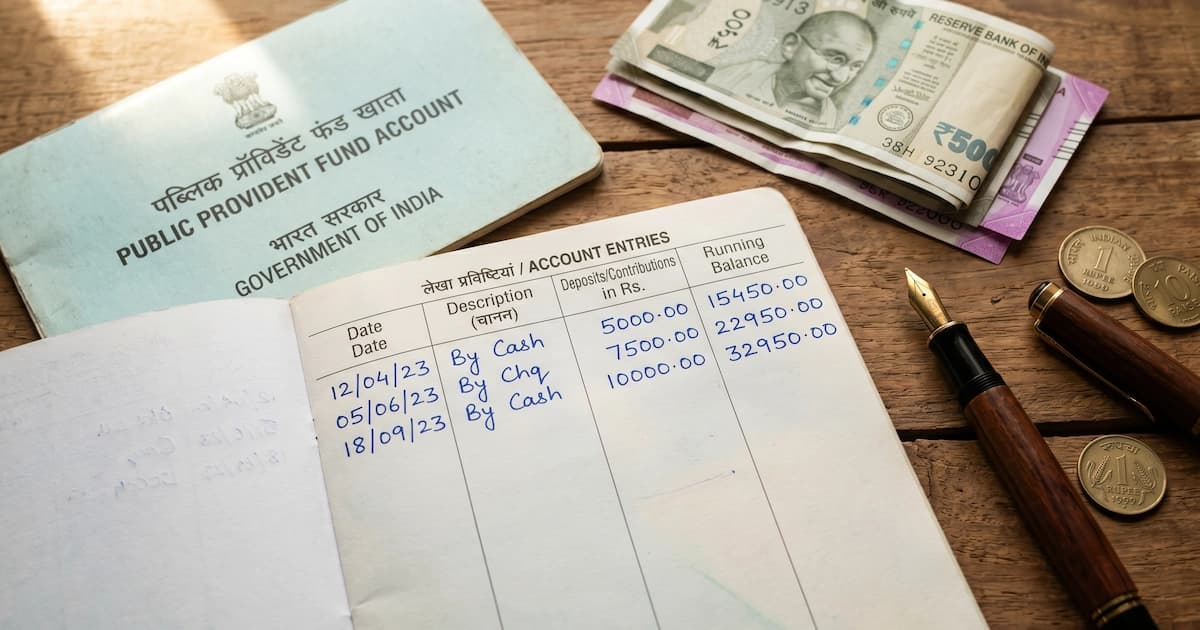
PPF pays 7.1% for Oct-Dec 2026, unchanged since 2020. See the Rs 500 to Rs 1.5 lakh limits, EEE tax, 15-year lock-in, withdrawal rules and a maturity example.
16 min read
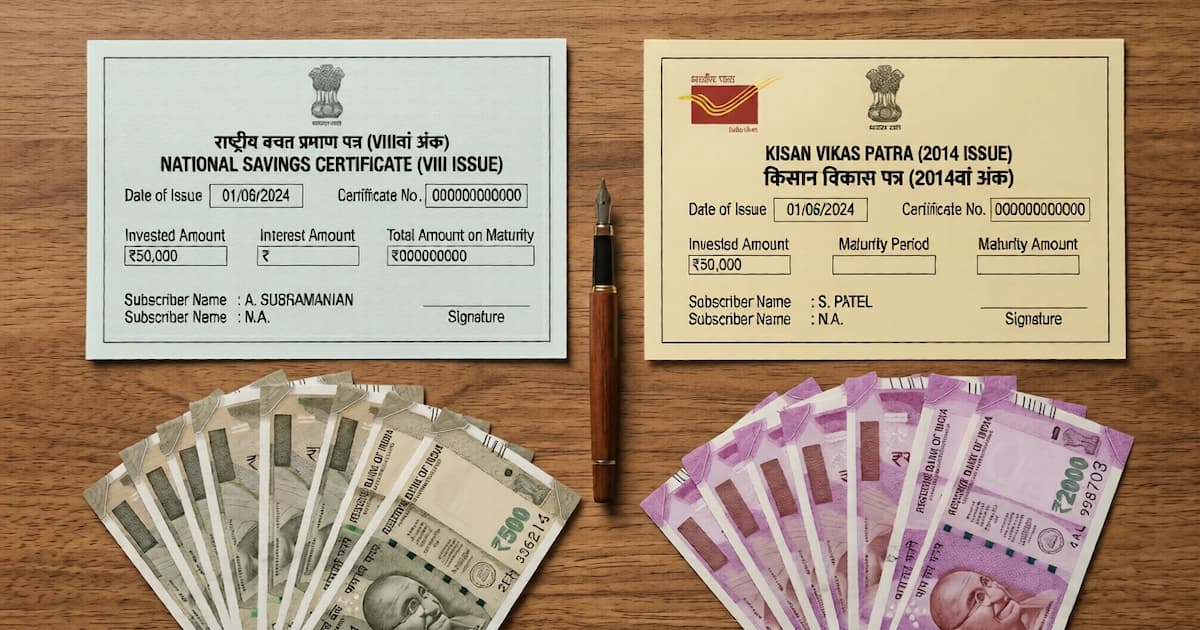
NSC pays 7.7% with an 80C tax break; KVP pays 7.5% and doubles your money in 115 months. Current Oct-Dec 2026 rates, tax, and a worked comparison.
15 min read