What Is Atal Pension Yojana? Eligibility, Cost, Payout

By Tapabrata Biswas · Updated July 19, 2026 · 14 min read
Written and fact-checked by Tapabrata Biswas. How I write

Every page about Atal Pension Yojana reproduces the same contribution table. Join at 18 and a ₹5,000 pension costs ₹210 a month. Join at 40 and the same pension costs ₹1,454. Nine of the nine ranking pages we read print those numbers. None explains them.
The explanation is worth more than the table. The monthly figure rises about 6.9 times across that span, but the total amount paid in rises only about 3.3 times, because the 18-year-old contributes for 42 years and the 40-year-old for 20. Both receive the identical pension, and both leave the identical corpus to a nominee.
There's a second thing most pages get wrong, and this one costs people an application. Income tax payers can't join APY, and the scheme document disqualifies anyone who is or has been an income-tax payer. Five of the nine pages either omit that rule or confuse it with a different, expired one.
What follows covers what APY is, who's actually eligible, what it costs and why, what the government guarantees, what happens when a contribution is missed, and what the nominee receives.
What is the Atal Pension Yojana?
Atal Pension Yojana is a government-guaranteed pension scheme that pays a fixed monthly amount from age 60, funded by small periodic contributions during working life. The scheme document describes it as a voluntary, periodic contribution-based pension system.
It was launched on 9 May 2015 and has been implemented with effect from 1 June 2015, administered by the Pension Fund Regulatory and Development Authority, the same regulator that oversees the National Pension System. PFRDA's own framing names the intended audience plainly: all citizens of India, especially the poor, the under-privileged and workers in the unorganised sector.
Five pension slabs exist, at ₹1,000, ₹2,000, ₹3,000, ₹4,000 and ₹5,000 a month, chosen when the account opens. The pension starts at 60 regardless of when a subscriber joined, and contributions are auto-debited from a linked savings bank account monthly, quarterly or half-yearly.
The scheme has grown large. The Ministry of Finance recorded APY crossing 9 crore gross enrolments on 21 April 2026, with 1.35 crore added during FY 2025-26, the highest in any single year since inception.
Who can join APY, and who can't?
Any Indian citizen aged 18 to 40 with a savings bank or post office account can join, unless they are or have been an income tax payer. That exclusion took effect on 1 October 2022, under a gazette notification dated 10 August 2022.
Two words in the scheme document do the work: "is or has been." The bar isn't current tax status. Someone who filed a return years ago and has since fallen below the threshold is still disqualified, which is not how most explainers describe it. Only one of the nine ranking pages we read reproduces that nuance.
The document also carries a consequence clause that almost nobody quotes. If a subscriber who joined on or after 1 October 2022 is later found to have been an income-tax payer on or before their application date, the APY account is closed and the accumulated pension wealth to that date is returned to them. So the rule isn't merely a gate at enrolment; it's checkable afterwards.
Anyone who joined on or before 30 September 2022 keeps their account whatever their tax status became later. And a separate, expired rule causes real confusion: the government co-contribution of the scheme's early years was available only to subscribers joining before 31 March 2016, and several pages conflate that old income-tax condition with today's eligibility bar. They're different rules from different eras.
What does APY cost, and why does entry age matter so much?
The monthly contribution ranges from ₹42 to ₹1,454, set by entry age and chosen pension slab, and it stays fixed for the entire subscription period.
| Entry age | ₹1,000 pension | ₹5,000 pension | Years contributing |
|---|---|---|---|
| 18 | ₹42 | ₹210 | 42 |
| 25 | ₹76 | ₹376 | 35 |
| 30 | ₹116 | ₹577 | 30 |
| 35 | ₹181 | ₹902 | 25 |
| 40 | ₹291 | ₹1,454 | 20 |
Now the part the ranking pages leave out. Run the arithmetic on total outlay for the ₹5,000 pension:
| Entry age | Monthly | Months paid | Total contributed |
|---|---|---|---|
| 18 | ₹210 | 504 | ₹1,05,840 |
| 40 | ₹1,454 | 240 | ₹3,48,960 |
The monthly figure is 6.9 times larger for the 40-year-old. The lifetime outlay is only 3.3 times larger. And the nominee receives the same ₹8.5 lakh corpus in both cases, for the same ₹5,000 monthly pension.
There's a further twist in the rate itself. Our APY calculator runs the whole cash flow, contributions in against pension and corpus out, and the return lands near 8% a year whichever age you enter at: 7.99% joining at 18 and 7.79% joining at 40. The chart was built that way. So entry age changes what the pension costs you, not what it earns.
So the chart isn't really describing a price difference of nearly seven times. It's describing the same actuarial target funded over two very different periods, with compounding doing progressively less work as the window shrinks. Whether that arithmetic is favourable depends entirely on a person's circumstances, and the scheme prices it identically for everyone in a given age band.
What does the government actually guarantee?
The central government guarantees the pension amount, committing to fund any shortfall if investment returns fall short. The scheme document states that if the accumulated corpus earns a lower-than-estimated return on investment and is inadequate to provide the minimum guaranteed pension, the central government would fund such inadequacy.
Two consequences follow. The subscriber's contribution never changes because investments underperformed, which is what separates APY structurally from a market-linked product where the payout floats with the corpus. And the guarantee is asymmetric in the subscriber's favour: if returns exceed what the guarantee needs, the subscriber may receive more than the slab promises.
This is the feature that makes APY a defined-benefit scheme in substance. The subscriber carries no investment risk at all, and PFRDA does the fund management without any choice offered to, or required from, the account holder.
What happens if you miss a contribution?
PFRDA states that banks collect ₹1 for every ₹100 of contribution, or part thereof, per month, for each delayed monthly contribution. That's a rate applied to the size of the contribution.
It replaces a banded penalty table of ₹1, ₹2, ₹5 and ₹10 by contribution size that several comparison pages still publish, and one insurer's page prints that superseded table with ₹0 in its top band, which is wrong under either version.
The more useful correction concerns closure. The NPS Trust states that an APY account never gets closed due to non-payment of contributions by the subscriber. Two commercial pages we read describe a freeze at six months and termination at twelve, and one adds automatic closure at twenty-four. The government's own explainer negates the premise. What actually happens is that account maintenance charges keep debiting the balance, and a subscriber can regularise later by paying the overdue contributions with interest, which is credited into their own pension corpus.
Can you exit before 60?
Two government sources answer this differently, and the disagreement is worth knowing about before relying on either.
PFRDA's APY FAQ states that voluntary exit is permitted, with the subscriber receiving the contributions they made along with accrued income. The NPS Trust's APY page states that exit before 60 isn't permitted except in cases of death or terminal illness.
The scheme document sits closer to PFRDA's position, since it describes what a voluntary exit actually pays: the subscriber's own contributions plus net actual interest earned on them, after deducting account maintenance charges. It adds a specific forfeiture. Where a subscriber received the government co-contribution, that amount and the interest earned on it aren't returned.
We can't resolve a contradiction between two official sources from outside, and the governing PFRDA circular on voluntary exit is published only as a PDF we couldn't extract. The bank administering the account is the right place to confirm what applies to a particular case.
What does the nominee receive?
On the subscriber's death after 60, the spouse receives the same monthly pension for life, and after both die the nominee receives the corpus accumulated to the subscriber's 60th birthday. Those corpus amounts are fixed by slab.
| Pension slab | Corpus returned to nominee |
|---|---|
| ₹1,000 | ₹1.7 lakh |
| ₹2,000 | ₹3.4 lakh |
| ₹3,000 | ₹5.1 lakh |
| ₹4,000 | ₹6.8 lakh |
| ₹5,000 | ₹8.5 lakh |
If the subscriber dies before 60, the spouse has the option to continue contributing to the account for the remaining vesting period, until the date the original subscriber would have turned 60. That keeps the pension itself alive, where the alternative would collapse the account into a refund.
Read alongside the outlay table above, the corpus figures reveal something about how the scheme is built. A subscriber entering at 40 pays ₹3,48,960 for the ₹5,000 slab and leaves a ₹8.5 lakh corpus; one entering at 18 pays ₹1,05,840 for the same corpus and the same pension. The difference is time, and the guarantee absorbs whatever the investments do in between.
How is APY actually being used?
Roughly 87% of APY subscribers hold the smallest ₹1,000 pension slab, a concentration that appears on none of the nine evergreen pages we read.
Against 9 crore gross enrolments, that tells you the scheme is functioning as designed, though seldom as described. Most explainers lead with the ₹5,000 figure and its ₹8.5 lakh corpus. The typical subscriber is signed up for ₹1,000 a month and a ₹1.7 lakh corpus, at a contribution most often between ₹42 and ₹291 depending on when they joined.
For where APY sits among India's other retirement and savings schemes, our government schemes overview maps the full set, and the Employee Provident Fund explainer covers the workplace-linked alternative. The parallel insurance schemes under the same Jan Suraksha umbrella are in PMJJBY vs PMSBY.
What this post deliberately does not cover
This describes how a government scheme works. It doesn't recommend APY, a pension slab, or an entry age to anyone, and the outlay arithmetic exists to explain the contribution chart, never to argue for a course of action.
Pension and retirement decisions depend on income, existing coverage, tax status and family circumstances that no article can see. A qualified financial adviser or the bank administering the account is the right place for advice on a specific situation.
Three sourcing limits are worth stating. The gazette notification behind the taxpayer exclusion is dated 10 August 2022 per PFRDA's FAQ, but we could not retrieve the notification itself, so we cite the date and no notification number. PFRDA's circular on voluntary exit is published as a PDF that wouldn't extract, which is why the exit contradiction above stays unresolved. And a PFRDA proposal to raise the pension ceiling above ₹5,000 has been reported, but we found no primary document confirming it, so this post treats the five existing slabs as current.
Frequently asked questions
Who is eligible for Atal Pension Yojana? Any Indian citizen aged 18 to 40 with a savings bank or post office account, provided they are not and have never been an income tax payer. The scheme document is specific on that last point: from 1 October 2022, any citizen who is or has been an income-tax payer is not eligible to join. The wording matters because it disqualifies people on filing history, not only on current tax status. It also carries a consequence clause. If someone who joined on or after 1 October 2022 is later found to have been a taxpayer on or before the date of application, the APY account is closed and the accumulated pension wealth is returned to them. Subscribers who joined on or before 30 September 2022 are unaffected regardless of their tax status since.
How much does Atal Pension Yojana cost per month? Between Rs 42 and Rs 1,454 a month, depending on entry age and chosen pension. For the Rs 1,000 pension, a subscriber joining at 18 pays Rs 42 a month and one joining at 40 pays Rs 291. For the Rs 5,000 pension, the same ages pay Rs 210 and Rs 1,454. The contribution is fixed for the whole subscription period and is auto-debited from the linked bank account monthly, quarterly or half-yearly. The steep rise with entry age reflects the contribution period rather than the benefit: someone joining at 18 contributes for 42 years, while someone joining at 40 contributes for 20.
What does the government actually guarantee under APY? The pension amount, and the guarantee is a funding commitment rather than a target. The scheme document states that if the accumulated corpus earns a lower-than-estimated return on investment and is inadequate to provide the minimum guaranteed pension, the central government would fund such inadequacy. So the subscriber's monthly contribution stays fixed whatever the investments do, and the promised Rs 1,000 to Rs 5,000 arrives regardless. The guarantee runs the other way too: if returns exceed what the guarantee requires, the subscriber may receive a higher pension than the slab promises.
What happens if you miss an APY contribution? A late fee accrues, but the account survives. PFRDA states that for each delayed monthly contribution, banks collect Rs 1 for every Rs 100 of contribution, or part thereof, per month. That is a rate applied to the contribution size, and it replaces an older banded table of Rs 1, Rs 2, Rs 5 and Rs 10 that several comparison pages still reproduce. On closure, the NPS Trust is explicit that an APY account never gets closed due to non-payment of contributions by the subscriber. Account maintenance charges continue to debit the balance, and a subscriber can regularise by paying the overdue contributions with interest, which is credited to their own pension corpus.
What does the nominee receive if the subscriber dies? It depends on when the death occurs, and the family is covered at every stage. If the subscriber dies after 60, the spouse receives the same monthly pension until their own death. After both die, the nominee receives the pension wealth accumulated to the subscriber's age of 60. Those corpus amounts are fixed by slab: Rs 1.7 lakh for the Rs 1,000 pension, rising through Rs 3.4 lakh, Rs 5.1 lakh and Rs 6.8 lakh to Rs 8.5 lakh for the Rs 5,000 pension. If the subscriber dies before 60, the spouse has the option to continue contributing to the account for the remaining vesting period until the subscriber would have turned 60.
Can you exit Atal Pension Yojana before 60? Two government sources give different answers, which is worth knowing before relying on either. PFRDA's own APY FAQ states that voluntary exit is permitted, with the subscriber receiving the contributions they made along with accrued income. The NPS Trust's APY page states that exit before 60 is not permitted except in cases of death or terminal illness. The scheme document does describe what a voluntary exit pays: contributions plus net actual interest earned, after deducting account maintenance charges, and it specifies that any government co-contribution and the interest on it are not returned. Given two official sources conflict, the bank administering the account is the right place to confirm what applies to a specific case.
Sources
-
Ministry of Finance, Atal Pension Yojana Scheme Document, jansuraksha.gov.in (launch dates, pension slabs, eligibility, the is-or-has-been taxpayer clause and its consequence provision, the government guarantee wording, death benefits and voluntary-exit forfeiture) jansuraksha.gov.in
-
Pension Fund Regulatory and Development Authority, Frequently Asked Questions on Atal Pension Yojana, page updated 21 August 2025 (the Rs 1 per Rs 100 per month late fee, the 10 August 2022 gazette date, the pre-31 March 2016 co-contribution window, and the voluntary-exit position) pfrda.org.in
-
NPS Trust, About APY, page updated 16 July 2026 (the taxpayer exclusion from 1 October 2022, and the statement that an APY account never closes for non-payment) npstrust.org.in
-
Press Information Bureau, Ministry of Finance, Atal Pension Yojana Crosses Historic Milestone, 22 April 2026 (9 crore gross enrolments on 21 April 2026, and 1.35 crore added in FY 2025-26) pib.gov.in



You might also like

NPS entry now runs to age 85, and non-government exits need only 20% annuity since December 2025. What the new tax regime allows, and what it takes away.
14 min read
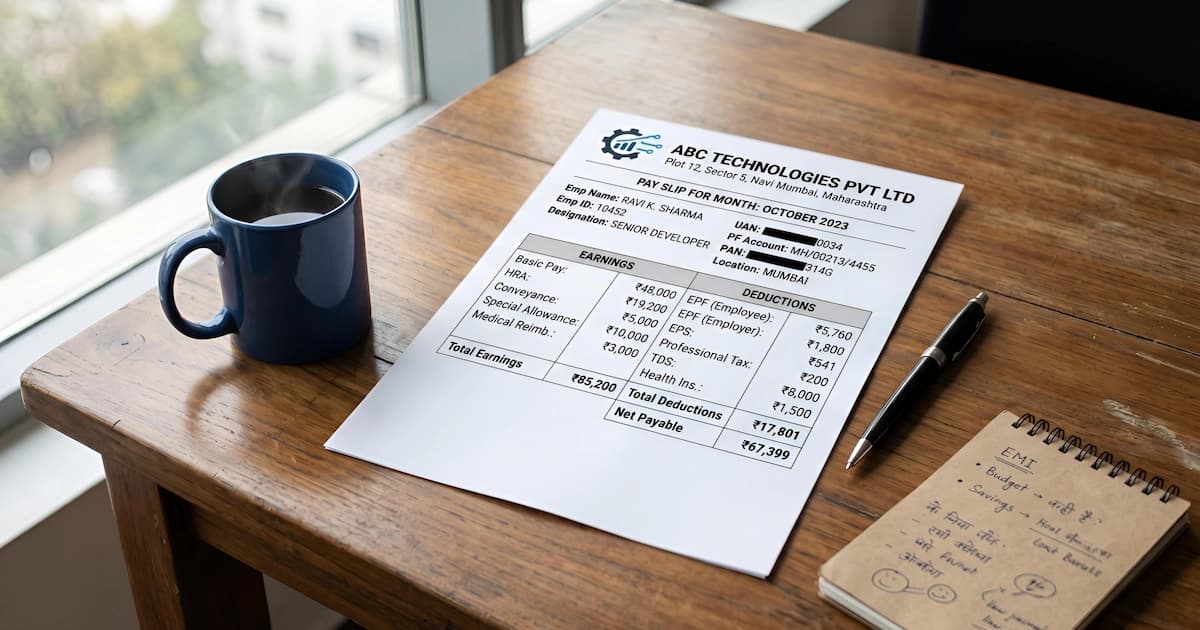
What is EPF? The 8.25% FY 2025-26 interest rate, the 12% + 12% contribution split, the new EPF Scheme 2026 withdrawal rules, and the tax treatment explained.
19 min read
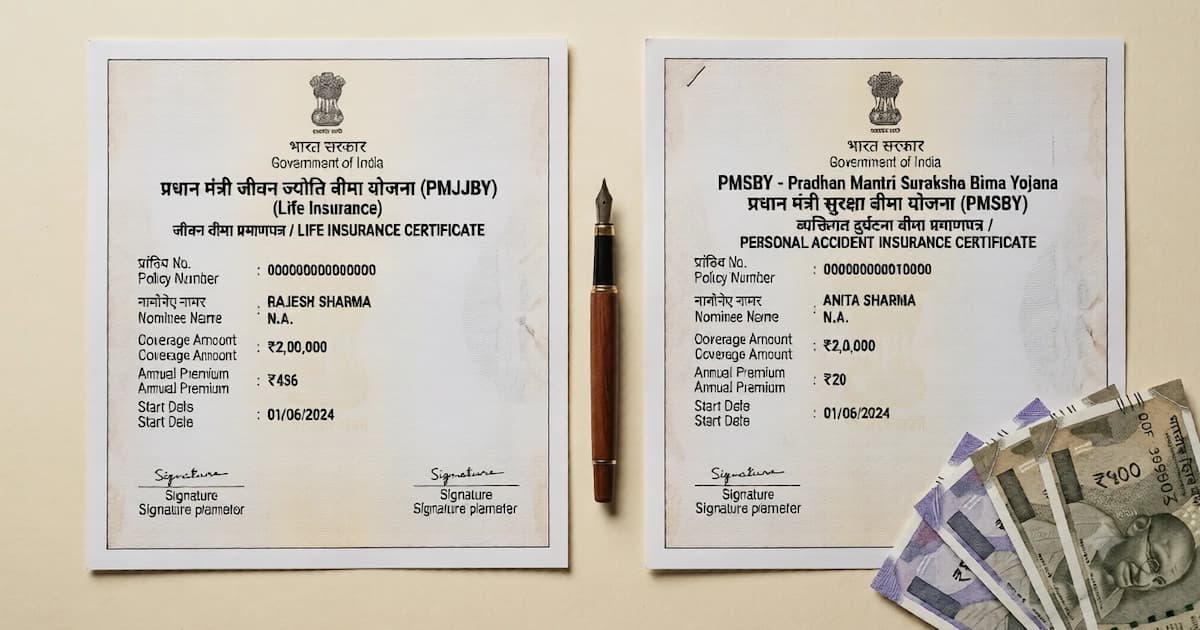
PMJJBY vs PMSBY on cover, premium and claims, plus what the scheme rules actually say about refunds, leaving, and the 30-day lien most pages skip.
20 min read