Budgeting Methods Explained: 10 Types Compared

By Tapabrata Biswas · Updated July 14, 2026 · 17 min read
Researched with AI assistance, reviewed and edited by Tapabrata Biswas.
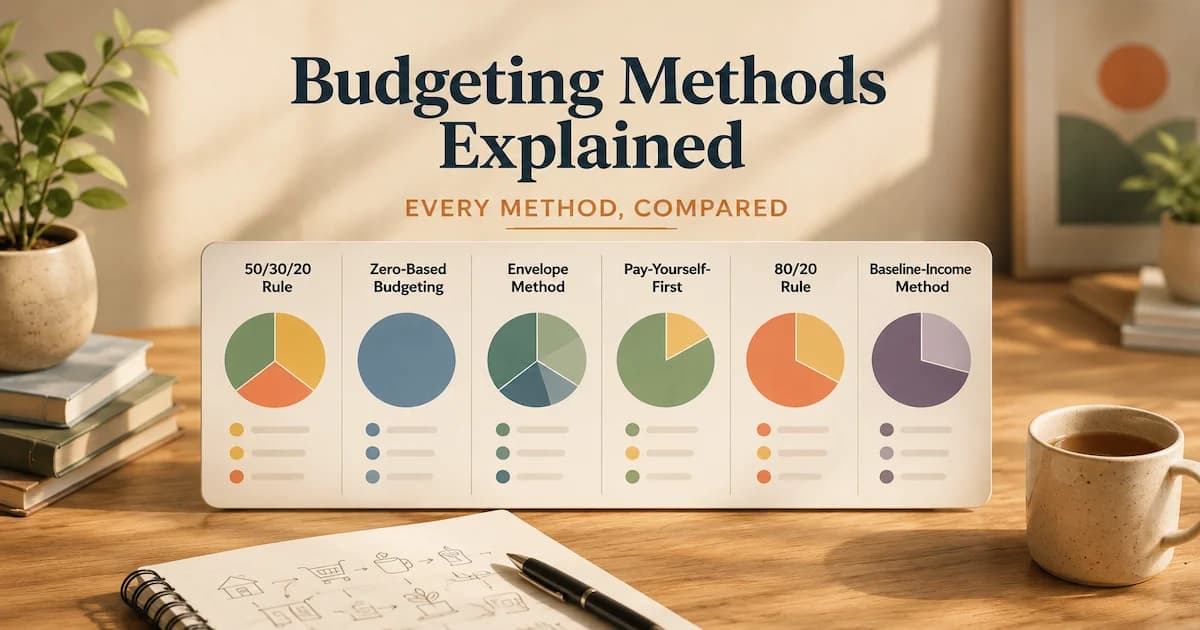
Most budgeting guides hand you a single method and call it the answer. The trouble is that the method that works for a salaried worker with steady pay quietly fails a freelancer, and the one that suits a natural saver frustrates someone who overspends. There are roughly ten named budgeting methods in common use, and they aren't interchangeable. This page lays all of them out side by side, with worked examples in both ₹ and $, so you can start from your situation and pick the method that fits it. Budgeting is step one of a longer sequence, and our beginner's guide to managing money in order shows where it sits and what comes next.
It's an explainer of how the methods work and who each one fits. It isn't a recommendation of any product or a substitute for advice on your specific finances.
What is a budgeting method?
A budgeting method is a structured system for dividing your income across spending, saving, and debt so that every rupee or dollar has a defined job. The methods differ in how rigid that division is, whether it runs on percentages or on cash, and whether it asks you to plan every unit or just protect the savings.
This page is about personal and household budgeting. Corporate budgeting methods that share some of the same names, incremental budgeting, activity-based budgeting, and the department-level version of zero-based budgeting that Peter Pyhrr formalized in 1970, solve a different problem for organizations and are out of scope here. For a household, the job is simpler: income arrives, and without a system, spending expands to absorb it.
What every budgeting method has in common
Every budgeting method, however different the rules look, does the same three things: it separates needs from wants, it gives your income a plan before it's spent, and it forces a regular check that spending hasn't outrun income. Some run on percentages, some on physical cash, some on a handwritten ledger. Underneath, all of them replace drift with a decision about where money goes.
There's an honest fourth thing they share, and it's the one the listicles skip. The best method isn't the most precise one. It's the one you'll still be using in month three, which is where most budgets quietly die. Sustainability beats accuracy. A rough budget you keep really does beat a perfect one you abandon, and that single truth is why "what's the best budgeting method" has no universal answer.
Every budgeting method at a glance
Each split-based method below runs on the same two take-home incomes, ₹80,000 per month and $4,000 per month, so they're genuinely comparable. Kakeibo and the budget-by-paycheck method work by tracking and timing, so they sit in their own sections further down.
| Method | How it splits income | Best for | Where it breaks | On ₹80,000 |
|---|---|---|---|---|
| 50/30/20 | 50% needs, 30% wants, 20% savings or debt | Steady income, low effort | Metros where needs top 50% | ₹40,000 / ₹24,000 / ₹16,000 |
| Zero-based | Every unit gets a job until income minus spending is zero | Debt payoff, full control | Busy people (high upkeep) | All ₹80,000 assigned |
| Envelope / cash stuffing | Cash split into category envelopes; empty envelope stops spending | Overspenders, cash thinkers | Autopay bills, online spend | Cash per category |
| Pay-yourself-first | Save a fixed share first, spend the rest freely | Anyone who never saves | Very tight months | ₹16,000 saved, ₹64,000 to live |
| 80/20 (savings-first) | 20% saved, 80% for everything else | Complete beginners | Heavy debt loads | ₹16,000 / ₹64,000 |
| 70/20/10 | 70% living, 20% savings, 10% debt or giving | High cost-of-living areas | Big savings goals | ₹56,000 / ₹16,000 / ₹8,000 |
| 6-jars | 55% needs, then 10/10/10/10, 5% giving | Building saving and giving habits | Tight budgets (6 accounts) | ₹44,000 needs + five smaller jars |
| Baseline-income | Budget against your lowest expected month | Freelancers, gig, commission | Early months, before you have data | Budget the low month, bank surplus |
The table shows why "best budgeting method" is the wrong question. A method is only as good as its fit. The next section turns that fit into a quick lookup.
Which budgeting method should you use?
Match the method to your situation, not to its popularity. The choice comes down to how stable your income is, how much control you want, and how much effort you'll realistically keep up. Find the row that sounds like you.
| Your situation | Method that fits | Why |
|---|---|---|
| Steady salary, want minimum effort | 50/30/20 or 80/20 | Three numbers, no daily tracking |
| Paying off debt, want full control | Zero-based | Every unit gets assigned, nothing drifts |
| Overspend on cards | Envelope / cash stuffing | A hard cash cap makes overspending visible |
| Earn enough but never save | Pay-yourself-first | Automates saving before you can spend it |
| Paid every two weeks | Budget-by-paycheck | Plans each check separately |
| Irregular or freelance income | Baseline-income + tax set-aside | Budgets the low month, banks the rest |
| Want spending awareness | Kakeibo | Writing each purchase down slows spending |
| Want to force saving and giving | 6-jars | Dedicated jars for investing and charity |
| Hate tracking entirely | Anti-budget (80/20) | One rule, everything else is free spending |
None of these is permanent. Plenty of people start with 50/30/20 to learn the shape of their spending, then move to zero-based once they want tighter control. The first budget is research, not a contract.
The 50/30/20 rule
The 50/30/20 rule splits after-tax income into 50% needs, 30% wants, and 20% savings or debt repayment. Elizabeth Warren and her daughter Amelia Warren Tyagi introduced it in their 2005 book All Your Worth, and it stays the most popular method because it needs only three numbers and no detailed category tracking.
On ₹80,000 take-home that's ₹40,000 for needs, ₹24,000 for wants, and ₹16,000 to savings. On $4,000 it's $2,000, $1,200, and $800. It fits people with steady income who want a simple frame. Where it breaks is high-cost cities, where rent alone can push needs well past 50%. The full mechanics and the fixes for that case are in the 50/30/20 rule explained.
Zero-based budgeting
Zero-based budgeting assigns every unit of income a specific job until income minus expenses equals zero. The zero doesn't mean you spend everything; savings and investing are jobs too. It means nothing is left unassigned, so no money drifts away uncategorized.
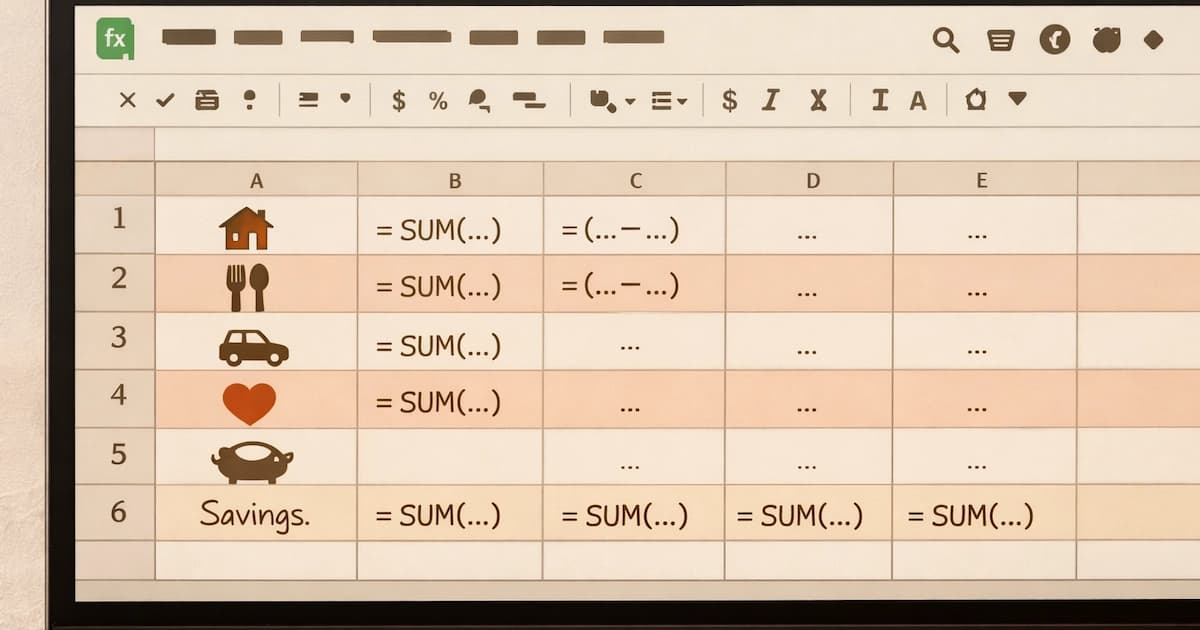
It gives the most control of any method, which makes it the strongest choice for paying down debt or for anyone who wants to see exactly where every rupee goes. The cost is upkeep: it asks for a few minutes of attention through the month, so it can overwhelm busy people who'd do better with a lighter system. The step-by-step build is in what is zero-based budgeting, and it pairs naturally with a budget in Google Sheets for the running math.
The envelope method, and cash stuffing
The envelope method allocates cash into labeled envelopes for each spending category, and when an envelope is empty, spending in that category stops for the month. The friction of handling physical cash is the entire point: it makes overspending visible and uncomfortable in a way a card swipe never is.
Cash stuffing is the same method under a newer name. It went viral on TikTok around 2021, popularized by creator Jasmine Taylor, whose Baddies and Budgets brand turned the trend into a real business. The mechanic is identical to the cash envelope system your grandparents may have used. It's the strongest method for people who overspend and who think better in cash than in numbers on a screen. Where it breaks is modern bill-paying: autopay utilities, subscriptions, and UPI or card spending don't fit into cash envelopes, so most people run it as a hybrid, cash for the categories they overspend and digital for fixed bills. Digital cash stuffing recreates the envelopes inside an app for people who don't want to carry notes around. The full method, including the digital version, is in the envelope budgeting method.
Pay-yourself-first, and reverse budgeting
Pay-yourself-first means moving a fixed amount to savings before you pay any bills or spend on anything else. It flips the usual order, where saving happens with whatever is left and usually isn't. By automating one transfer on payday, saving becomes a default, no longer a monthly act of willpower.
Reverse budgeting is the same method under a third name: fund savings and investing first, then spend the rest without tracking categories. It suits anyone who earns enough to cover essentials but never seems to save, because it removes the decision entirely. On ₹80,000 you might auto-transfer ₹16,000 the day you're paid and live on the ₹64,000 that remains. It struggles only in genuinely tight months where there's no slack to move. The setup is covered in the pay-yourself-first method.
Kakeibo, the Japanese pen-and-paper method
Kakeibo is a Japanese budgeting method that logs every expense by hand in a physical ledger and reviews it against four monthly questions. The name means "household financial ledger." It was introduced in 1904 by Hani Motoko, Japan's first female journalist, and popularized in the West by Fumiko Chiba's 2018 book Kakeibo: The Japanese Art of Saving Money.
The four questions structure every month: how much money do you have, how much would you like to save, how much are you spending, and how can you improve. Spending sorts into four buckets, needs, wants, culture, and unexpected, with that "culture" bucket for books, music, and the arts being a genuinely unusual category no percentage rule includes. The handwriting is deliberate. Writing each purchase down forces a pause an app's automatic sync removes, and that pause is where the awareness comes from. None of the big US budgeting guides name kakeibo as a method, which is odd given how much its mindfulness angle differs from every spreadsheet-driven rule above.
The 6-jars method
The 6-jars method splits income across six separate accounts by fixed percentage: 55% to necessities, 10% to long-term savings, 10% to financial freedom or investing, 10% to education, 10% to play, and 5% to giving. It comes from T. Harv Eker's book Secrets of the Millionaire Mind.
On ₹80,000 that's ₹44,000 for necessities and ₹8,000 each into long-term savings, investing, education, and play, with ₹4,000 to giving. On $4,000 it's $2,200 to necessities and $400 into each of the four middle jars, with $200 to give. The twist most percentage rules skip is the play jar and the give jar: the method deliberately budgets guilt-free fun and charity as their own line items. Eker's own framing is that the habit of managing money matters more than the amount, so the percentages scale down to any income. It's a lot of accounts to run, which is where it breaks on very tight budgets, but the six-way split makes it a strong habit builder.
Percentage variations: 80/20 and 70/20/10
Two of the simplest methods are trimmed-down cousins of the rules above. The 80/20 rule saves 20% first and leaves 80% for everything else, with no split between needs and wants, which makes it the lowest-effort entry point for a complete beginner. The 70/20/10 split sends 70% to all living costs (needs and wants together), 20% to savings and investing, and 10% to extra debt payments or giving. On ₹80,000 that's ₹56,000 to live on, ₹16,000 to savings, and ₹8,000 to debt or charity. Because 70/20/10 folds wants into the 70% bucket, it copes better than 50/30/20 in high-rent cities where a clean 50% needs cap is impossible.
These all trade precision for simplicity. They're good starting points and good fallbacks for anyone who finds detailed methods exhausting.
Budgeting on a biweekly or irregular income
The budget-by-paycheck method builds a separate plan for each pay period. You map each bill to the specific paycheck that will cover it, which suits anyone paid every two weeks, since a biweekly schedule delivers 26 paychecks a year and two "extra" checks in the months that hold three pay dates. Kumiko Love, who writes as The Budget Mom, popularized this hybrid of the calendar, paycheck, and envelope methods. The full walkthrough is in the biweekly budget explained.
The baseline-income method budgets only against your lowest expected month, treating everything above that as surplus to bank. It's the method the mainstream listicles skip, and it's the one freelancers, gig workers, and commission earners actually need, because budgeting against an average leaves you short every below-average month. Three rules make it hold together: budget on the low month, set aside 25% to 30% of every payment for tax before you budget the rest, and keep a buffer of at least one month of expenses. The fuller playbook is in budgeting tips for freelancers.
Budgeting methods in India (₹)
In India the percentage rules work, but they need adjusting for metro rents. In Mumbai or Bangalore, rent and essentials often consume 60% to 70% of take-home pay, which breaks the 50% needs cap in the 50/30/20 rule before you've bought anything discretionary.
The fix is a rule worth stating plainly: when needs run high, hold the savings share fixed and absorb the overflow from the wants bucket. A Mumbai household on ₹80,000 with ₹45,000 of needs can still protect ₹16,000 of savings by squeezing wants to ₹19,000. Two method choices travel especially well in India. Zero-based budgeting handles the lumpy reality of school fees, festivals, and annual insurance premiums by giving each its own assigned job. Pay-yourself-first pairs cleanly with UPI auto-debit or a recurring deposit, which automates the savings transfer the moment salary lands. For tier-2 cities where rent is lower, the standard 50/30/20 split usually fits without adjustment.
How to choose and start
Picking a method matters less than starting one, but a little structure helps the first attempt survive.
- Total your real take-home income, the figure that actually lands in your account, not the gross salary.
- List your fixed needs (rent, utilities, EMIs, groceries) so you know what's non-negotiable before you choose a split.
- Pick the method from the decision table above that matches your income stability and your tolerance for effort. When unsure, start with 50/30/20 or pay-yourself-first.
- Track one month against it, then adjust. The first month is data collection; the second is when the method starts working.
For a fuller walkthrough of building that first budget, see how to make a budget, and for a printable structure, the monthly budget template.
What this guide does not cover
This is an explainer of how the personal budgeting methods work and who each fits, not advice on your specific finances or a recommendation of any app or bank. It leaves aside corporate and organizational budgeting (incremental, activity-based, and capital budgeting with tools like NPV and IRR), which answer a different question for businesses. It also stops short of the full step-by-step build for any single method, since each links to its own deep dive, and it names apps like YNAB only as tools that run a method (YNAB operationalizes zero-based budgeting), not as separate methods.
Frequently asked questions
What do all budgeting methods have in common? Every budgeting method, however different the rules look, does the same three things: it separates needs from wants, it gives your income a plan before it is spent, and it forces a regular check that your spending has not outrun your income. Some run on percentages, some on cash, some on a handwritten ledger, but all of them replace drift with a decision about where money goes. The honest fourth thing they share is that the best method is the one you can actually maintain, because a rough budget you keep beats a precise one you abandon.
What are the main budgeting methods? The most widely used personal budgeting methods are the 50/30/20 rule (50% needs, 30% wants, 20% savings), zero-based budgeting (every unit of income assigned a job until nothing is left), the envelope or cash-stuffing method (cash split into category envelopes), and pay-yourself-first (save a fixed share before spending). Beyond those four you'll also see the 80/20 and 70/20/10 percentage splits, the 6-jars method, kakeibo (a Japanese handwritten ledger), the budget-by-paycheck method for biweekly pay, and the baseline-income method for irregular income. Each splits or tracks the same income differently.
Which budgeting method is best for me? It depends on three things: how stable your income is, how much debt you carry, and how much effort you'll sustain. Steady income and low effort points to the 50/30/20 rule or pay-yourself-first. Paying off debt or wanting full control points to zero-based budgeting. Overspending on cards points to the envelope or cash-stuffing method. Irregular income points to the baseline-income method plus a tax set-aside. If you've started a budget and quit before, pick the lowest-friction option, usually pay-yourself-first or the 80/20 rule.
What is the most popular budgeting method? The 50/30/20 rule is the most popular budgeting method. It splits after-tax income into 50% needs, 30% wants, and 20% savings or debt repayment. Elizabeth Warren and Amelia Warren Tyagi introduced it in their 2005 book All Your Worth, and its appeal is that it needs only three numbers and no detailed category tracking, which makes it the method beginners are most likely to stick with.
Is cash stuffing the same as the envelope method? Yes. Cash stuffing is the envelope method under a newer name. It went viral on TikTok around 2021, popularized by creator Jasmine Taylor and her Baddies and Budgets brand, but the mechanic is the decades-old cash envelope system: pull out cash, split it into labeled category envelopes, and stop spending in a category once its envelope is empty. Digital cash stuffing recreates the same envelopes inside a budgeting app for people who prefer not to carry cash.
What is kakeibo? Kakeibo is a Japanese budgeting method that logs every expense by hand in a physical ledger and reviews it against four monthly questions: how much do you have, how much would you like to save, how much are you spending, and how can you improve. It was introduced in 1904 by Hani Motoko, Japan's first female journalist, and popularized in the West by Fumiko Chiba's 2018 book. It sorts spending into four buckets, needs, wants, culture, and unexpected, and the pen-and-paper step is the point, since writing each purchase down builds spending awareness an app can dull.
Which budgeting method works best in India? Any method works in India, but the percentage rules need adjusting for metro rents. In Mumbai or Bangalore, rent and essentials often consume 60% to 70% of take-home pay, which breaks the 50% needs cap in the 50/30/20 rule. The India-friendly fix is to keep the savings share fixed and absorb the overflow from the wants bucket. Zero-based budgeting and pay-yourself-first both translate cleanly to ₹ and pair well with UPI auto-debit for automating the savings transfer.
Sources
- Elizabeth Warren and Amelia Warren Tyagi, All Your Worth: The Ultimate Lifetime Money Plan (2005), the origin of the 50/30/20 rule
- T. Harv Eker, Secrets of the Millionaire Mind, the 6-jars money-management system (harveker.com)
- Fumiko Chiba, Kakeibo: The Japanese Art of Saving Money (2018); method originated by Hani Motoko, 1904
- Consumer Financial Protection Bureau, Budgeting: How to create a budget and stick with it (consumerfinance.gov)
- U.S. government financial education, MyMoney.gov, Spend (mymoney.gov)

You might also like
The rule everyone can recite leaves three things unresolved: which net income to use, where debt sits, and what to do when needs already eat 70%.
11 min read
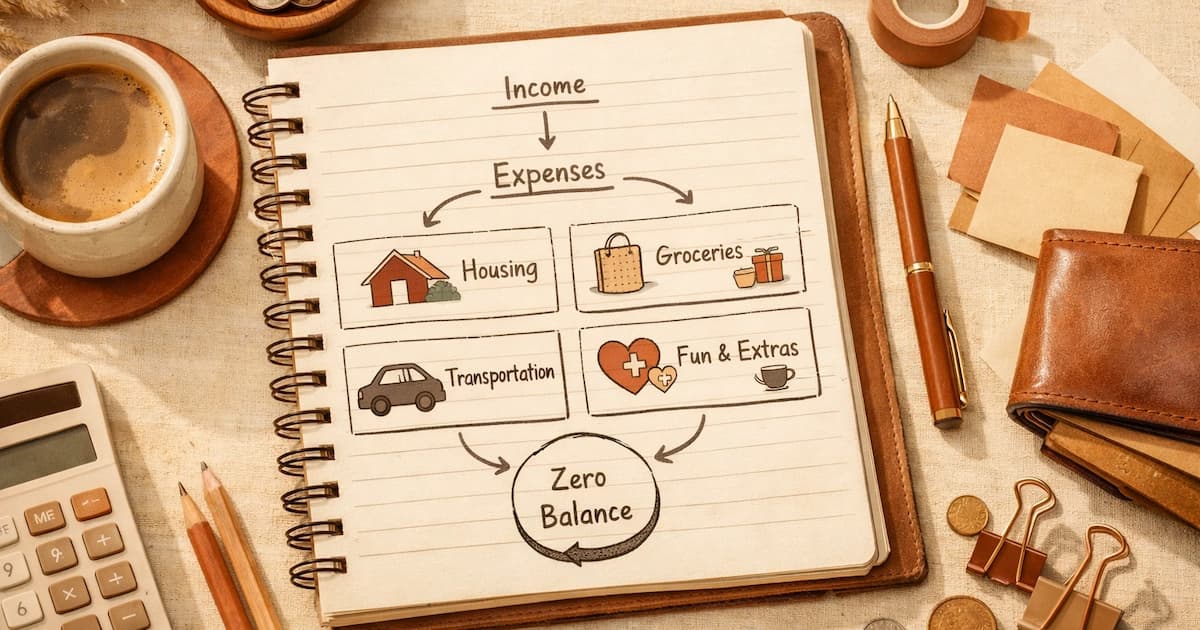
Give every rupee a job until income minus spending is zero. The five steps, a worked example in rupees and dollars, and where it breaks down.
14 min read
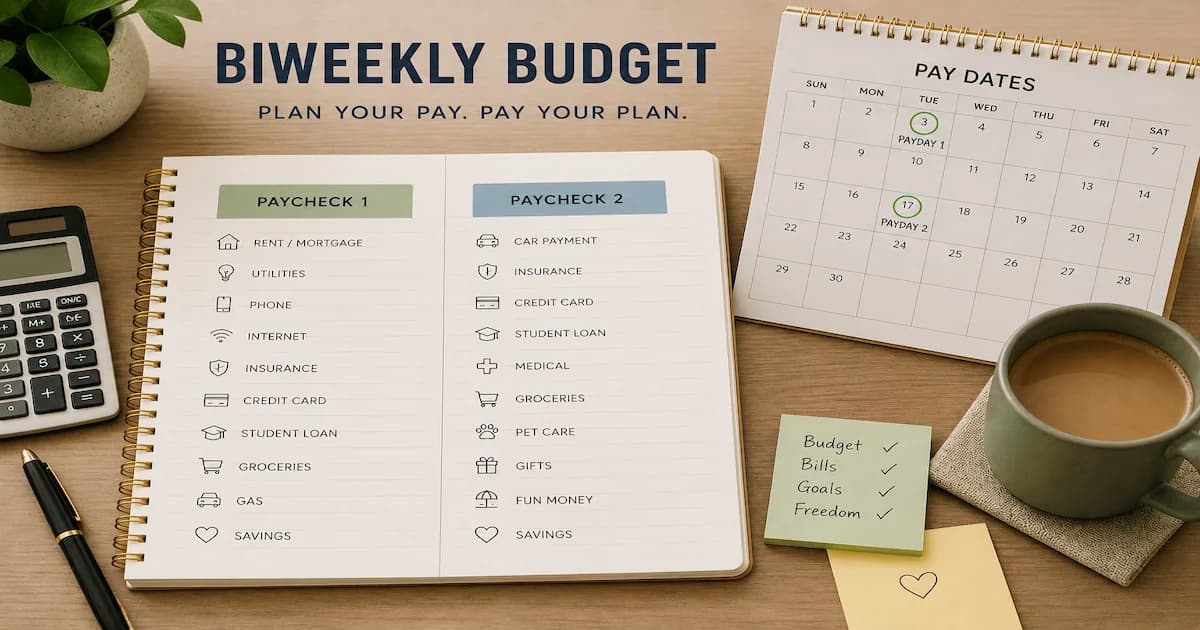
A biweekly budget plans each two-week paycheck on its own. Build each month on two checks as your floor, and the year's extra paychecks arrive as surplus.
18 min read