Biweekly Budget Explained: How to Budget by Paycheck

By Tapabrata Biswas · Updated July 16, 2026 · 18 min read
Written and fact-checked by Tapabrata Biswas. How I write
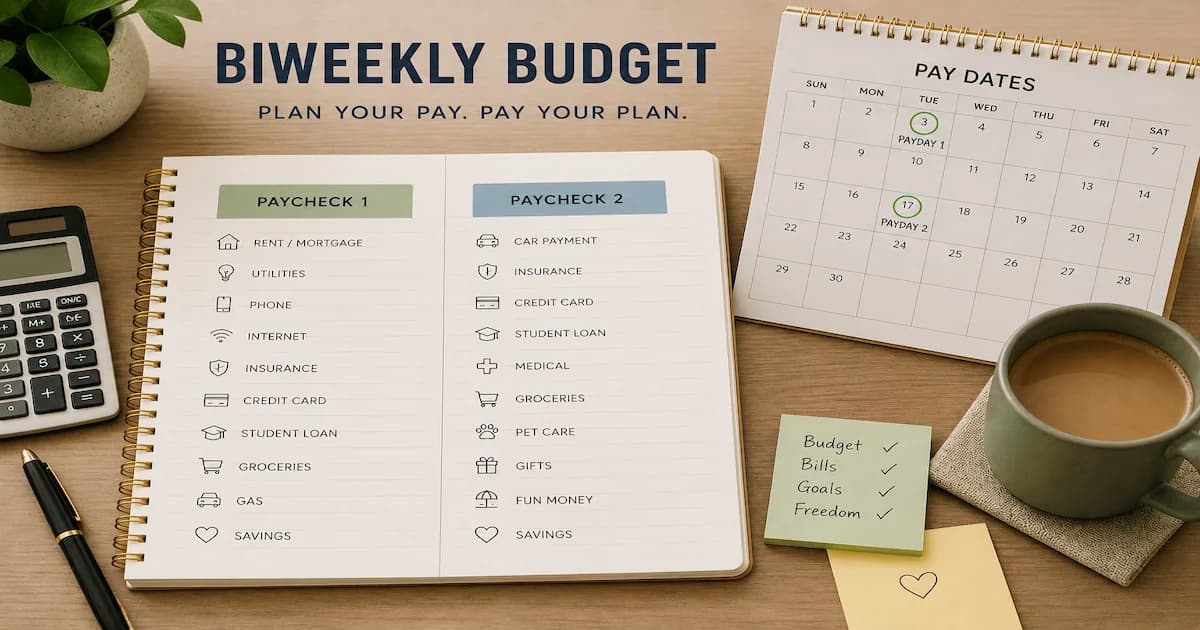
If you're paid every two weeks, your money never quite lines up with the calendar. Rent is due on the 1st, but your paycheck lands on a Friday that drifts a little later each month. Most months you get two checks. Twice a year a third one shows up.
Biweekly is the most common way American businesses pay. In February 2023, 43.0% of US private establishments ran a biweekly schedule, ahead of weekly at 27.0%, semimonthly at 19.8%, and monthly at 10.3%, according to the US Bureau of Labor Statistics, which added that no single pay period is used by a majority. Note the word establishments: that's employers, not employees, a distinction the pages that quote this figure routinely get wrong. This post covers what a biweekly budget is, where the method came from, the paycheck math that trips people up, whether to budget monthly or per check, a full worked example, when your extra paychecks land (including the 27-paycheck year almost nobody has noticed), and how biweekly compares to the other schedules. It explains the method. It isn't financial advice.
What is a biweekly budget?
A biweekly budget is a spending plan built around a paycheck that arrives every two weeks, so you plan each check on its own instead of treating a whole month as one pot of money. A year has 52 weeks, so a biweekly schedule pays you 26 times, not 24. That's about 2.17 checks a month, an awkward number to build anything on.
The fix is the single idea this whole post rests on: build your month on two paychecks as the floor, never the 2.17 average. Ten months a year run on exactly two checks, the way you planned. The other two hand you a third check with no bills waiting for it. Plan for the floor and the surplus takes care of itself, instead of the other way round.
Where the budget-by-paycheck method came from
The budget-by-paycheck method was developed by Kumiko Love, who writes as The Budget Mom, and it fuses three older systems into one: calendar budgeting, paycheck budgeting, and the cash envelope system. Her own description of the practice is blunt, and it's the whole method in a sentence: she writes a budget every time she gets paid.
The composition matters more than the branding. From calendar budgeting it takes the habit of mapping paydays and due dates onto an actual calendar. From paycheck budgeting it takes the separate mini-plan per check. From the envelope system it takes hard limits on variable categories. And each paycheck's plan is zero-based: income minus expenses equals zero, the same logic as zero-based budgeting, just applied to each pay period, one at a time. The method is now trademarked as Budget by Paycheck.
Worth saying plainly, because the search results won't: almost no page teaching this method credits her. Pages rank for her keyword, teach her system, and never name her. Where this post sits among the alternatives is covered in our budgeting methods overview.
Why your paycheck isn't your monthly budget
Multiplying one biweekly check by two to find your monthly income is the first mistake biweekly earners make, and it quietly undercounts you by about a month of pay a year. It feels right, which is why it survives.
Take-home pay is the money that actually reaches your account after taxes and deductions, and it's the number a budget runs on, not gross salary. Where that number comes from is broken down in how to read a pay stub and gross vs net income. To turn a biweekly check into a true monthly figure:
Monthly income = (biweekly take-home × 26) ÷ 12
Say your take-home is $2,000 a check. Double it and you'd plan around $4,000 a month. But $2,000 across 26 checks is $52,000 a year, and split over 12 months that's $4,333. The doubling shortcut hides roughly $4,000 a year, which is the value of the two extra checks you forgot to count.
There's a matching identity worth knowing, and the field mentions it exactly once anywhere. Biweekly checks are about 8% smaller than semimonthly checks on the same salary, because 24 divided by 26 is 0.923. You aren't paid less. The same annual pay is cut into 26 pieces, two more than semimonthly gives you, and two of those pieces land in months that already had their bills covered.
Should you budget monthly or budget each paycheck?
Three approaches compete here, and almost no page tells you which one fits you, so here's the rule: the tighter your bills run against your income, the more the per-check method earns its complexity. The camps are real and they contradict each other.
| Approach | What it does | Fits you when |
|---|---|---|
| Convert to monthly | Turn biweekly pay into one monthly budget | Income is steady and there's comfortable headroom |
| Budget each check | A separate mini-plan per paycheck | Bills run close to income; timing decides everything |
| Two-check floor | Monthly plan built on two checks, extras are surplus | You want the monthly picture and the per-check discipline |
Converting to monthly is simpler and it's what the biggest budgeting brands teach, which is why plenty of biweekly earners are handed a monthly template and told to make it work. It breaks when money assigned to the second half of the month gets spent in the first. Budgeting each check separately fixes exactly that, at the cost of running two plans a month forever.
The two-check floor is the position this post takes, and it dissolves the argument. You still compute the monthly number, because you need it to see the shape of your year. You just don't budget on it. You budget on two checks, assign bills to the check that arrives before they're due, and the extra checks land as surplus, which beats having them arrive as relief from a shortfall you engineered.
How to build a biweekly budget
Building a biweekly budget takes five steps, and the order matters because each one feeds the next. Everything below runs on take-home pay.
- Total your real monthly bills using take-home pay, not gross.
- Sort each bill by its due date into the first half or the second half of the month.
- Assign each bill to the paycheck that arrives before it's due.
- Split any bill that's too big for one check evenly across both.
- Give whatever's left a job: savings, debt, or your buffer.
A worked example makes it concrete. Say your take-home is $1,900 a check, so your two-check baseline is $3,800 a month.
| Line | Paycheck 1 | Paycheck 2 |
|---|---|---|
| Rent (split in half) | $700 | $700 |
| Groceries | $250 | $250 |
| Electric and water | $180 | |
| Phone | $80 | |
| Car payment | $350 | |
| Car insurance | $120 | |
| Internet | $70 | |
| Subscriptions | $40 | |
| Gas | $100 | $100 |
| Savings | $150 | $150 |
| Fun money | $100 | $100 |
| Assigned | $1,560 | $1,880 |
| Left in the check | $340 | $20 |
The two checks assign $3,440 across bills, savings, and spending money, leaving $360 between them. That $360 isn't loose cash. It's the start of a buffer or a sinking fund, which the next two sections cover. If you want the ground-level version of steps one and two first, how to make a budget walks through listing income and bills from scratch, and the percentages behind the savings line come from the 50/30/20 rule.
Which paycheck pays which bill?
The rule that keeps this simple is that a bill comes out of the paycheck that arrives before it's due. Rent due on the 1st is funded by the late-month check before it. A car payment due on the 20th comes from the check landing around the 15th.
Two situations need an adjustment. When a single bill is larger than one check can hold, you split it. Rent of $1,400 against a $1,900 check would eat most of one paycheck and leave nothing for groceries, so the example sets aside $700 from each check and pays the full $1,400 when it's due. This case deserves more attention than it gets: nearly every guide tells you to sort your bills into two affordable groups, and not one of them admits that rent frequently exceeds a single biweekly check, which is precisely the situation of the reader who needed the advice.
And when too many bills cluster in one half of the month, the second-half check ends up overloaded while the first sits half empty. Moving a due date is the fix most people land on, since credit card issuers and utilities will usually shift yours on request, and a couple of changes can balance the two checks for good.
Now the part the field skips entirely. Biweekly paydays drift. Fourteen days doesn't divide into a 30 or 31 day month, so your payday walks forward through the calendar by roughly two days a month, and every so often a month catches three of them. That drift is why "paycheck 1 pays the rent" is unstable by construction: sooner or later paycheck 1 lands on the 29th and rent is due on the 1st with nothing behind it. The two-check floor and the buffer exist to absorb exactly this.
How big should your buffer be?
A buffer is a cushion of your own cash that stays in your checking account so a paycheck landing a few days late, or a month where bills bunch up early, never bounces anything. Almost every budgeting guide mentions one. Few say how much.
A common target is one full paycheck. In the running example that's about $1,900 sitting untouched in checking, built from the leftover surpluses ($360 a month in the table) and the first spare third paycheck. Once it's there, you're effectively a pay period ahead: this paycheck covers bills that aren't due until after the next one arrives, and the timing drift mostly stops mattering. A buffer isn't an emergency fund, which is a separate and larger pool for lost income or real emergencies. The buffer just absorbs the calendar.
Sinking funds for the bills that aren't monthly
A sinking fund is money set aside a little at a time for a bill you know is coming but that doesn't arrive monthly, like annual car insurance, a registration renewal, or holiday gifts. On a biweekly schedule the math is one division: yearly cost divided by 26.
| Irregular bill | Yearly cost | Set aside per check |
|---|---|---|
| Car insurance (paid annually) | $1,200 | $46 |
| Vehicle registration | $260 | $10 |
| Holiday gifts | $780 | $30 |
| Annual subscriptions | $130 | $5 |
Putting $46 aside from each check means the $1,200 insurance bill is already paid for when it lands, so it never detonates one paycheck in the month it falls. Across those four bills that's about $91 a check covering every lumpy cost in the year. Our explainer on sinking funds covers running several at once without losing track of which is which.
When are your three-paycheck months?
A three-paycheck month is a calendar month where your payday lands three times in one month, and it happens because 26 checks don't divide evenly into 12 months. The popular framing calls that third check a bonus. It's ordinary pay, arriving in a month that happened to hold three of your paydays, and if you budgeted on the two-check floor its bills were already covered by the first two.
Every guide tells you to go look at a calendar. The rule is simple enough to state: take your first payday of the year, count forward 14 days at a time, and any month catching three paydays is a three-paycheck month. Worked out for 2026, by the day you're paid:
| Your first 2026 payday | Paychecks in 2026 | Three-paycheck months |
|---|---|---|
| Thursday, January 1 | 27 | January, July, December |
| Friday, January 2 | 26 | January, July |
| Monday, January 5 | 26 | March, August |
| Tuesday, January 6 | 26 | March, September |
| Wednesday, January 7 | 26 | April, September |
| Thursday, January 8 | 26 | April, October |
| Friday, January 9 | 26 | May, October |
That top row is the one to notice, and it's missing from every consumer page on this topic, all of which quietly assume a Friday payday. 2026 is a 27-paycheck year, but only if you're paid every other Thursday starting January 1, because that schedule runs Jan 1 through Dec 31 and squeezes in an extra payday. Twenty-six pay periods cover 364 days, one short of a normal year, so the remainder accumulates until roughly every 11 years a 27th payday falls inside the calendar, as the employment lawyers at Squire Patton Boggs flagged for employers in 2026. Two errors are worth avoiding: some pages claim a Friday January 2 start gives 27 checks in 2026 (it gives 26, ending December 18), and some list January, May, July, and October together as 2026's three-paycheck months, which mashes two mutually exclusive schedules into one list. No single schedule gets all four.
Looking ahead, the Friday January 2 cycle reaches 27 checks in 2027, with January, July, and December holding three; the Friday January 9 cycle gets April and October. The table above is our own arithmetic against the 2026 calendar, and you can check any row in a minute with a calendar and a pen.
Biweekly vs semimonthly, weekly, and monthly
Semimonthly pay is a schedule that pays on two fixed dates each month, usually around the 15th and the last day, for 24 checks a year. It sounds like biweekly and behaves differently.
| Schedule | Checks per year | Per check (on $52,000) | Same dates each month? | Extra-check months | Share of US private establishments, Feb 2023 |
|---|---|---|---|---|---|
| Weekly | 52 | $1,000 | No | Four months get a 5th | 27.0% |
| Biweekly | 26 | $2,000 | No | Two months get a 3rd | 43.0% |
| Semimonthly | 24 | $2,167 | Yes | None | 19.8% |
| Monthly | 12 | $4,333 | Yes | None | 10.3% |
Semimonthly is the easier one to budget, because the dates never move and two checks is exactly one month with no conversion math. Biweekly checks run about 8% smaller per pay, since you get two more of them, and they bring the drift this post deals with. Neither is more money over a year. They're different rhythms, and the budget has to match the rhythm you're on. One correction while we're here: biweekly pay is sometimes described as creating more income fluctuation than semimonthly. It doesn't. Every biweekly check is the same size. What moves is the alignment between your paydays and your fixed due dates, which is a calendar problem, not an income problem.
What this post does not cover
This explains the biweekly method, not a product. It doesn't review budgeting apps or spreadsheets, prescribe a savings or debt order for your situation, or get into tax filing. The dollar figures are illustrative, chosen for clean math over a typical household. If your biweekly pay swings with overtime, tips, or commission, the floor idea still applies but the floor sits lower, and budgeting tips for freelancers deals with variable income properly. On geography, this is a US topic: Indian salaried pay runs monthly under a statutory wage period capped at one month (Code on Wages, 2019, section 16), so 26 paychecks and three-paycheck months have no Indian equivalent, and a plain monthly budget fits that rhythm. For where a biweekly schedule sits among the other systems, see budgeting methods, and to find where your money actually goes before you split it across two checks, tracking spending.
Frequently asked questions
How many paychecks are in a biweekly year? 26 in a normal year. A year has 52 weeks and a biweekly schedule pays every two weeks, so 52 divided by 2 is 26 checks, not 24. That works out to about 2.17 paychecks a month, which is why two months a year end up holding a third check. Some years deliver 27. Twenty-six pay periods cover only 364 days, one day short of a normal year and two short of a leap year, so the leftover accumulates and roughly every 11 years a 27th payday falls inside the calendar year. 2026 is one of those years, but only for people paid every other Thursday starting January 1.
What are the three-paycheck months in 2026? It depends entirely on the day you are paid and your first check of the year, and most guides only work it out for Friday. Paid every other Thursday from January 1: January, July, and December, and that schedule gets 27 paychecks. Every other Friday from January 2: January and July. From Friday January 9: May and October. From Monday January 5: March and August. From Tuesday January 6: March and September. From Wednesday January 7: April and September. To find your own in any year, take your first payday of the year and count forward 14 days at a time, then note any month that catches three paydays.
Should I budget monthly or budget each paycheck? Both work, and the honest answer depends on how close your bills run to your income. Converting biweekly pay into one monthly budget is simpler and suits steady income with comfortable headroom. Budgeting each paycheck separately, assigning specific bills to the specific check that arrives before they are due, suits anyone living close to the line, because it stops money meant for the second half of the month being spent in the first. A third approach, the one this post uses, builds the monthly plan on two checks as a floor and treats the extra checks as surplus, which gives you the monthly picture and the per-check discipline at once.
How do I split rent across two paychecks? Set aside half the rent from each paycheck into the same account, then pay the full amount when it is due. If rent is $1,400 and each check is $1,900, putting $700 aside from both checks covers it without letting one paycheck get swallowed. The same split works for any bill too large for a single check to hold comfortably. This matters more than the field admits: almost every guide says to balance your bills into two affordable groups, and none of them acknowledges that rent or a mortgage often exceeds one biweekly check, which breaks that instruction for the reader most likely to need it.
Is the third paycheck taxed differently? No. Each biweekly check has the same payroll taxes and withholding applied, and your total income tax for the year is identical whether you are paid biweekly, semimonthly, or monthly. The third check in a three-paycheck month only feels like extra money because most budgets are built around two checks a month. The tax treatment does not change, and neither does your annual salary. The same yearly pay is simply cut into 26 pieces, where semimonthly cuts 24 and monthly cuts 12.
What's the difference between biweekly and semimonthly pay? Biweekly pay arrives every two weeks for 26 checks a year, on a payday that drifts later through the calendar. Semimonthly pay arrives on two fixed dates each month, often the 15th and the last day, for 24 checks a year. On the same salary, semimonthly checks are about 8% larger because there are two fewer of them (24 divided by 26 is 0.923), and semimonthly never produces a three-paycheck month. Neither pays you more over a year. In February 2023, 43.0% of US private establishments ran biweekly and 19.8% ran semimonthly, per the Bureau of Labor Statistics.
How do I calculate monthly income from a biweekly paycheck? Multiply one take-home check by 26, then divide by 12. A $2,000 biweekly check is $52,000 a year, which is $4,333 a month. Multiplying a single check by 2 undercounts you by about $4,000 a year, because there are not exactly two biweekly periods in every month. The times-26-divided-by-12 figure is your true monthly average, though this post argues you should plan on the two-check floor of $4,000 instead, and let the average take care of itself.
Sources
- US Bureau of Labor Statistics, Length of pay periods in the Current Employment Statistics survey (February 2023 data) (bls.gov)
- Kumiko Love, The Budget Mom, The budgeting method that changed my life (thebudgetmom.com)
- Squire Patton Boggs, Some employers to have an extra pay period in 2026 (employmentlawworldview.com)
- Consumer Financial Protection Bureau, Creating a budget (consumerfinance.gov)
- Ministry of Labour and Employment, Code on Wages, 2019, section 16 (fixation of wage period) (labour.gov.in)


You might also like
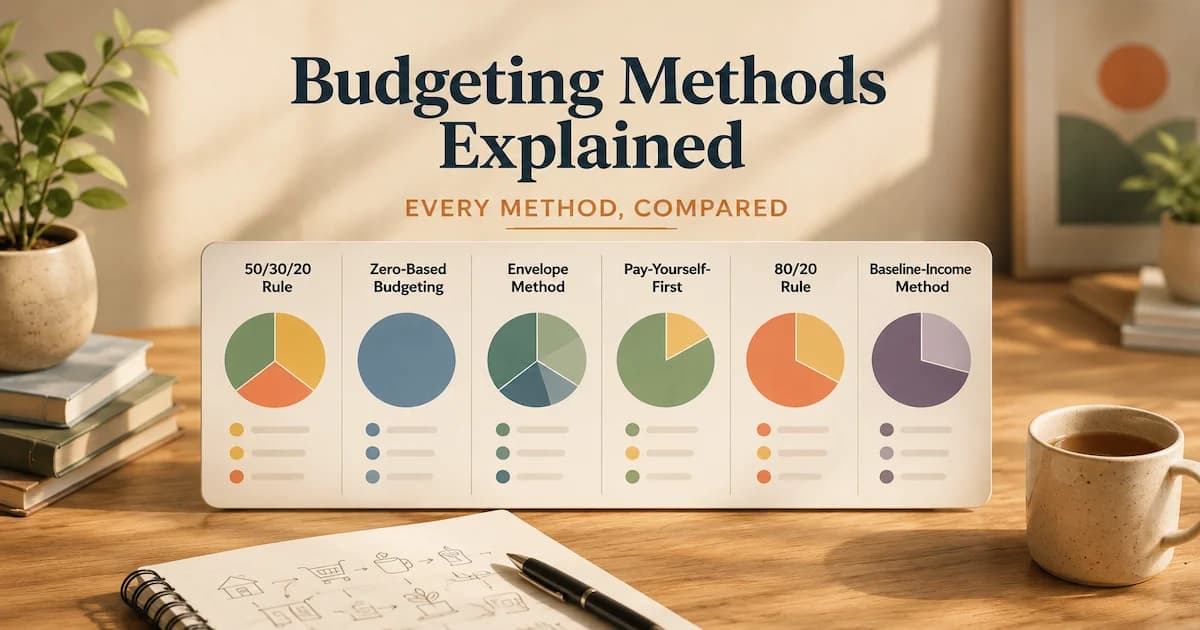
The 10 personal budgeting methods compared, from 50/30/20 and zero-based to kakeibo and cash stuffing, with ₹ and $ examples and a which-fits-you table.
17 min read

Making a first budget step by step: the information to gather, choosing categories, picking a method, and the routine that turns setup into habit.
10 min read

A sinking fund is money set aside monthly for a known future expense. The missing layer between a budget and an emergency fund, explained plainly.
9 min read