How to Make a Budget for the First Time: Step by Step

By Tapabrata Biswas · Published May 10, 2026 · 10 min read
Researched with AI assistance, reviewed and edited by Tapabrata Biswas.

A first budget takes about 60-90 minutes from a cold start. Most of that time isn't math. It's hunting down the bank and credit card statements that tell you what your money actually does, not what you think it does. Most personal finance writing on budgeting jumps straight to comparing methods, zero-based vs. 50/30/20 vs. envelope vs. pay yourself first, without addressing the question that comes first for someone who has never budgeted before: how do I actually do this? The mechanics matter, the categories matter, the choice of method matters less than the discipline of starting.
A first budget is a research instrument, not a binding contract. The goal is to find out what your money actually does, then to nudge it toward what you want it to do.
Step 1: gather the information you need
Before sitting down to make any decisions, gather the data the budget will run on:
- Your most recent pay stubs (the last 1-2 if you're salaried, last 4-6 if your pay varies). The figure you need is the net (take-home) amount that actually arrives in your bank account, not the gross.
- Bank statements from the last 2 months. These show your real spending pattern, not what you remember spending.
- Credit card statements from the last 2 months. Same reason, and especially important for catching subscriptions, recurring small charges, and discretionary spending you might forget.
- A list of any debt payments. Minimum amounts, due dates, and APRs.
- Any irregular bills. Quarterly insurance, annual subscriptions, vehicle registration, property tax: anything that arrives less often than monthly.
Spend an hour on this collection step. Almost every budget that fails in month one fails because of information missing from this list, not because of a flaw in the method.
Step 2: calculate your real net income
Take your pay stubs and identify the after-tax, after-deduction number that lands in your checking account. That's the number every budget category will be a percentage of.
If your income varies (hourly, commission, freelance), use the lowest reliable figure from the last six months as your baseline. Anything above that figure is bonus income to be assigned to savings, debt, or specific irregular expenses. We cover the gross-versus-net distinction in detail in our piece on the difference between gross and net income, which is the single most common first-time budgeting error.
Add any reliable non-paycheck income, a small side business, rental income, recurring transfers, to arrive at total monthly net income. That's your "amount to budget."
Step 3: list every spending category
Working from your gathered statements, list every category of spending you expect this month. The list breaks into four groups.
Fixed essentials are the bills that don't vary: rent or mortgage, utilities (electricity, gas, water), internet, phone, insurance premiums (paid monthly), and minimum debt payments (credit cards, student loans, car).
Variable essentials are necessary, but the amount varies: groceries, transportation (fuel, transit, parking), healthcare (copays, prescriptions), and personal care.
Goals and savings include the emergency fund deposit, retirement contribution (if not already deducted from pay), sinking funds (vacation, holiday, vehicle registration, irregular bills), and any extra debt payment.
Discretionary covers eating out and entertainment, subscriptions (Netflix, Spotify, etc.), personal spending (each adult gets their own line), hobby spending, and gifts.
Finally, a buffer line, a small "miscellaneous" category for unexpected small charges.
Aim for 12-15 categories on a first budget. More than 20 becomes administrative work; fewer than 8 is too coarse to be useful.
Step 4: pick a method
Three beginner-appropriate methods are worth knowing, with the situations each suits best.
The 50/30/20 rule splits net income 50% to needs, 30% to wants, 20% to savings and debt. Simplest to apply. Requires no spreadsheets. Best for someone who wants to start budgeting without spending an hour on it. Covered in detail in the 50/30/20 rule explained.
Zero-based budgeting assigns every dollar of income to a specific category until the bottom-line difference equals zero. Most rigorous. Best for households with specific savings goals, debt payoff plans, or irregular income. Covered in detail in what is zero-based budgeting.
Pay yourself first plus free spending automates a savings transfer on payday, then lets you spend whatever's left without category-level tracking. Simplest of all. Best for households with stable income who want savings discipline without budgeting overhead. Covered in pay yourself first method explained.
A reasonable starter sequence: begin with 50/30/20 for month one, graduate to zero-based budgeting in month two if more precision is needed, layer in pay yourself first as the automation backbone of either.
Step 5: assign amounts to each category
Take your monthly net income from step 2 and assign amounts to each category from step 3, working in this priority order. Fixed essentials first. These are non-negotiable and usually the same each month. Variable essentials next, using realistic averages from your gathered statements rather than aspirational lower numbers. Goals and savings third: even small amounts ($25 to an emergency fund) count. Discretionary categories fourth: whatever's left after essentials and goals. The buffer last: keep $50-$100 for genuinely unexpected items.
If you're using zero-based budgeting, the total of all assignments must equal your starting income. If it doesn't, if you have $87 unassigned or $87 over-assigned, adjust until it balances. If you're using 50/30/20, check whether your assignments roughly fit the percentages; if needs are eating 60% of income, you have either a temporary cost-of-living issue or a long-term mismatch worth addressing.
Step 6: choose your tracking tool
The tool matters less than sticking with it. Three credible options.
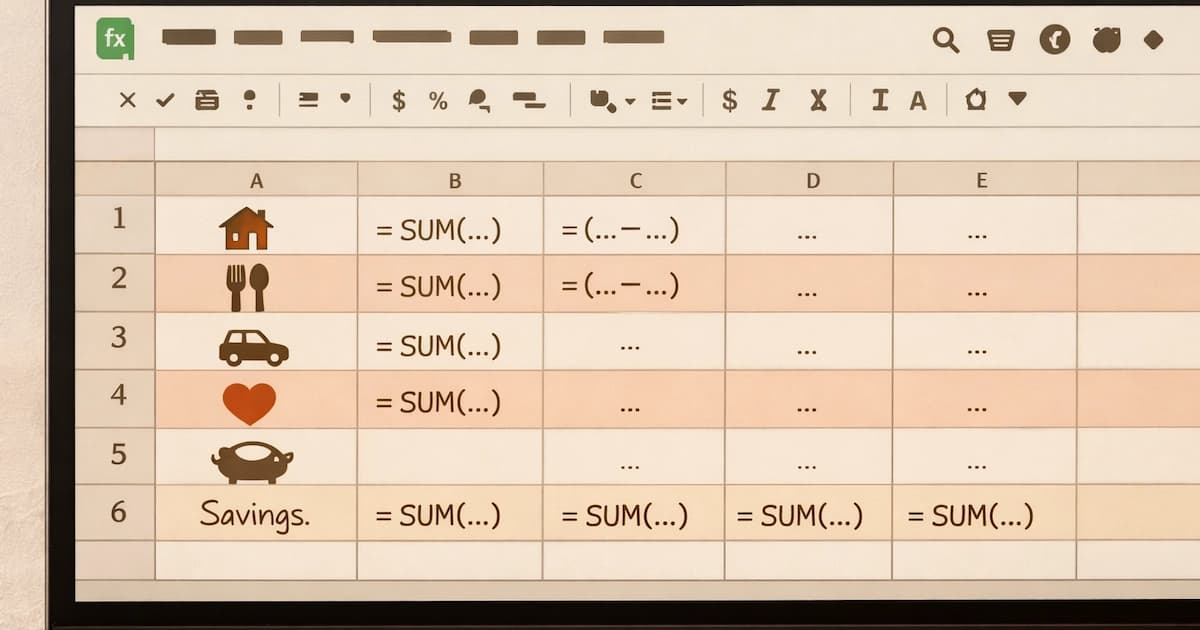
A spreadsheet: Google Sheets is free, syncs across devices, and gives full control over formulas. Best for households who want to see exactly what's happening and don't mind a manual update each week. We cover the specific spreadsheet build in budget in Google Sheets.
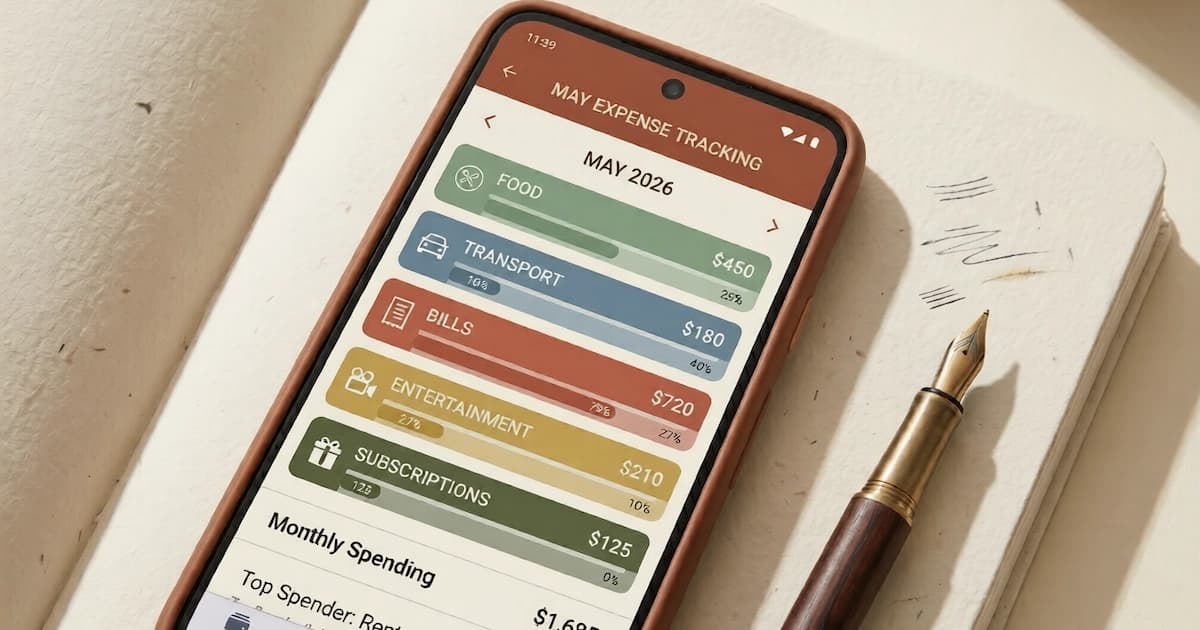
A budgeting app: YNAB, Goodbudget, EveryDollar, and Monarch all sync with bank accounts and categorise transactions automatically. Best for households who want less manual work. Most charge a monthly subscription; some offer free tiers.
A paper notebook with categories on the left and amounts on the right. Best for households who prefer the tactile experience and don't mind copying transactions manually.
The deciding factor: which one will you actually open every week? Pick that one.
Step 7: set up the weekly check-in routine
A budget that sits in a notebook untouched after the 1st of the month isn't really a budget. The check-in is what makes the assignments matter.
Once a week, same day, same time, spend 10 minutes updating the budget with what's been spent so far. Identify any category on track to overspend. Decide whether to cut spending in that category for the rest of the month, or to move money in from another category that has surplus.
If a category runs short, the standard practice is to move money from another category that has surplus, and note the change in the budget. The total still reconciles. You haven't created new money, you've moved an existing assignment.
Step 8: automate everything that can be automated
For every fixed bill that allows it, set up autopay. Removing fixed bills from the daily decision queue frees up attention for the variable categories where attention actually changes outcomes.
For savings, set up an automatic transfer that fires on payday, before any bills are paid, before any discretionary spending happens. The pay yourself first principle is the structural fix for the "I'll save the leftover" pattern that rarely produces leftover.
For irregular bills (annual insurance, quarterly tax payments, holiday spending), set up monthly transfers to dedicated sinking funds so the cash is there when the bill arrives.
Step 9: review and adjust at month end
At the end of the first month, compare what you assigned to what you actually spent in each category. Three patterns are typical.
Categories you over-assigned should come down in next month's budget. The freed money goes to savings, debt, or under-assigned categories.
Categories you under-assigned should go up realistically. If groceries needed $510 and you budgeted $480, raise the budget: don't try to force the same number to work next month.
Categories you forgot get added. The first budget always misses something; adding it in month two is normal, not failure.
The third month is usually the first cycle that feels stable. Most categories settle into accurate amounts by then.
Common mistakes to avoid
Six patterns trip first-time budgeters up regularly.
The first is budgeting against gross income. Net is what arrives. Gross is irrelevant to monthly spending decisions.
The second is aspirational category amounts. Setting groceries at $300 when you historically spend $500 sets up week-one collapse.
The third is too many categories. Twenty-five categories on a first budget is administrative work and not a useful tool.
The fourth is no buffer line. A budget with no buffer collapses on the first surprise expense.
The fifth is skipping the weekly check-in. Without it, you'll only discover overspends at month-end when it's too late to course-correct.
The sixth is treating one bad month as system failure. First budgets are imprecise by nature. Iterate; don't abandon.
What experts say
NerdWallet's how-to-budget guide covers similar steps with U.S.-specific examples and includes a free budget calculator. Investopedia's budgeting overview provides the conceptual background on why budgeting works as a financial discipline.
The Consumer Financial Protection Bureau's tools include a free spending tracker and bill calendar that work well for the first-month measurement phase before settling on any specific method.
The Consumer Financial Protection Bureau's research on financial well-being finds that households who maintain any form of written budget, spreadsheet, app, or notebook, report higher financial well-being than those who don't, regardless of income level.
Frequently asked questions
What is the very first step to making a budget? Calculate your real take-home (net) income. Pull your most recent pay stubs and use the after-tax, after-deduction figure that actually arrives in your bank account. Every category amount in your budget will be a percentage of this number, so getting it right is the foundation for everything else.
How long does it take to make a first budget? About 60-90 minutes from a cold start. Most of that time is gathering bank and credit card statements from the last two months and identifying spending categories you might otherwise forget. Once the categories are listed and the amounts are assigned, the rest is updating amounts each cycle, which takes 20-40 minutes.
What is the best budgeting method for someone who has never budgeted before? The 50/30/20 rule is the most beginner-friendly because it requires no spreadsheets and no granular categories: just three percentages of net income. Households with credit card debt or strong savings goals often graduate to zero-based budgeting in month two or three for the additional precision, but starting simple matters more than starting precise.
What if my budget doesn't balance the first time? Almost no first budget balances. The two most common issues are over-budgeting essentials (rent + utilities + groceries leave very little for anything else) or budgeting against gross income and not net. The fix is iteration: adjust one category at a time, see what changes, and treat month one as measurement rather than as a binding contract.
In summary
Making a first budget is a nine-step process: gather information, calculate net income, list categories, pick a method, assign amounts, choose a tracking tool, set up the weekly routine, automate what can be automated, and review at month-end. The first budget is research, not contract: most categories will be wrong on month one, and that's expected. Budgets stabilise around month three.
The single biggest factor in whether a budget survives is the weekly check-in habit. Pick a day and time, set a calendar reminder, and treat the ten-minute appointment as non-negotiable for three months. Almost everything else about the first budget can be wrong without killing it. A budget that goes untouched is just a wish list, and that's the failure mode the weekly habit prevents.
Step four asks you to pick a method, so our guide to the different budgeting methods is worth a look before you choose.
Sources
- NerdWallet, How to Budget: nerdwallet.com/article/finance/how-to-budget
- Investopedia, Budget: investopedia.com/terms/b/budget.asp
- Consumer Financial Protection Bureau, Consumer Tools: consumerfinance.gov/consumer-tools
- Consumer Financial Protection Bureau, Financial Well-Being in America: consumerfinance.gov/data-research/research-reports/financial-well-being-america



You might also like

Give every rupee a job until income minus spending is zero. The five steps, a worked example in rupees and dollars, and where it breaks down.
14 min read

The rule everyone can recite leaves three things unresolved: which net income to use, where debt sits, and what to do when needs already eat 70%.
11 min read

India quotes CTC. The US quotes gross. Neither is what lands in your account, and the US employer's 7.65% is the part nobody puts in the offer letter.
12 min read