What Is a Joint Bank Account? How They Work

By Tapabrata Biswas · Updated October 2, 2026 · 15 min read
Written and fact-checked by Tapabrata Biswas. How I write
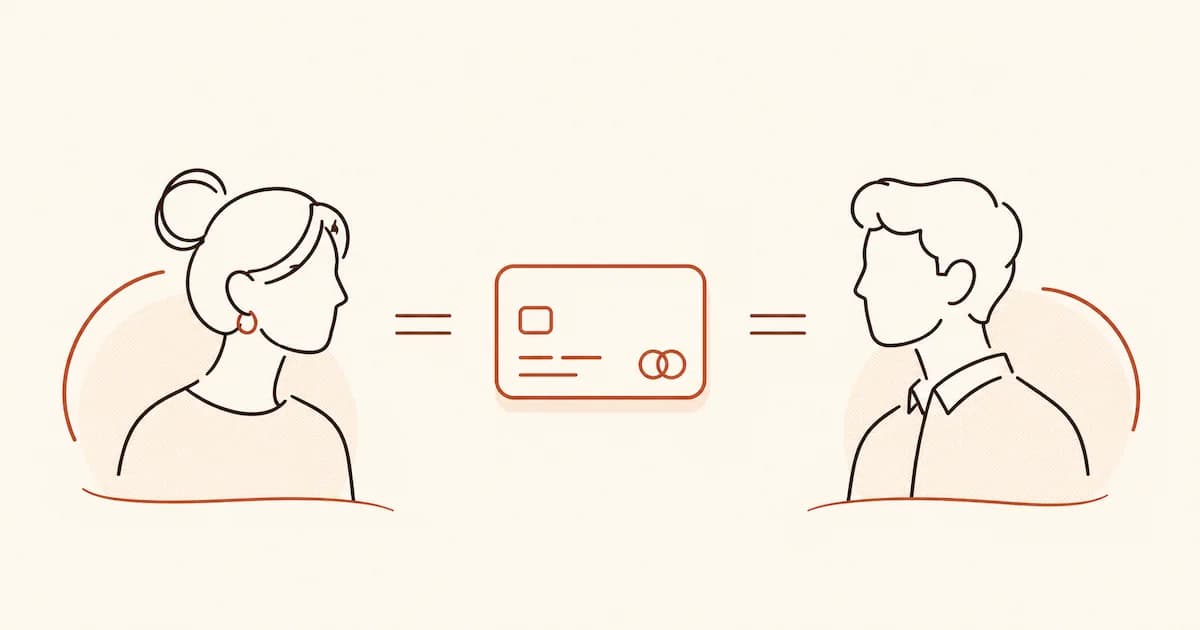
A joint bank account is one that two or more people own together, and the headline fact is the one people underestimate: everyone on it has full, independent access to all of the money. Any owner can spend the whole balance without asking, and each owner is on the hook for overdrafts and fees no matter who caused them. That makes a joint account excellent for shared bills and genuinely risky with the wrong co-owner.
This guide explains how joint accounts work in both the US and India, which the bank pages ranking for this question almost never do together. The rules diverge in ways that matter. The US has one equal-access model with survivorship set by titling, while India has named operating modes like "either or survivor" that change who can touch the account and what happens when someone dies. It explains the mechanics. It is not advice on whether to open one, or with whom.
What is a joint bank account?
A joint bank account is a deposit account shared by two or more people, each of whom can deposit, withdraw, and manage the money on their own. It can be a checking account, a savings account, or a fixed deposit; the "joint" part describes who owns it, not what type it is. Every owner's name is on the account, and in the eyes of the bank the money belongs to all of them equally, regardless of who paid it in.
That last point is the one that trips people up. A joint account is not a shared wallet where each person's contribution stays theirs. Once money lands in it, it is legally everyone's. That single fact is what makes the account so convenient and so risky in the same breath.
How does a joint bank account work?
In a standard joint account, any owner can move money without the other owner's permission or knowledge. Deposit, withdraw, transfer, swipe the debit card, set up autopay: any holder can do any of it alone. Most banks issue a card and a login to each owner.
The flip side is shared liability. Each owner is individually responsible for everything that happens on the account, including an overdraft or a fee that one of them triggered and the other never saw. If the balance goes negative, the bank can pursue either person for the full amount. Some couples and roommates run their whole financial life through one joint checking account; others keep it narrow, funding it only for shared bills. Both approaches work. The mechanics underneath are identical.
What are the types of joint accounts?
The word "joint" hides some important differences, and they are not the same in the US and India.
In the US, most joint accounts are one structure: joint tenants with right of survivorship (JTWROS), which gives all owners equal access and passes the balance straight to the survivors when one owner dies, instead of into the deceased's estate. Two less common structures exist. Tenants in common splits ownership into shares, so a deceased owner's share goes to their own heirs rather than to the co-owner. A convenience account, sometimes called an authorized-user setup, has one real owner and a helper who can transact but owns nothing and inherits nothing.
India organizes the same idea differently, through named operating modes you choose when you open the account. An "either or survivor" account lets any one holder operate it alone while both are alive, and hands full control to the survivor when one dies. That is the common choice for couples. The other modes each answer the question "who is allowed to operate it" in a different way.
| Operating mode (India) | Who can operate while all are alive | What happens when a holder dies |
|---|---|---|
| Either or Survivor | Any one holder, independently | The survivor gets full control |
| Former or Survivor | Only the first-named holder | The survivor can operate it after the former dies |
| Latter or Survivor | Only the second-named holder | The other holder operates it after the latter dies |
| Jointly | All holders, signing together | Passes per the survivorship terms or to legal heirs |
| Anyone or Survivor (3+ holders) | Any one holder, independently | The surviving holders keep operating it |
Former or survivor tends to suit a parent who wants sole control during their life with a child stepping in later, or certain pension accounts. Jointly suits people who want two signatures on every move. The operating-mode framework comes from the Reserve Bank of India; the US structures follow standard account titling.
Joint account vs separate vs "yours, mine, and ours"?
There is no single right structure for a couple, only trade-offs. The three common setups are fully joint (one shared account), fully separate (two individual accounts), and hybrid (a shared account for joint costs plus a personal account each). The hybrid is where many couples land, and the reason shows up in the survey data. A Bankrate survey in December 2024 found that 73% of couples use a joint account while 62% still keep some money separate. Sharing everything and sharing nothing are both minority positions.
| Fully joint | Fully separate | Hybrid (yours, mine, ours) | |
|---|---|---|---|
| Shared-bill convenience | High, one pot | Low, constant splitting | High for the shared pot |
| Financial transparency | Complete | Low | Partial, by design |
| Privacy over personal spending | None | Full | Kept in the personal accounts |
| Access for a partner on death | Built in | None to the partner | Built in for the joint pot |
| Shared liability exposure | Full | None | Limited to the joint pot |
| A partner's debt reaching your money | Yes | No | Only the joint pot |
| Difficulty untangling on a breakup | High | Low | Moderate |
| Fit for unequal incomes | Can feel lopsided | Clean but less unified | Often the compromise |
The pattern in the research is that shared accounts tend to go with more financial transparency, and separate accounts with more autonomy. What the table cannot decide for anyone is which of those two things they value more.
Can unmarried couples open a joint account?
Yes. No bank in the US or India requires marriage to open a joint account; any two adults can, with the usual ID and documents. The difference for unmarried couples is not procedural. It is legal, and it is worth understanding before the money is mixed.
When a married couple separates, marital-property law in most places divides shared accounts under a set of default rules. Unmarried couples get none of that. If the relationship ends, there is no legal presumption that a joint balance splits down the middle. Whoever is named on the account controls it, and in a standard joint account either person can withdraw all of it at any point, including on the way out the door. Unmarried partners also cannot file taxes jointly in the US, and one partner's individual debt can still expose the shared balance to that partner's creditors.
The mechanism that fills the gap is a written agreement. A short document setting out who contributes what, and how the account splits if things end, is the substitute for the protections marriage would otherwise supply. In India, the operating mode and the registered nominee do part of this job, deciding who can operate the account and who the bank pays on a death. None of this argues for opening or avoiding a joint account. It is the set of facts that makes the choice an informed one.
Is the money in a joint account insured?
A joint account is insured separately from the individual accounts each owner holds at the same bank, which quietly doubles the protection for a couple. Deposit insurance in both countries is calculated per depositor, and a joint account counts as its own category.
In the US, the FDIC insures each co-owner of a joint account up to $250,000, so a two-person joint account is covered up to $500,000, and that sits on top of the $250,000 each person gets on their single accounts at the same bank, per the FDIC. In India, the DICGC insures each depositor up to ₹5 lakh per bank, and a joint account is treated as a separate holding from either person's individual accounts, per the DICGC.
India adds a wrinkle worth knowing. Two joint accounts are insured separately only if the names sit in a different order. An "A and B" account and a "B and A" account count as two separate insured deposits, but two "A and B" accounts are added together under one ₹5 lakh limit. In numbers:
| US (FDIC) | India (DICGC) | |
|---|---|---|
| Per-depositor limit | $250,000 | ₹5,00,000 |
| A two-person joint account | Insured to $500,000 | Insured to ₹5,00,000, separate from each person's individual cover |
| Worked example | $600,000 joint → $500,000 covered, $100,000 exposed | ₹8,00,000 joint FD → ₹5,00,000 covered, ₹3,00,000 exposed |
Our FDIC vs DICGC explainer goes deeper on how the two schemes compare.
What happens to a joint account when an owner dies?
In most joint accounts, the surviving owner keeps access to the money without going through probate. The outcome is the same in both countries, but the plumbing differs.
In the US, a JTWROS account passes directly to the surviving owner by law, outside the deceased's estate and outside probate. In India, a survivorship mandate does the equivalent: with an "either or survivor" or similar setup, the bank can release the balance to the survivor. Under the Reserve Bank of India's 2025 directions on deceased-customer claims, a bank generally cannot demand a succession certificate, probate, or an indemnity bond when there is a survivor or a nominee, and it is expected to settle a valid claim within 15 days, per RBI guidance.
One distinction matters here and is widely misunderstood in India. A nominee is not the owner of the money; a nominee receives it as a trustee for the legal heirs. Nomination decides who the bank pays, not who ultimately keeps the funds, which is settled by succession law. A surviving joint holder can be in the same position, holding the balance in trust for the deceased's heirs unless they were the sole beneficial owner. For anything that touches an estate, this is where a lawyer or a qualified professional earns their fee.
What are the risks? Shared liability and creditors
The convenience of a joint account comes bundled with exposure to the other owner's problems. Because the money legally belongs to every owner, a creditor or tax authority of just one owner can often go after the entire joint balance, including the share the other person deposited. An unpaid debt, a tax lien, or a court order against one holder can freeze or drain an account the other holder thought was partly theirs.
The shared liability runs the other way too. An overdraft, a bounced payment, or a maintenance fee lands on both owners, and negative activity can be reported against both of their banking records.
Ending a joint account works the opposite way round from what most people assume, and the Consumer Financial Protection Bureau states both halves plainly. On closing it, the CFPB says that in most circumstances either person on a joint checking account can withdraw the money and close the account, adding that you should check the account agreement and that state law may give some protection. On removing someone, it says that in general you need the other person's consent, because either state law or the terms of the account usually prevent one owner from taking the other off.
Put those together and the asymmetry is the thing to know. One owner can usually empty and close the whole account alone, but cannot remove the other owner from it. The practical fix for a partnership that has ended is to close the account and open a new one, which is its own small headache when direct deposits and autopayments are attached. Checking the fees on the account before funding it heads off one of the more avoidable versions of this.
How do you open a joint bank account?
Opening a joint account works like opening any account, with the added step that every owner has to be verified. The path is short:
- Pick the bank and the account type, checking the fees and any minimum balance the way you would for a checking or savings account.
- Each owner provides identification and details: a government photo ID, proof of address, and a tax identifier (an SSN in the US, a PAN in India). Some banks want every owner present to open in a branch.
- In India, choose the operating mode (either or survivor, jointly, and so on) and register a nominee. In the US, confirm the account is titled the way you intend, usually JTWROS.
- Fund it with an opening deposit, and the account is live.
Most banks let you apply online, though a few restrict online joint-account opening to certain ID types, so it is worth confirming before you start.
Frequently asked questions
Can either person withdraw all the money from a joint account? Usually yes. In a standard joint account, and in an "either or survivor" account in India, any owner can withdraw the entire balance without the other's permission. The main exception is an account set to operate "jointly" in India, which needs every holder to sign off. This is exactly why joint accounts are best opened only with someone you trust completely.
What happens to a joint account when one owner dies? In most cases the surviving owner keeps the money without probate. In the US, a joint account held with right of survivorship passes directly to the surviving owner. In India, a survivorship mandate lets the bank release the balance to the survivor, and under the RBI's 2025 rules the bank generally cannot demand a succession certificate and should settle within 15 days. In both countries the survivor may hold the money in trust for the deceased's legal heirs unless they were the sole beneficial owner.
Can unmarried couples open a joint bank account? Yes. No US or Indian bank requires marriage; any two adults can open one with ID and the usual documents. The catch is legal, not procedural: marital-property rules do not divide the account if an unmarried couple splits, so whoever is named on it controls it and either can withdraw the full balance at any time. A written agreement on contributions and how to split it is the substitute for what marriage would otherwise provide.
Is a nominee the same as a joint account holder in India? No. A joint holder co-owns the account and can operate it; a nominee only receives the balance after the account holders die, and receives it as a trustee for the legal heirs rather than as the owner. Nomination decides who the bank pays out to, not who ultimately owns the money, which is settled by succession law.
Can a creditor take money from a joint account? Potentially yes. Because the funds legally belong to all owners, a creditor or tax authority of just one owner can often freeze or garnish the whole account, including the other owner's contributions. It is one of the main risks of pooling money with someone who carries debt.
How is a joint account insured? Separately from your individual accounts. The FDIC covers each co-owner up to $250,000 in the joint-account category, so a two-person account is insured to $500,000, on top of each person's $250,000 single-account cover. India's DICGC covers ₹5 lakh per depositor per bank, with a joint account insured separately from each holder's individual accounts.
What is the difference between "either or survivor" and "jointly" in India? "Either or survivor" lets any one holder operate the account alone and passes control to the survivor when one holder dies. "Jointly" requires all holders to sign together for every transaction. Either or survivor is the convenient default for couples; jointly suits people who want two signatures on every move.
What this guide does not cover
This is an explainer of how joint accounts work, not advice on whether to open one, with whom, or how to structure your money with a partner. It leaves aside the specifics of estate and succession law, business and trust accounts, joint credit cards or loans (which behave very differently from deposit accounts), and minor accounts. Rules, fees, and insurance limits change and vary by bank, so confirm the current details with yours, and for estate or tax questions consult a qualified professional. For how money actually moves between accounts once you have one, our wire transfer vs ACH explainer picks up there.
Sources
- Reserve Bank of India, deposit account operation and 2025 directions on settlement of deceased customers' claims rbi.org.in · directions summary
- Deposit Insurance and Credit Guarantee Corporation (DICGC), deposit insurance for joint accounts dicgc.org.in
- Federal Deposit Insurance Corporation (FDIC), Joint Accounts coverage fdic.gov
- Consumer Financial Protection Bureau (CFPB), A joint checking account owner took all the money out and then closed the account without my agreement. Can they do that?, for the position that in most circumstances either owner may withdraw the money and close the account consumerfinance.gov
- Consumer Financial Protection Bureau (CFPB), Can I remove my spouse from our joint checking account?, for the position that removal generally needs the other person's consent consumerfinance.gov


You might also like

A checking account is the bank account you use for everyday spending. How it works, the types, what you need to open one, and the fees to watch for.
10 min read

DICGC insures ₹5 lakh per Indian bank; FDIC insures $250,000 per US bank. The rules, what is and isn't covered, the 90-day payout, and FDIC vs NCUA vs SIPC.
16 min read

Checking vs savings account: checking is for spending, savings is for growing. The interest gap, how much to keep in each, and why most people keep both.
10 min read