What Is a Checking Account? How It Works, Types & Fees

By Tapabrata Biswas · Updated July 11, 2026 · 10 min read
Written and fact-checked by Tapabrata Biswas. How I write
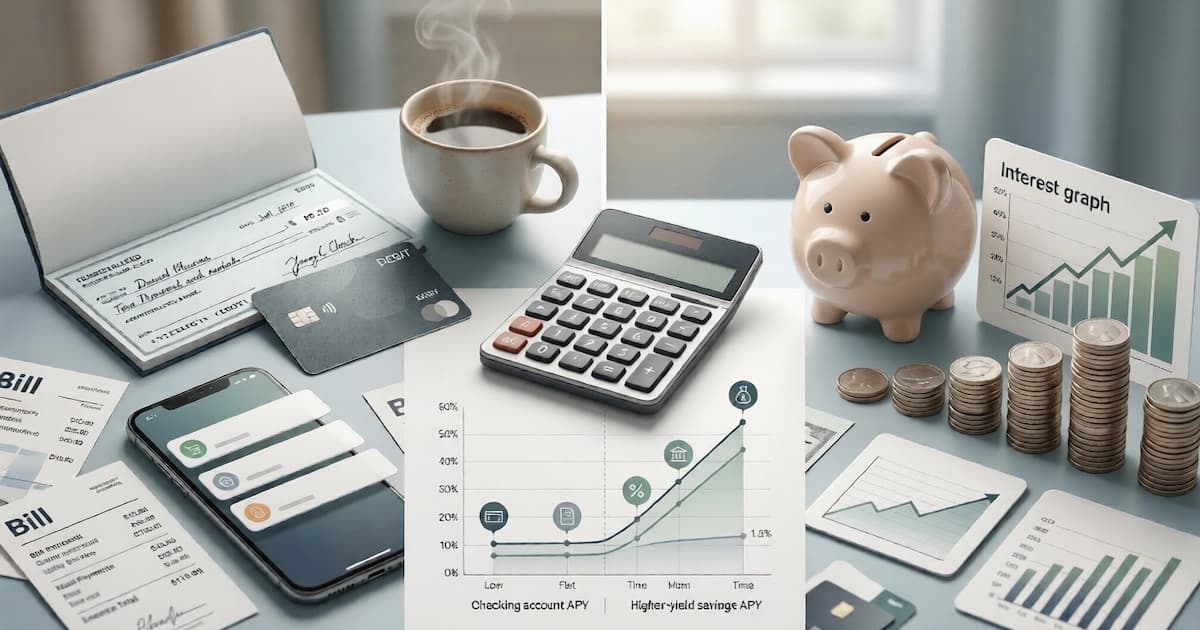
Almost every American adult opens one before any other bank account, usually alongside their first paycheck. The FDIC's 2023 survey found 96 percent of US households had a bank account and only 4.2 percent were unbanked, the lowest rate since the survey began in 2009. For nearly all of those households, the first account is a checking account, the one your daily money actually runs through.
It's also the account most people never really got explained. This covers what a checking account is, how it works, the types you'll see, what it takes to open one, and the fees worth spotting before you sign up.
What is a checking account?
A checking account is a bank account built for everyday money movement: receiving pay by direct deposit, spending on a debit card, paying bills, sending transfers, and withdrawing cash at an ATM. Banks and economists also call it a transaction account or a demand deposit account, meaning you can take your money out on demand with no notice and no limit. (In the UK the same account is called a current account.)
The defining feature is liquidity, not growth. Money flows in and straight back out, which is the opposite of a savings account, where money is meant to sit and earn. Checking pays almost no interest at a traditional bank, usually well under 0.1 percent, precisely because that isn't its job. For the full head-to-head on which account does what, see savings vs checking account; here we're staying on what checking itself is.
How does a checking account work?
A checking account works by letting money flow in from several sources and back out through several spending channels, all against a single balance you can use immediately. Nothing is locked, and there's no cap on how often you transact.
Money comes in through direct deposit of your paycheck, mobile check deposit by photographing a paper check, cash or check deposits at a branch or ATM, and incoming transfers. Money goes out through a linked debit card for purchases, online bill pay, peer-to-peer apps like Zelle and Venmo, ATM cash withdrawals, and paper checks for the landlord or contractor who still wants one. Paper checks are fading fast, from about 19 billion US checks in 2003 to roughly 3.1 billion in 2024 per the Federal Reserve Payments Study, but the checkbook is still part of the account. The balance updates in real time as each of these hits, which is what makes checking the hub your other accounts connect to.
What are the types of checking accounts?
Checking accounts come in several types aimed at different users, but if you only remember three, they are basic, interest-bearing, and premium. Most banks build their lineup from this longer list.
| Type | Who it's for | Defining feature |
|---|---|---|
| Traditional / basic | Most people | Standard debit card and bill pay, low or waivable fee |
| Interest-bearing / high-yield | Larger balances | Pays some interest, often needs a higher minimum |
| Student | Students, often under 24 | Monthly fee usually waived while enrolled |
| Joint | Couples, family | Two or more owners share one account |
| Second-chance | Rebuilding banking history | Opens despite a ChexSystems record, limited features |
| Senior | Typically 55 or 60+ | Fee waivers and perks for older customers |
| Business | Companies, freelancers | Higher transaction limits, separate from personal money |
| Premium / private | High balances | Perks and fee waivers, high minimum (often $5,000 or more) |
Online-only checking, offered by banks like Ally and Capital One 360, cuts across this whole list by dropping the monthly fee on almost any type. The "second-chance" category is the one most people have never heard of: it exists for people who've been reported to ChexSystems, the database banks check for prior account mishandling, and it trades limited features for the ability to get a bank account at all.
What do you need to open a checking account?
Opening a checking account generally takes four things: a government photo ID, a Social Security Number or ITIN, proof of address, and a small opening deposit that's often between $0 and $100. The exact list barely changes from bank to bank.
The government photo ID can be a driver's license, passport, or state ID. For the tax number, banks accept a Social Security Number, and importantly for newcomers to the US, many also accept an Individual Taxpayer Identification Number (ITIN) with a passport, which is the route people without an SSN use. Proof of address is usually a utility bill, lease, or bank statement. The opening deposit is frequently waived, and where it applies it's small, $25 at some banks and $25 to $100 at others. Most banks set a minimum age of 18, or 17 to apply online, and a minor opens a joint account with a parent using a birth certificate. The application itself, in a branch or online, usually takes under 15 minutes once the documents are in hand.
How much does a checking account cost?
A checking account can be free, but the ones that charge fees cluster around three: a monthly maintenance fee, an overdraft fee, and an out-of-network ATM fee. Knowing the 2025 numbers makes a genuinely free account easy to spot.
Per Bankrate's 2025 checking account survey, the average monthly maintenance fee was $5.47 on non-interest accounts and $15.65 on interest checking, the average overdraft fee was $26.77, and the average out-of-network ATM fee was $4.86. A foreign transaction fee of 1 to 3 percent applies on spending abroad at many banks. Maintenance fees are usually waived if you keep a minimum balance, receive a qualifying direct deposit, or hold other accounts at the bank, and online banks often charge nothing at all. Overdraft is its own topic with its own opt-in rules; the mechanics and how to avoid the fee sit in what is overdraft protection. Add two out-of-network ATM trips a month at $4.86 each and that alone is about $117 a year, which is more interest than most checking accounts will ever pay on a normal balance.
Is the money in a checking account safe?
Money in a checking account is protected by FDIC insurance up to $250,000 per depositor, per insured bank, per ownership category, and it's automatic. You don't apply for it or pay for it, and if the bank fails the FDIC reimburses insured deposits within a few business days.
Because coverage is per ownership category, a joint account with two owners is effectively insured to $500,000 at one bank, and a retirement account at the same bank is covered separately again. Credit union checking accounts get the identical $250,000 protection through the National Credit Union Administration (NCUA) rather than the FDIC. The account type does not change the protection; only the depositor, the bank, and the ownership category do. For how deposit insurance works in more depth, see how FDIC deposit insurance works. To confirm a specific bank is covered, the FDIC's BankFind tool lists every insured institution.
What this post deliberately does not cover
This is an explainer on what a checking account is, not advice on which bank or account to choose. It doesn't rank specific banks, and it deliberately keeps a few neighboring topics short and links out instead. The full checking-versus-savings decision lives in savings vs checking account; the overdraft mechanic and its fees are in what is overdraft protection; and the deposit-insurance detail is in how FDIC deposit insurance works. Account terms, fees, and minimums change often and vary by bank, so confirm the current details on the bank's own site before opening anything.
Frequently asked questions
What is a checking account in simple terms? A checking account is a bank account designed for everyday money movement rather than for saving. You receive your paycheck into it by direct deposit, spend from it with a debit card, pay bills online, send transfers, and withdraw cash at an ATM. The money is fully liquid, with no withdrawal limit and no penalty for spending your own balance. The trade-off is that checking pays almost no interest, which is why savings usually sits in a separate account.
What do you need to open a checking account? You generally need four things: a government-issued photo ID such as a driver's license or passport, a Social Security Number or an ITIN, proof of your address like a utility bill or lease, and an opening deposit, which is often $0 to $100. Most banks require you to be at least 18, or 17 to open online, and minors open joint accounts with a parent using a birth certificate. Newcomers to the US without a Social Security Number can often open an account using a passport and an ITIN.
Do checking accounts earn interest, and how much should you keep in one? Most checking accounts pay little or no interest, typically well under 0.1 percent at traditional banks, because the account is built for spending rather than growth. A common rule of thumb is that a checking balance covering about one month of expenses plus a small buffer is enough for the account's job, with longer-term money held elsewhere. How much any individual should keep depends on their own bills and income, so treat that only as a general framing. For the full checking-versus-savings breakdown, see our dedicated comparison.
Are checking accounts safe and insured? Yes. Checking deposits at an FDIC-insured bank are protected up to $250,000 per depositor, per insured bank, per ownership category, and the coverage is automatic, with no application and no cost to you. Because it is per ownership category, a joint account with two owners is effectively insured to $500,000 at one bank. Credit union checking accounts get the same $250,000 protection through the NCUA. If the bank fails, insured deposits are reimbursed within a few business days.
In summary
A checking account is the account your daily money runs through: pay in, debit card and bills out, cash at the ATM, all against one liquid balance that earns next to nothing on purpose. The card attached to it spends that balance directly, which is what separates it from a credit card in fraud liability and credit building alike, covered in credit card vs debit card. The types differ mostly at the edges, basic to premium, student to business, and opening one is a short document exercise: photo ID, tax number, address, a small deposit. Your deposits are FDIC-insured to $250,000, or $500,000 on a two-owner joint account.
The practical thing to carry away is the fee test. A checking account should cost you nothing to hold, so before you open one, check the three numbers that quietly add up: the monthly maintenance fee, the overdraft fee, and the out-of-network ATM fee. If a bank waives all three, the account is doing its one job, moving your money, without charging you for the privilege.
Sources
- Federal Deposit Insurance Corporation, Understanding Deposit Insurance: fdic.gov/resources/deposit-insurance
- Federal Deposit Insurance Corporation, 2023 FDIC National Survey of Unbanked and Underbanked Households: fdic.gov
- Bankrate, 2025 Checking Account and ATM Fee Study: bankrate.com
- Federal Reserve, Federal Reserve Payments Study: federalreserve.gov
- Consumer Financial Protection Bureau, Bank Accounts and Services: consumerfinance.gov
- National Credit Union Administration, Share Insurance Coverage: ncua.gov


You might also like
Why RBI makes every Indian bank pay the same rate below Rs 1 lakh, how savings interest is actually calculated, and what DICGC and FDIC really cover.
17 min read

Checking vs savings account: checking is for spending, savings is for growing. The interest gap, how much to keep in each, and why most people keep both.
10 min read
Overdraft protection covers a short checking balance by a linked transfer or a flat fee. Reg E opt-in, the repealed $5 cap, and India's OD facility explained.
17 min read