Section 80E Education Loan Deduction: What It's Worth

By Tapabrata Biswas · Updated September 3, 2026 · 13 min read
Written and fact-checked by Tapabrata Biswas. How I write
Reviewed by Subir Kumar Debsharma, Tax, GST and ROC professional with 20+ years of experience.

Almost every page about Section 80E leads with the same fact, and the fact is true. There's no upper limit. Deduct the whole interest, however large, unlike the ₹1.5 lakh ceiling on Section 80C.
Then the page stops.
What it rarely says is that the deduction sits outside the tax regime you're in by default, so for most salaried borrowers the amount actually deducted is nil. Nobody denied them anything. Claiming it requires opting out of the default regime, and the opt-out costs more than the deduction returns at most income levels. This post runs that arithmetic. It's an explainer and not tax advice, and the regime decision genuinely turns on numbers only you and a chartered accountant can see.
What is Section 80E?
Section 80E of the Income-tax Act 1961 lets an individual deduct the interest paid on a loan taken for higher education, with no upper limit on the amount, for a maximum of eight years.
Four conditions carry all the weight. The borrower has to be an individual, so a Hindu undivided family is excluded. The lender has to be a bank, a notified financial institution, or an approved charitable institution, which rules out a loan from your uncle however formally you documented it. That one catches people. The interest has to be paid out of income chargeable to tax. And the course has to be higher education, meaning anything pursued after the Senior Secondary Examination or its equivalent.
The eight years are counted from the year you start paying interest, not the year the loan was sanctioned. The Act calls that the initial tax year. You get it plus the seven following, or until the interest runs out, whichever ends first.
One definition is wider than most summaries suggest. The relative whose education qualifies is your spouse, your children, or a student for whom you're the legal guardian. That last clause covers arrangements that aren't parenthood, and it's written into the statute itself.
Principal never qualifies. Only interest. Since a standard reducing-balance EMI is mostly interest early and mostly principal later, the deductible share of an identical EMI shrinks every year you hold the loan. Our explainer on how education loan interest is actually calculated covers that accrual in detail.
Is Section 80E allowed in the new tax regime?
No. The education loan interest deduction is unavailable under the new regime, and the new regime has been the default since FY 2023-24, so it applies unless you actively choose otherwise.
The Income-tax Act 2025, which commenced on 1 April 2026, states this more plainly than the old law did. Section 202 sets the new regime and makes it the default: tax is computed at the Section 202(1) rates "unless the person exercises the option" to leave. Section 202(2)(a) then lists what gets stripped out in computing total income, and clause (xii) reads:
"Chapter VIII other than the provisions of sections 124(1) and 124(2), or 125(2) or 146"
Chapter VIII holds the deductions. The education loan provision sits inside it, and it isn't one of the four survivors. That single clause is the whole answer, and it's one line long.
Four deductions do survive it. They are the more useful half of the clause:
| Survives | What it is | Old number |
|---|---|---|
| Section 124(1) | Employer's contribution to a notified pension scheme | 80CCD(2) |
| Section 124(2) | Raises that ceiling from 10% to 14% specifically inside the default regime | proviso to 80CCD(2) |
| Section 125(2) | The government's contribution to an Agniveer Corpus Fund account | 80CCH(2) |
| Section 146 | 30% of additional employee cost, business income only | 80JJAA |
Two details worth noticing there. Section 124(2) makes the employer-NPS deduction larger inside the default regime rather than smaller, so it's the one deduction that rewards staying. And within Section 125 the government's contribution survives while the Agniveer's own contribution doesn't, an asymmetry that's easy to read past.
What does claiming the deduction actually cost?
Opting out of the default regime to claim education loan interest usually costs more tax than the deduction saves, because the opt-out surrenders the wider slabs and the larger standard deduction at the same time.
Take a salaried filer on ₹15,00,000 gross for FY 2025-26, paying ₹1,50,000 of education loan interest, with Section 80C fully used at ₹1,50,000.
Staying in the default regime, the standard deduction is ₹75,000 and no Chapter VIII deduction applies:
| Step | Amount |
|---|---|
| Gross salary | ₹15,00,000 |
| Standard deduction | ₹75,000 |
| Taxable income | ₹14,25,000 |
| Tax at 5%, 10% and 15% slabs | ₹93,750 |
| Cess at 4% | ₹3,750 |
| Total tax | ₹97,500 |
Opting out to claim both deductions, the standard deduction drops to ₹50,000 and the older, narrower slabs apply:
| Step | Amount |
|---|---|
| Gross salary | ₹15,00,000 |
| Standard deduction | ₹50,000 |
| Section 80C | ₹1,50,000 |
| Education loan interest | ₹1,50,000 |
| Taxable income | ₹11,50,000 |
| Tax at 5%, 20% and 30% slabs | ₹1,57,500 |
| Cess at 4% | ₹6,300 |
| Total tax | ₹1,63,800 |
The deduction is entirely real. At a 30% marginal rate plus cess, ₹1,50,000 of interest is worth ₹46,800 of tax. And claiming it still leaves this filer ₹66,300 worse off, because the regime it lives in charges 20% where the default charges 10%, and 30% where the default charges 15%.
That gap is the number missing from the pages that lead with "no upper limit". The cap was never the constraint. The regime is.
When does opting out actually pay?
At ₹15 lakh gross, the old regime only beats the default once deductions beyond the standard one pass ₹5,43,750, which is far more than a full Section 80C and a typical year of loan interest combined.
Working backwards from the ₹97,500 default-regime bill, the old regime matches it at a taxable income of ₹9,06,250. Subtract that from ₹14,50,000 after the smaller standard deduction and you need ₹5,43,750 of everything else to break even. Our salaried tax guide puts the same threshold at ₹5,93,750 because it counts the ₹50,000 standard deduction inside the total. Same arithmetic, different convention, and it is worth knowing which one a break-even figure is using before comparing two of them. With ₹1,50,000 of that taken by Section 80C, the education loan interest alone would have to reach ₹3,93,750, which at 10% implies roughly ₹39 lakh still outstanding. That is a large loan.
Very few education loans are that large. Some are, particularly for overseas medicine and US master's programmes, and for those borrowers the arithmetic genuinely flips.
The honest complication is that education loan interest is rarely the only thing on the list. House rent allowance is also unavailable in the default regime. For a tenant in Mumbai or Bengaluru the HRA exemption alone can run past ₹3 lakh. Add that to ₹1.5 lakh of Section 80C and ₹1.5 lakh of interest and the ₹5,43,750 bar is cleared comfortably. So the deduction rarely justifies the switch on its own, and it regularly decides a switch that was already close. The old versus new regime calculator runs both sides line by line, including the rebate and the marginal relief.
One asymmetry decides how freely you can revisit this. A salaried filer with no business income exercises the option with each year's return, so the choice is annual and reversible. A filer with business or professional income gets one withdrawal, after which, in the Act's own words, the person "shall never be eligible to exercise the option" again unless the business income ceases. Against an eight-year deduction window, that's a materially different decision for a consultant than for an employee.
Which number applies now, 80E or Section 129?
Both, and the split is by tax year. Section 80E of the 1961 Act governs returns for FY 2025-26, filed as assessment year 2026-27, while Section 129 of the Income-tax Act 2025 governs tax year 2026-27 onward.
The 1961 Act was repealed with effect from 1 April 2026. Its repeal provision preserves it for tax years beginning before that date. So the return most people are filing right now still runs on the old numbering. Anyone telling you 80E no longer exists is early, and anyone who's never heard of Section 129 is behind.
The substance carried over intact, which is worth stating plainly because renumbering usually invites suspicion that something changed:
| Feature | Section 80E (1961) | Section 129 (2025) |
|---|---|---|
| Who can claim | Individual only | Individual only |
| What qualifies | Interest only, no principal | Interest only, no principal |
| Upper limit | None | None |
| Duration | Initial year plus seven | Initial year plus seven |
| Lender | Financial or approved charitable institution | Financial or approved charitable institution |
| Relative | Spouse, children, legal ward | Spouse, children, legal ward |
Nothing of substance moved. The number did, and so did the clause that disallows it: what was handled by Section 115BAC is now Section 202.
There's one small oddity in the new Act worth flagging for anyone reading it directly. Section 129(3)(a) defines an approved charitable institution by pointing back at Section 10(23C) and Section 80G(2)(a) of the 1961 Act, so the new statute cites the repealed one to complete its own definition. If you're checking whether a particular lender qualifies, you'll still be reading the old Act to do it.
Section 80C went through the same renumbering, landing as Section 123 with its list moved into Schedule XV, and our Section 80C guide tracks that mapping. For how the slabs themselves are structured across both regimes, see the income tax slabs explainer.
What this post deliberately does not cover
It doesn't tell you which regime to choose. That depends on your rent, your insurance, your home loan, your investments and your income, and the calculation is specific enough that it belongs with a chartered accountant who can see all of it at once.
It doesn't cover the process of claiming: which ITR schedule, what the lender's interest certificate looks like, or how to report it. Process content dates fast and the department's own utility is the better guide.
It doesn't cover Sections 80EE and 80EEA. Those turn up beside 80E in almost every search result and they're home loan interest deductions, an entirely different provision for an entirely different loan.
It doesn't cover the US student loan interest deduction, which works on opposite principles: capped at $2,500, claimable without itemising, and phased out above a modest income. That contrast belongs in its own post.
And it doesn't cover education loan eligibility, sanction, moratorium terms or interest rates, none of which are tax questions.
Frequently asked questions
Is 80E allowed in the new tax regime?
No. The education loan interest deduction is not available to anyone taxed under the new regime, and since FY 2023-24 the new regime is the default, so it applies unless you actively choose otherwise. Under the Income-tax Act 2025 the rule is explicit: Section 202(2)(a)(xii) computes total income without any deduction under Chapter VIII other than Sections 124(1), 124(2), 125(2) and 146. The education loan provision, now Section 129, sits inside Chapter VIII and is not one of those four exceptions. You can still claim it, but only by opting out of the default regime, and that opt-out costs you the wider slabs and the ₹75,000 standard deduction. Whether the trade is worth making depends on your total deductions, which is a computation worth running with a chartered accountant.
Who is eligible for an 80E deduction?
An individual, and only an individual. A Hindu undivided family cannot claim it, which separates this from several neighbouring deductions. The loan must be taken from a bank or notified financial institution, or from an approved charitable institution, so a loan from a relative or a private lender does not qualify however genuine it is. The education can be your own or a relative's, and the Act defines relative for this purpose as your spouse and children, or a student for whom you are the legal guardian. The interest must be paid out of income that is chargeable to tax. Untaxed money will not do. Note that the person claiming is the person repaying the loan, which is usually the parent, since a student in course rarely has taxable income yet.
What is the maximum deduction under section 80E?
There is no maximum. This is the genuine feature of the provision and the reason it gets quoted so often. Unlike Section 80C with its ₹1.5 lakh ceiling, the education loan deduction has no monetary cap at all, so the entire interest paid during the year qualifies. The limit is on time rather than amount. The deduction runs for the tax year in which you start paying interest, called the initial tax year, plus the seven years immediately after it, or until the interest is fully paid, whichever comes first. Eight years total. Principal repayment never qualifies, only interest, which surprises borrowers whose EMI is mostly principal in the later years.
Can I claim both 80C and 80E?
Yes, and they do not interact or share a limit. Section 80C covers a defined list of investments and payments capped at ₹1.5 lakh, while the education loan deduction covers interest with no cap, so the two run in parallel and add together. The catch is the one that applies to both. Neither survives the default regime. If you opt out to claim your education loan interest, your 80C deduction comes with you, and it is the combined figure that decides whether opting out is worth it. On a ₹15 lakh salary the two together need to reach about ₹5,43,750, counting deductions beyond the standard one, before the old regime beats the new one, and a full 80C plus ₹1.5 lakh of interest reaches only ₹3 lakh.
Is Section 80E applicable for foreign education?
Yes. The Act attaches no geographic condition to the course, so a loan for study abroad qualifies on the same terms as one for study in India. What the Act does define is the level of study: higher education means any course pursued after passing the Senior Secondary Examination or its equivalent from a recognised school, board or university. That covers undergraduate and postgraduate study, vocational courses and doctoral work, and it excludes schooling below that level. The condition that does bite for overseas study is the lender. The loan still has to come from a bank, a notified financial institution or an approved charitable institution, so a loan raised abroad from a foreign lender outside that description will not qualify.
In summary
The uncapped deduction is real, and for the overseas-medicine borrower carrying ₹40 lakh it's worth a great deal. For the ₹15 lakh salaried borrower paying ₹1.5 lakh of interest, the deduction is worth ₹46,800 and reaching it costs ₹66,300, so the pages celebrating the missing cap are describing a benefit that particular reader can't collect. Work out your total deductions first, and let the education loan interest be the last figure you add, once the decision is already close.
Sources
- Income Tax Department: the Income-tax Act, 2025. Sections 129, 202, 124, 125 and 146 are quoted in this post from the Act as published in the Gazette of India.
- Income Tax Department: objective and scope of the new Act
- Income Tax Department: new regime and old regime FAQs
- Income Tax Department: which return applies to you
- US Internal Revenue Service, Topic 456: student loan interest deduction, for the contrast noted above




You might also like
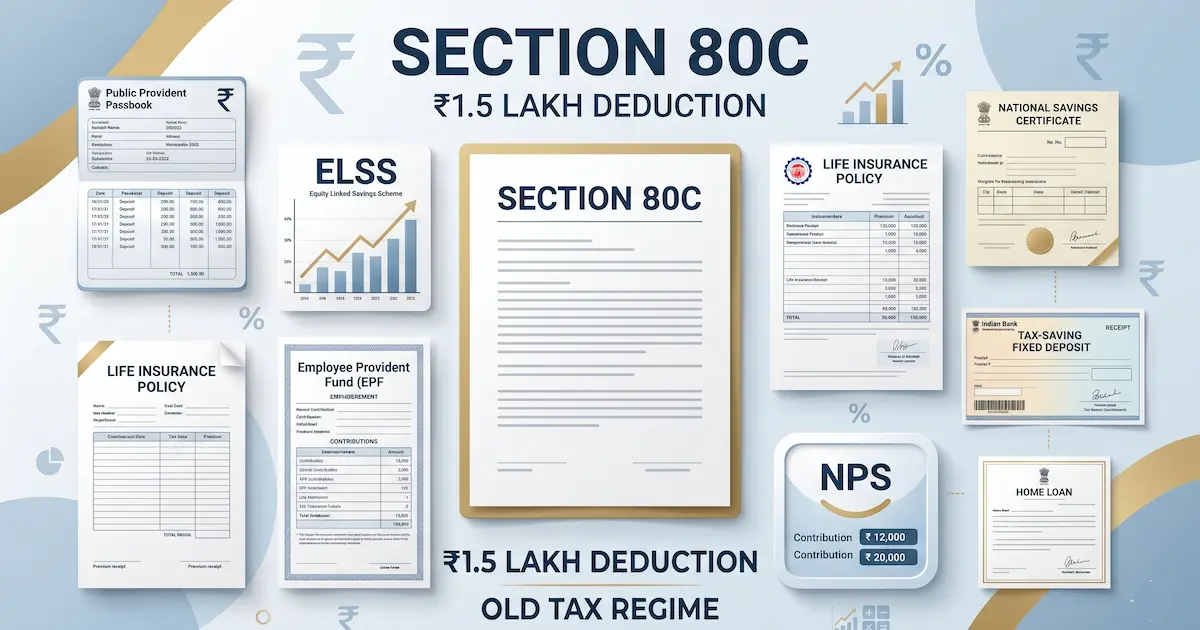
Section 80C cuts up to Rs 1.5 lakh off taxable income under the old regime only. The list, the limit, and where it lands as Section 123.
16 min read
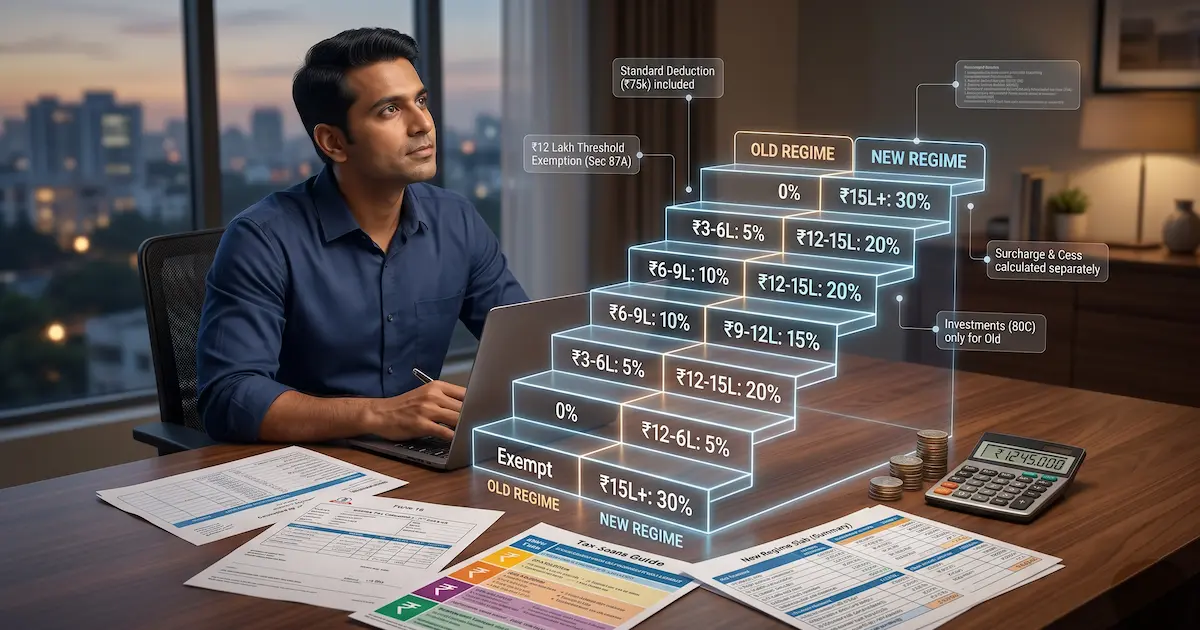
Income tax slabs in India for FY 2025-26 (AY 2026-27): new and old regime rates, the ₹12.75 lakh salaried zero-tax point, the 87A rebate, surcharge, and cess.
18 min read
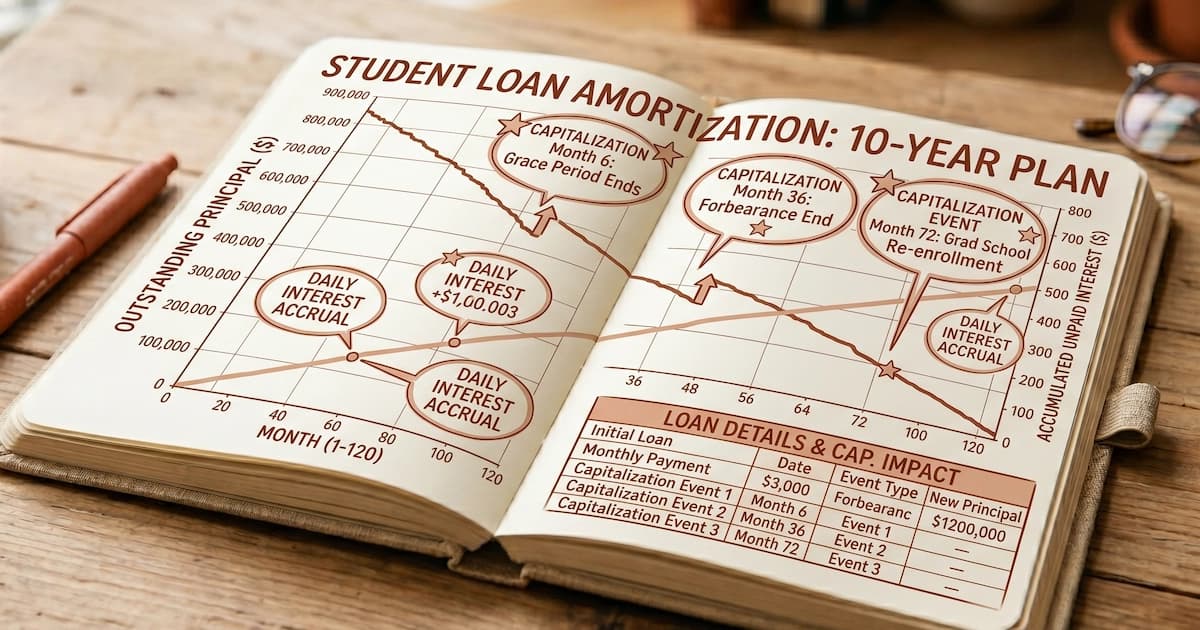
Daily simple interest accrual, capitalisation rules, and the actual rates on US federal loans and Indian education loans, in plain English.
11 min read