RBI Gold Loan Rules 2026: LTV Tiers and ₹5,000 a Day

By Tapabrata Biswas · Published August 30, 2026 · 12 min read
Written and fact-checked by Tapabrata Biswas. How I write
Reviewed by Subir Kumar Debsharma, Tax, GST and ROC professional with 20+ years of experience.

Every page currently ranking for the new gold loan rules is published by somebody who lends against gold. That is not an accusation, it is just what the search results are: Muthoot, IIFL, Shriram, Kosamattam, Poonawalla. They are the people who know this subject best. They are also the people with the least reason to lead with the parts that cost them money.
So this post works through the Reserve Bank of India (Lending Against Gold and Silver Collateral) Directions, 2025 by paragraph number, and gives as much room to the four provisions the lender pages leave out as to the one they all lead with. This is an explainer, not advice on whether to pledge your gold. A gold loan puts a family asset at risk to raise cash, and whether that trade makes sense for you is a conversation for a professional who can see your whole position.
What are the new RBI gold loan rules?
The Reserve Bank of India (Lending Against Gold and Silver Collateral) Directions, 2025 are a single rulebook covering how banks, NBFCs and co-operative lenders may lend against pledged gold and silver. They were notified on 6 June 2025, updated on 29 September 2025, and took effect on 1 April 2026.
Before them, gold lending ran on a patchwork of circulars that applied differently to banks and to non-banking finance companies. The Directions replace that with one set of rules for every regulated lender, and they change the headline number that decides how much you can borrow.
What is the LTV ratio, and what are the 2026 tiers?
The loan-to-value ratio is the share of your pledged gold's assessed value that a lender is allowed to advance you. At an 85% ratio, gold assessed at ₹1 lakh supports a loan of ₹85,000.
Paragraph 19 sets the ceiling for consumption loans, and it is now tiered by loan size:
| Loan amount | Maximum LTV |
|---|---|
| Up to ₹2.5 lakh | 85% |
| Above ₹2.5 lakh, up to ₹5 lakh | 80% |
| Above ₹5 lakh | 75% |
The old position was a flat 75% for everyone. The change is genuinely favourable at the small end, where a ₹2 lakh borrower can now raise the same money against noticeably less gold.
Two qualifiers travel with those numbers and are usually dropped. The tiers are written for consumption loans, so borrowing for an income-generating purpose is assessed on a different basis. And the valuation counts the precious metal only, so the stones set into an ornament, and the weight of anything that is not gold, are excluded before the ratio is applied. A necklace that weighs 40 grams on the scale is not 40 grams of loan-eligible gold.
Our gold loan LTV calculator works the tiers against your own weight and gold rate, and it marks the two points where pledging more gold raises your limit by nothing at all.
What happens if the gold price falls during the loan?
Paragraph 20 requires that the prescribed LTV ratio be maintained on an ongoing basis throughout the tenor of the loan. Not measured once at the start. Maintained.
This is the provision with the most consequence for a borrower and the least coverage anywhere else. Work through why. You borrow ₹85,000 against ₹1 lakh of gold, right at the 85% ceiling. Six months later the gold price has fallen 15%, so the same ornaments are now assessed at ₹85,000. Your outstanding balance has not moved with the price. Your effective ratio is now 100%, and the loan sits outside the permitted tier through no decision of yours.
What the Directions do not say is what happens next. They impose the maintenance obligation on the lender and stop there. No paragraph sets out a cure period, a notice requirement, or a prescribed remedy. That silence is the finding: the consequence lives in your loan agreement, not in the regulation, so the document that tells you whether you face a top-up demand, a part-prepayment call or a shortened tenor is the contract you sign, and it is worth reading that clause before you sign, not after gold moves.
How long can a lender hold your gold after repayment?
Paragraph 35 gives the lender the same day, and seven working days at the absolute outside. Its wording is that a lender shall release or return the pledged collateral to the borrower or legal heirs "on the same day but in any case, not exceeding a maximum period of seven working days upon full repayment or settlement of the loan."
Paragraph 46 attaches a number to missing it. Where the delay is attributable to the lender, it "shall compensate the borrower(s)/ legal heir(s) at the rate of ₹5,000 for each day of delay" beyond that deadline.
That figure deserves reading twice, because it is unusually large for a consumer-protection provision and it accrues daily. A two-week delay is ₹70,000. Neither of the two lender pages examined for this post states the amount: one omits the subject entirely and the other says only that "penalties apply". A borrower who does not know the number has no way to tell whether an offered goodwill gesture is generous or a fraction of an entitlement.
What are the rules on bullet repayment gold loans?
A bullet repayment loan is one where you pay nothing during the term and clear the interest and principal together at the end, and paragraph 15 caps these at 12 months for consumption loans.
They are popular precisely because they demand nothing month to month, which is also what makes the twelve-month boundary matter. Renewal is possible but conditional, and paragraph 11 sets four conditions at once: a formal request from the borrower, a fresh credit assessment, a loan still classified as standard, and room inside the permissible LTV.
That last condition is where paragraph 20 comes back. If gold has fallen, the renewal you were relying on may not be available on the same terms, because the LTV headroom that renewal depends on is measured at the price on the day you ask.
How much gold can one borrower pledge?
The caps apply per borrower across all loans taken together, which is the part that surprises people who borrow from more than one lender.
| Collateral | Cap per borrower |
|---|---|
| Gold ornaments | 1 kg |
| Gold coins | 50 g |
| Silver ornaments | 10 kg |
| Silver coins | 500 g |
Because these aggregate across every loan a borrower holds, a second lender does not come with a fresh allowance. Neither lender page examined for this post mentions the caps at all.
What the lender pages leave out
The teardown behind this post was done on 30 August 2026, on the pages then ranking. It is a small sample and it is worth stating as one, but the pattern inside it is consistent.
| Provision | Shriram Finance, 12 Feb 2026 | IIFL, 4 Mar 2026 |
|---|---|---|
| Tiered LTV 85/80/75 | stated | absent, still prints the old flat 75% |
| Ongoing LTV maintenance | absent | mentions "closer monitoring", no consequence |
| ₹5,000 a day compensation | "penalties apply", no figure | absent |
| 12-month bullet cap | absent | absent |
| Per-borrower weight caps | absent | absent |
The IIFL entry is the one worth pausing on. Published on 4 March 2026, under four weeks before the tiered structure commenced, it told readers that "most lenders continue to align with the traditional benchmark cap of 75%". That was the position it was describing on the way out.
Read the table by column and it is a list of pages that could be better. Read it by row and something else shows up. The provision every page carries is the one that lets a borrower take a larger loan. The four that go missing are a cap on a loan product, a limit on how much can be pledged, a risk that lands on the borrower mid-term, and a sum the lender owes when it is late. None of those helps sell a gold loan. That is not dishonesty, it is what happens when the only people writing about a rulebook are the people it regulates.
What this post deliberately does not cover
It does not give current gold loan interest rates or per-gram lending rates. Those move daily, every lender publishes its own, and a page carrying them is stale within a week. It does not compare lenders or name a best one. It does not tell you whether a gold loan is the right way to raise money, which depends on what else you could pledge or sell, what the money is for, and how secure your repayment is. Where the alternative is a personal loan, the comparison turns on your credit score in a way a secured gold loan does not, since the gold rather than your record is doing the work. And if you are thinking about gold as an investment and not as collateral, that is a different question, covered in our post on the sovereign gold bond scheme.
It also does not cover the prudential and disclosure obligations the Directions place on lenders themselves, such as auction procedure and internal valuation policy, which matter to a compliance team and not to a borrower.
Frequently asked questions
What is the maximum LTV ratio for a gold loan in 2026? It depends on the size of the loan, which is what changed. For consumption loans against gold or silver, paragraph 19 of the RBI Directions sets 85% where the loan is up to ₹2.5 lakh, 80% where it is above ₹2.5 lakh and up to ₹5 lakh, and 75% above ₹5 lakh. Before this, a flat 75% cap applied across the board. The tiers are scoped to consumption loans, so a loan taken for an income-generating purpose is assessed differently. One point worth noting is that the ratio applies to the value of the precious metal only, so stones and other non-gold parts of an ornament are excluded from the valuation.
What does 75% LTV mean on a gold loan? It means the lender may advance you 75 paise for every rupee of assessed gold value. On gold valued at ₹4 lakh, a 75% ratio is a maximum loan of ₹3 lakh. The remaining 25% is the lender's cushion against a fall in the gold price and against the cost of recovering its money if the loan is not repaid. That cushion is also why the tier falls as the loan grows: a bigger loan is a bigger exposure to the same price movement, so the regulator requires a thicker margin.
What happens if the gold price falls during my loan? The rule that matters here is paragraph 20, which says the prescribed LTV ratio shall be maintained on an ongoing basis throughout the tenor of the loan. Your outstanding balance does not fall when gold does, so a price drop raises your effective LTV and can push it past the permitted tier. What the Directions do not do is spell out what follows from a breach. They require maintenance and stop there, leaving the mechanism to the lender's own policy, which is why the loan agreement rather than the regulation is where you find out whether you face a top-up demand or a part-prepayment call.
How long can a lender keep my gold after I repay? Paragraph 35 says the lender shall release the pledged collateral on the same day, and in any case within a maximum of seven working days of full repayment or settlement. Paragraph 46 then puts a price on missing that: where the delay is attributable to the lender, it shall compensate the borrower at ₹5,000 for each day of delay beyond the paragraph 35 timeline. The compensation is per day and not a one-off, and it is written as an obligation on the lender rather than something a borrower has to negotiate for.
How much gold can I pledge under the new rules? The caps are per borrower across all loans taken together, not per loan, which is the part that catches people with borrowings at more than one lender. The limits are 1 kg for gold ornaments, 50 g for gold coins, 10 kg for silver ornaments and 500 g for silver coins. Because they aggregate, a second loan elsewhere does not come with a fresh allowance.
In summary
The rule people ask about is the LTV, and the answer is now three numbers instead of one: 85% up to ₹2.5 lakh, 80% to ₹5 lakh, 75% above it, for consumption loans, on the precious metal content only.
The rules people do not ask about are the ones worth carrying. Your LTV has to hold for the life of the loan and not just on day one, and the Directions leave the consequence of a breach to your loan agreement. A bullet loan runs twelve months and renewal is conditional on headroom you may not have. The weight you can pledge is capped across all your lenders at once. And if your gold comes back late through the lender's fault, that is ₹5,000 a day, which is a number worth knowing before you are offered a smaller one.
Sources
- Reserve Bank of India, Reserve Bank of India (Lending Against Gold and Silver Collateral) Directions, 2025, notified 6 June 2025, updated 29 September 2025, effective 1 April 2026. Paragraph 19 for the tiered LTV, paragraph 20 for ongoing maintenance, paragraph 15 for the bullet-loan cap, paragraph 11 for renewal conditions, paragraph 35 for the release timeline, paragraph 46 for the compensation, paragraph 16 for the weight caps: rbi.org.in
- Shriram Finance, RBI Gold and Silver Loan Guidelines, published 12 February 2026, read 30 August 2026 for the competitor comparison: shriramfinance.in
- IIFL Finance, RBI's Final Gold Loan LTV Norms from April 2026, published 4 March 2026, read 30 August 2026, for the flat 75% figure quoted above: iifl.com



You might also like

RBI barred pre-payment charges on loans sanctioned from 1 January 2026, but only on floating-rate loans. Most personal loans are fixed, so check which you hold.
11 min read
The Sovereign Gold Bond scheme closed to new subscription in February 2024, and from April 2026 only original subscribers holding to maturity stay tax-exempt.
17 min read
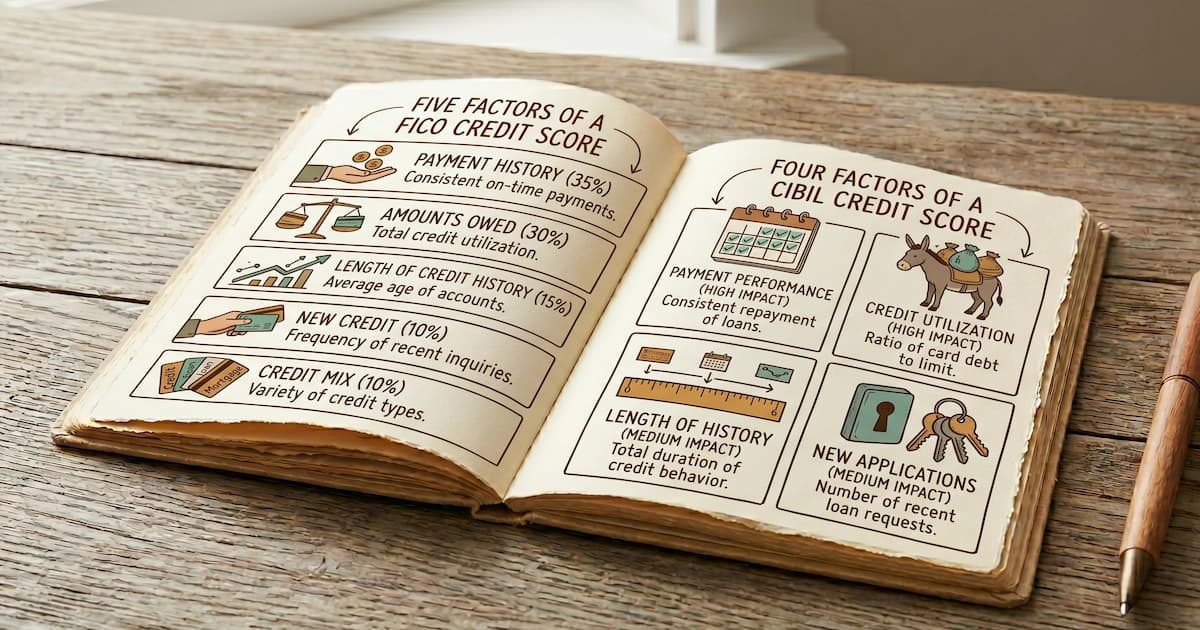
How credit scores are calculated: FICO's five published weights, why CIBIL publishes none, what both models ignore entirely, and what changed in 2026.
19 min read