Budgeting Tips for Beginners: 12 Habits That Work

By Tapabrata Biswas · Published May 10, 2026 · 9 min read
Researched with AI assistance, reviewed and edited by Tapabrata Biswas.

About 60% of people who start a budget abandon it within two months. The reason is rarely lack of discipline. It's that the first budget is built on assumptions that turn out to be wrong, and the resulting collapse feels like personal failure when it's actually just a measurement problem. The household didn't fail; the categories did.
A first budget is a research instrument, not a binding contract. The goal of month one is to find out what you actually spend; the goal of month two is to fix the categories that were obviously wrong; the goal of month three is to settle into a routine that holds. Twelve practical tips survive the first ninety days, organised by when in the cycle they matter most.
Tips for week one
Start with net income, not gross. The number at the top of every budget is what actually lands in your checking account, not what you earn before taxes. Pull your last two pay stubs and use the after-tax, after-deduction figure. Budgeting against gross is the most common first-time error and produces shortfalls equal to the deduction percentage every single month.
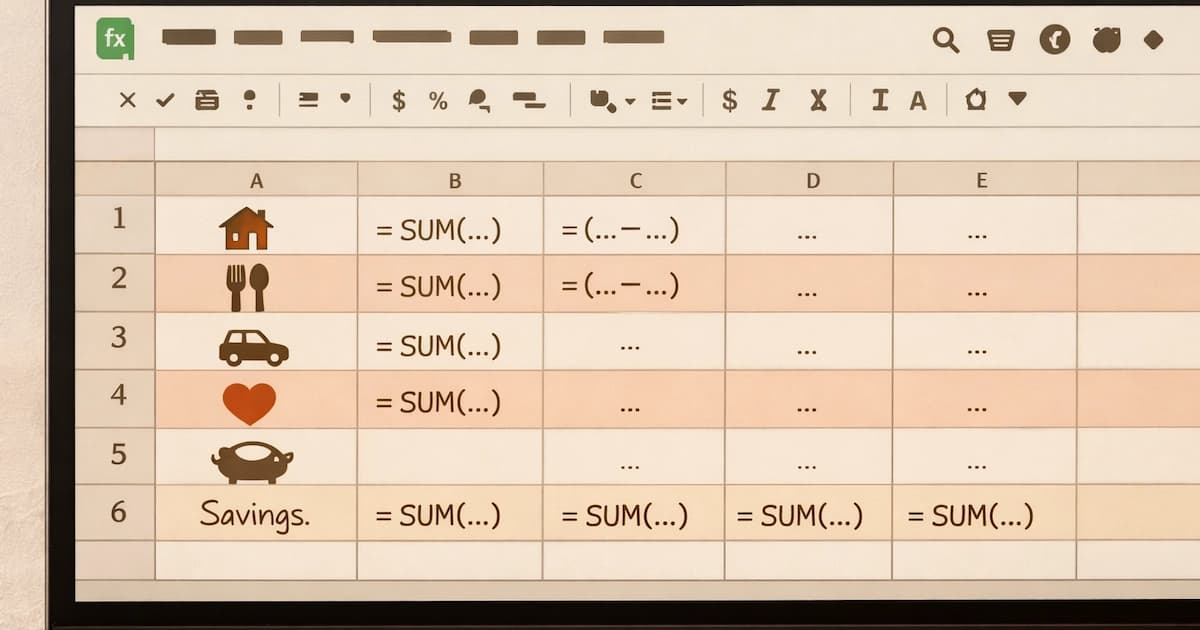
Pull two months of statements before you open a spreadsheet or build a budget in Google Sheets. Bank and credit card statements from the last 60 days will tell you what you actually spend, not what you think you spend. Almost every beginner discovers categories they had forgotten, a streaming service from 2023, a subscription that quietly renewed, recurring transfers to a friend. Spend an hour on this before deciding any category amounts.
Pick a method, then start. The exact method matters less than starting. The 50/30/20 rule is the simplest starting point. Zero-based budgeting is more rigorous. The envelope method suits households recovering from credit-card overspending. None of them work if the household waits another month to "research more."
Tips for the first month
Use realistic numbers, not aspirational ones. Budgeting groceries at $300 when you historically spend $500 is a recipe for an immediate shortfall. The first budget is for measurement; tighten in month two if you choose to. Setting numbers below your historical spending is the second-most-common cause of first-month collapse.
Keep the category list short. Twenty-five categories on a first budget is too granular. Start with ten or twelve: rent, utilities, groceries, transport, eating out, subscriptions, personal spending, gifts, savings, debt payment, miscellaneous buffer. You can split categories in month three once you know which ones matter.
Leave a buffer line. Months will have at least one item nobody anticipated, a friend's wedding present, a school fee, a car battery, a copay. A small buffer ($50-$100) prevents the budget from collapsing on the first surprise. Without it, the entire month gets retroactively blamed.
Tips for ongoing maintenance
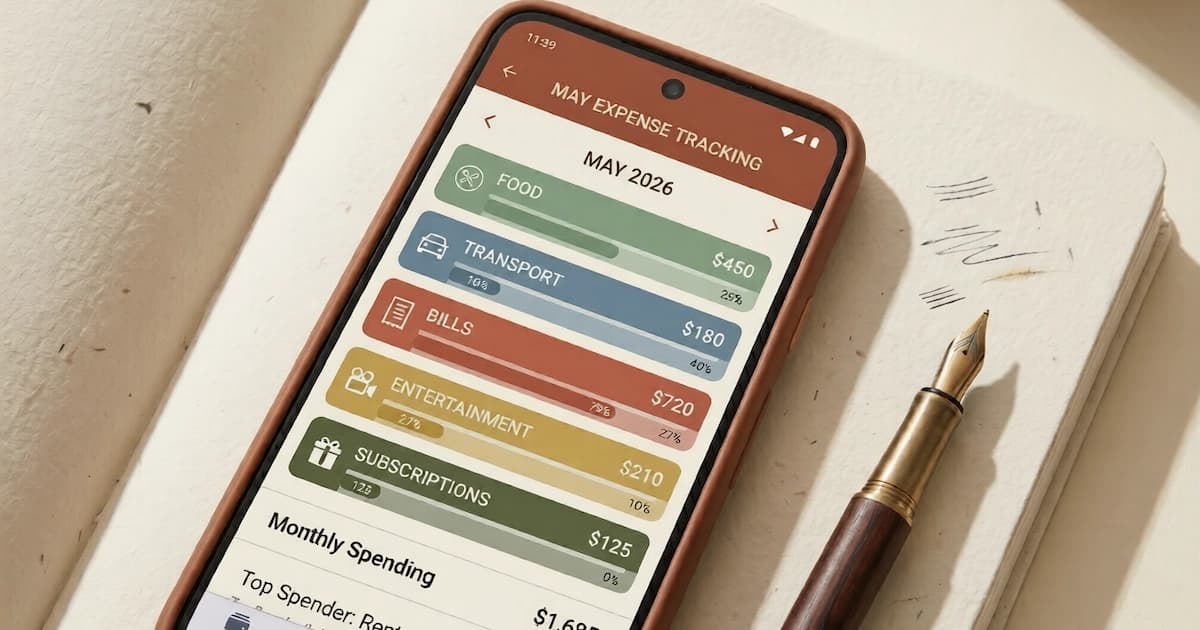
Check in once a week, briefly. Ten minutes once a week is enough to update categories with what's been spent and identify any line on track to overspend. A budget without a check-in is just a wish list. The check-in doesn't have to be elaborate: open the app or spreadsheet, scan the categories, note any that need attention.
Separate fixed bills from variable spending. Fixed bills (rent, utilities, internet, insurance, minimum debt payments) should be on autopay and out of the daily decision queue. Variable spending (groceries, eating out, entertainment) is where attention belongs because that's where most overspending happens. Mixing them in the same mental category makes both harder to control.
Pay yourself first, automatically. A scheduled transfer to savings on payday, before any bills are paid, works far better than trying to save the leftover at month-end. The leftover rarely materialises. The pay yourself first method is the structural fix for that pattern.
Tips for handling the inevitable misses
When a category runs short, move money rather than panic. If groceries hit $510 by week three of a $480 budget, the standard fix is to move $30 from another category that has surplus, entertainment, miscellaneous, eating out, and continue. The total still reconciles; you haven't created new money. Repeated shortfalls in the same category are a signal to increase the allocation in next month's budget, not to abandon the system.
Don't restart the budget mid-month after one bad week. A single overspent category is not a reason to throw out the whole budget. Most beginners interpret one failure as system failure and abandon the entire process; experienced budgeters interpret it as data and adjust the next month. Restarting mid-month is almost always a bigger setback than absorbing the one overspend and continuing.
Review the categories monthly, not weekly. The weekly check-in is for tracking; the monthly review is for adjusting. At the end of each month, ask which categories were too high, which were too low, and what surprises you didn't budget for. That's where the budget evolves into something that fits the actual household. By month three, most categories stabilise.
What separates beginners who stick with it
Three patterns show up in households who keep budgeting past the three-month mark.
The first is treating month one as research. The first budget is approximate by nature because the household has incomplete information about its own spending. Households who expect month one to be precise feel like failures when it isn't. Households who treat it as a measurement exercise stay engaged.
The second is having a clear reason. Budgeting for budgeting's sake rarely sustains motivation. Budgeting to build a $1,000 emergency fund, to clear a specific credit card balance, to save for a wedding, or to hit a savings rate that compounds toward financial freedom. Those reasons survive bad months.
The third is forgiving small misses. Households who treat every overspend as a moral failure burn out quickly. Households who treat overspends as data ("groceries were $520 this month: I should budget $510 next month") improve the numbers without exhausting the willpower.
The Consumer Financial Protection Bureau's research on financial well-being finds that households who maintain any form of written budget, spreadsheet, app, or notebook, report higher financial well-being than those who don't, regardless of income level. The method matters less than the practice. The practice matters less than the persistence past month three.
Common mistakes beginners make
Six patterns trip beginners up regularly.
The first is budgeting against gross income. Already covered above, but worth repeating because it's the single most common first-time error.
The second is too many categories. Twenty-five granular categories on a first budget feels organised but is administratively exhausting. Start with twelve.
The third is aspirational numbers in month one. "I should spend $200 on groceries" when you historically spend $500 sets up immediate failure. Use real numbers; cut aggressively in month three after the data exists.
The fourth is no tracking. A budget that sits in a notebook untouched after the 1st isn't a budget. Without weekly check-ins, the budget is a wish list.
The fifth is restarting after one bad week. Treat misses as data, not as evidence the system doesn't work.
The sixth is skipping the buffer line. A budget with no buffer collapses on the first unexpected expense. $50-$100 absorbs almost every routine surprise.
What experts say
NerdWallet's beginner budgeting guide covers similar ground and emphasises the importance of net income and weekly check-ins. Investopedia's budgeting overview provides the conceptual background on why budgeting works as a financial discipline, regardless of method.
The Consumer Financial Protection Bureau's bill-tracking tools are free and designed for beginners, particularly useful for the first-month "what do I actually spend?" measurement phase before settling on any specific budgeting method.
For the full step-by-step setup of the most rigorous beginner-friendly method, see our piece on how to make a budget for the first time. For the underlying gross-versus-net distinction that every budget depends on, see the difference between gross and net income.
Frequently asked questions
What is the most important first step when starting a budget? Calculate your real take-home (net) income. Most first-time budgets fail because they are built around gross income or a guess at net income. Pull your last two pay stubs, look at the actual number that lands in checking, and start from there. Everything else depends on that number being accurate.
How long does it take to feel comfortable with a budget? Most beginners report that month three is the turning point. Month one is messy because you're discovering what you actually spend; month two is adjusting the categories that were wrong; month three is the first cycle where the numbers feel familiar and the routine is established. Stick with it through three full cycles before judging the method.
What is the simplest budget for a complete beginner? The simplest credible starting framework is the 50/30/20 rule: 50% of net income to needs, 30% to wants, 20% to savings and debt. It requires no spreadsheets, no apps, and no granular categories. It's not the most precise method, but it's the most likely to survive the first three months.
Should beginners use a budgeting app or a spreadsheet? Either works. Apps (Goodbudget, EveryDollar, YNAB, Monarch) reduce manual entry by syncing with bank accounts; spreadsheets give full control and zero subscription cost. The choice that actually matters: pick the one you're most likely to open every week. The best tool is the one you keep using.
In summary
The twelve tips that matter most for budgeting beginners cluster into three phases: setup (use net income, pull two months of statements, pick a method and start), execution (realistic numbers, short category list, weekly check-ins, automation, a buffer line), and recovery (move money rather than panic, don't restart after one bad week, review monthly). The single biggest predictor of long-term success is treating the first month as research rather than as a binding contract.
The first budget is never accurate. That's the whole point of doing it. The second one is when the method actually starts.
Once you're ready to choose a framework, our guide to which budgeting method fits you walks through the main options.
Sources
- NerdWallet, How to Budget: nerdwallet.com/article/finance/how-to-budget
- Investopedia, Budget: investopedia.com/terms/b/budget.asp
- Consumer Financial Protection Bureau, Financial Well-Being in America: consumerfinance.gov/data-research/research-reports/financial-well-being-america
- Consumer Financial Protection Bureau, Consumer Tools: consumerfinance.gov/consumer-tools



You might also like

Give every rupee a job until income minus spending is zero. The five steps, a worked example in rupees and dollars, and where it breaks down.
14 min read

The rule everyone can recite leaves three things unresolved: which net income to use, where debt sits, and what to do when needs already eat 70%.
11 min read

Personal finance basics explained in plain English: income, saving, debt, credit, and investing, the small set of concepts every adult tends to encounter.
10 min read