15 Best Personal Finance Podcasts Still Live in 2026

By Tapabrata Biswas · Updated September 6, 2026 · 17 min read
Researched with AI assistance, reviewed and edited by Tapabrata Biswas.

A podcast recommendation list has one job that almost none of them do: check whether the shows still publish.
We read the pages ranking for this term and its offshoots, and found three dead shows still being recommended. Listen Money Matters ended in May 2020. The Fairer Cents stopped on 8 April 2020 and still sits on a current best-podcasts-for-women list. Zerodha Educate has posted nothing dated since January 2024. All three keep appearing, because a list is only as current as the day it was last checked, and most were not checked.
So this page carries a status for every show, with the newest episode we could confirm. Fifteen came through that check: eleven on the main shortlist and four more in the section for women. Two markets, India and the US, sorted by who each show is for and where you would listen, plus honest notes in the two places we could not verify something, which is more useful stated than hidden.
What makes a finance podcast worth the time?
The signal that a show is worth subscribing to is a long, unbroken publishing record, because it predicts the show will still be there next month. Everything else is secondary to that.
Three things separate a podcast that builds knowledge from one that fills commute time. The host has real expertise or genuine fact-checking, a CFP or a finance journalist over a confident generalist. The format teaches a repeatable framework, not a string of stories, which is why caller-question shows work: the same money problems recur, and the answers educate by repetition. And the release cadence is steady, because a show that has run weekly for years has editorial muscle a new one has not built.
That last point is also the one you can check yourself in ten seconds, by looking at the date on the latest episode. It is the check this whole page is built on.
The 2026 shortlist, with status
Every show below was confirmed publishing in 2026 when this was checked, with the newest episode date we could find. The status column is the part no competitor list carries.
| Podcast | Hosts | Market | Latest confirmed |
|---|---|---|---|
| The Ramsey Show | Ramsey team | US | Active, weekly |
| The Money Guy Show | Brian Preston, Bo Hanson | US | Active, Jul 2026 |
| Planet Money | NPR | US, global | Active, weekly |
| ChooseFI | Brad Barrett, Jonathan Mendonsa | US | Active, Jun 2026 |
| BiggerPockets Money | Mindy Jensen, Scott Trench | US | Active, Jul 2026 |
| Afford Anything | Paula Pant | US | Active, Jul 2026 |
| Paisa Vaisa | Anupam Gupta | India | Active, 2026 |
| Let's Talk Money | Monika Halan | India | Active, Jan 2026 |
| Why Not Mint Money | Mint, rotating hosts | India | Active, 2026 |
| Finshots Daily | Finshots | India | Active, Jul 2026 |
| Capitalmind | Deepak Shenoy, Shray | India | Active, May 2026 |
All are free on the major podcast platforms. A couple of accuracy notes that ripple through other lists: ChooseFI's Jonathan Mendonsa returned as co-host in January 2026, so the pairing is current again, and Scott Trench still co-hosts BiggerPockets Money even after stepping down as the company's CEO in 2025.
Does it matter whether you listen on Spotify, YouTube or Amazon Music?
For almost every show here the app makes no difference, because a podcast is distributed as an open RSS feed that any player can read. Spotify, Apple Podcasts, Amazon Music and Pocket Casts all pull the same audio file from the same feed. A search for the best finance podcasts on Spotify and a search for the best ones on Amazon Music have the same answer, and every one of the eleven shows above is free on all of them.
Two things genuinely differ.
Video is the real split, and it depends on which show you pick. Some of these are built for watching as much as hearing. The Money Guy Show's YouTube channel had 674,000 subscribers and about 5,500 videos as of June 2026, per vidIQ's channel stats, and Ramsey Solutions counts YouTube inside the 18 million weekly figure for The Ramsey Show. A daily audio brief like Finshots offers nothing extra on screen. So the question worth asking is whether a particular show makes video, not which app you open.
The second is that Google Podcasts no longer exists. Google closed it to US listeners at the end of March 2024 and worldwide over that year, moving subscriptions into YouTube Music and offering an OPML export for anyone who wanted to take their list elsewhere. Any guide that still tells you to subscribe in Google Podcasts has not been checked since the app existed.
Which of these suit a complete beginner?
The format that teaches a beginner fastest is the caller-question show, because the same handful of money problems come back week after week and the answers sink in through repetition. The Ramsey Show and The Money Guy Show both work this way. Nobody sits you down and explains an emergency fund. You just hear thirty strangers get asked about theirs.
Interview shows are the harder entry point, and they are what most beginner lists open with. An interview assumes you already know what an expense ratio or an ELSS is, because the host and the guest are talking to each other. Paisa Vaisa and Capitalmind are both excellent and both read better once the vocabulary is in place.
The other beginner-friendly shape is the short daily brief. Finshots Daily runs about five minutes on a single Indian money story, which is a realistic commitment for someone who has never finished a finance episode.
| Format | Example | What it asks of a new listener |
|---|---|---|
| Caller questions | The Ramsey Show, The Money Guy Show | Nothing. The callers ask the beginner questions for you |
| Daily brief | Finshots Daily | Five minutes and no prior vocabulary |
| Explainer | Let's Talk Money, Planet Money | Attention, but no background knowledge |
| Interview | Paisa Vaisa, Capitalmind | The vocabulary already learned somewhere else |
| Advanced or niche | ChooseFI, BiggerPockets Money | A cleared debt and a working emergency fund |
Students and people in their first job usually land in the same place, and for a reason that is about money and not age. A listener with no assets yet gets more out of a debt, budgeting or salary episode than out of asset allocation, so the bottom two rows of that table are the ones to come back to later.
Best podcasts for US listeners
The Ramsey Show is the largest personal finance podcast by audience, reaching over 18 million combined weekly listeners per Ramsey Solutions. It is live caller questions answered through the Baby Steps debt-payoff framework, which suits listeners with consumer debt to clear. Its investing advice is more conservative than most planners hold, favouring actively managed funds over index funds, so the debt and budgeting content travels better than the market calls.
The Money Guy Show is the strongest pure financial-planning show, hosted by Brian Preston and Bo Hanson, both credentialed advisers. It works through Roth versus traditional, HSA use, and mortgage-versus-invest questions in a structured way, and its Financial Order of Operations is a useful alternative framework to the Baby Steps for someone without heavy consumer debt.
Planet Money from NPR is not strictly personal finance but builds the economic literacy that makes financial news legible. ChooseFI is the podcast of the FIRE movement, best once the basics are in place; the FIRE approach itself is worth understanding before the show makes full sense. BiggerPockets Money and Afford Anything both sit at the intersection of financial independence and real estate, Afford Anything from the more philosophical angle of treating every money choice as a trade-off.
Best podcasts for Indian listeners
The Indian personal finance podcast space is smaller than its YouTube equivalent, but four shows were confirmed active in 2026.
Paisa Vaisa with Anupam Gupta is the established name, an interview show covering Indian mutual funds, taxation, insurance and real estate across hundreds of episodes. It runs in Hinglish, and it was still publishing in 2026. Let's Talk Money with Monika Halan is calmer and more explanatory, useful for a listener who wants the reasoning more than the market view. Why Not Mint Money, from Mint, covers current Indian money questions with rotating hosts, which is why the host on any given episode varies. Finshots Daily is a five-minute daily brief on a single Indian business or money story, the lightest way to stay current.
Capitalmind with Deepak Shenoy goes deeper into Indian markets and RBI policy than the others, at a roughly monthly cadence, which suits a listener who has covered the basics and wants the institutional read.
On Hindi specifically, the honest finding is a gap. The dedicated Hindi show from the Paisa Vaisa team, Aapka Paisa Vaisa, has not published since 2021, and the other Hindi finance podcasts that come up in searches could not be confirmed with a recent episode. If you find one, the latest-episode date is the thing to check before trusting it, which is the same rule this whole page runs on.
Which finance podcasts are made for women?
A women's money podcast is one built around the financial questions that fall differently on women, including the pay gap, career breaks for caregiving, and money inside a relationship. It is a real category with real shows in it, and it is also the category where the dead-show problem is worst.
So Money with Farnoosh Torabi is the veteran. Torabi started it in 2014, it has passed 1,500 episodes, and it was running three episodes a week through August 2026. Suze Orman's Women & Money publishes new episodes on Sundays and classic ones on Thursdays. HerMoney with Jean Chatzky has been going since 2016 and had reached 756 episodes by mid-2026. Financial Feminist, hosted by Tori Dunlap, releases on Tuesdays and had 329 episodes by 2026.
Then there is the one this page exists to catch. The Fairer Cents ran 48 episodes and stopped on 8 April 2020, with a season-four wrap-up promising a return that never came. Listen Notes now marks the feed as one that may not release new episodes. It sits at number 8 on a current "14 best personal finance podcasts for women" list with no status note beside it, which is how a show that went quiet six years ago keeps getting recommended.
| Show | Host | Latest confirmed |
|---|---|---|
| So Money | Farnoosh Torabi | Active, Aug 2026, 3 a week |
| Suze Orman's Women & Money | Suze Orman | Active, weekly on Sundays |
| HerMoney | Jean Chatzky | Active, Jun 2026 |
| Financial Feminist | Tori Dunlap | Active, weekly on Tuesdays |
| The Fairer Cents | Tanja Hester, Kara Perez | Stopped, 8 Apr 2020 |
India has no equivalent show we could confirm as active, which is the same gap the Hindi-language search runs into.
Which recommended shows are actually dead?
Three shows still appear on ranking lists despite having stopped publishing. This is the section those lists never include, because including it would mean checking.
| Show | Status | Evidence |
|---|---|---|
| Listen Money Matters | Ended May 2020 | Ran 2012 to 2020, no episodes since |
| The Fairer Cents | Ended April 2020 | 48 episodes, nothing after 8 Apr 2020 |
| Zerodha Educate | Dormant | No dated episodes after January 2024 |
Two of the three stopped in the same season, spring 2020, and both still circulate. That is six years of lists copying lists.
There is a softer version of the same problem: shows that still run but are listed with the wrong host. Motley Fool Money is frequently credited to hosts who have since left, and Afford Anything is sometimes tagged as releasing sporadically when it currently publishes several times a week. A wrong host is a smaller sin than a dead show, but both come from the same place, which is a list assembled from older lists.
How to actually build a listening habit
Subscribe to three to five shows, not twenty, and match them to the stage you are at now. Over-subscribing produces a queue you skip, which is functionally the same as not listening.
The stage-matching point matters more than the count. A listener carrying credit card debt is served by a debt-focused show, not a FIRE podcast about early-retirement asset allocation. The FIRE and advanced-investing shows earn their place after the debt is cleared and the emergency fund exists. Getting that order wrong means good content aimed at the wrong problem.
Podcasts also work best stacked on time that was going to pass anyway, a commute, a walk, the dishes. That is the cheapest learning time you have, because it costs no calendar. For readers who prefer text or visuals, the best finance books, best finance newsletters and best finance YouTube channels cover those routes.
What this post deliberately does not cover
This lists personal finance podcasts confirmed active in 2026 and flags ones that have stopped. It does not rank them into a single winner, endorse any show's specific investment views, or tell you which to subscribe to, since the right set depends on your stage, your market and your language.
Two markets only, India and the US. Australian and Canadian shows come up in the same searches and are left out on purpose, because we cannot check tax and regulatory context in a market we do not write about, and a list padded with shows nobody here has verified is the exact failure this page was built against.
A few things sit elsewhere on purpose. The foundations these shows assume are in personal finance basics. The debt frameworks two of the US shows are built on are in how the debt snowball works. Text and video alternatives are in the books and YouTube companions.
Two limits on what is here. The main shortlist was checked on 23 July 2026 and the women's, platform and beginner sections on 6 September 2026, each by finding the show's latest episode, and a show active today can go quiet, so the latest-episode date in your own app is the live authority. And a podcast is education, not advice; several of these hosts hold views other credentialed planners disagree with, which is a reason to listen across a few and not adopt one show's house position wholesale.
Frequently asked questions
Which personal finance podcasts that people recommend are actually dead? Three names still show up on best-of lists despite having stopped. Listen Money Matters, an American personal finance podcast, ran from 2012 and ended in May 2020. The Fairer Cents, hosted by Tanja Hester and Kara Perez, ran 48 episodes and stopped on 8 April 2020, yet it still appears on a current list of the best personal finance podcasts for women. Zerodha Educate, an Indian investing podcast, has no dated episodes after January 2024 and is effectively dormant. A separate trap is stale hosts: several lists still credit Motley Fool Money to hosts who have moved on. A podcast list is only as current as the day someone last checked it, and most are not checked.
What is the most popular personal finance podcast in 2026? The Ramsey Show is the largest by audience. Ramsey Solutions states it reaches over 18 million combined weekly listeners across radio, podcast, YouTube and streaming, built around live caller questions answered using its Baby Steps debt-payoff framework. In India, Paisa Vaisa with Anupam Gupta is the most-established personal finance podcast and remains active in 2026, running an interview format on Indian mutual funds, taxation and investing. Both have published for years without a real gap, which is the single best signal that a show will still be there next month.
Are there good personal finance podcasts for Indian listeners? Yes, and several are confirmed active in 2026. Paisa Vaisa with Anupam Gupta is the established name. Let's Talk Money with Monika Halan runs shorter, calmer explainer episodes. Why Not Mint Money, from Mint, covers current Indian money topics with rotating hosts. Finshots Daily is a five-minute daily brief on one Indian business or money story. All four were publishing in 2026 when this was checked. Coverage runs to Indian instruments, RBI policy and taxation that US shows never touch. One caveat: most of these are in Hinglish or English, and pure Hindi is rare.
Is there an active Hindi-language personal finance podcast? This was the hardest thing on the page to confirm, and the honest answer is that we could not verify a clearly active one. Aapka Paisa Vaisa, the dedicated Hindi show from the Paisa Vaisa team, has published nothing since 2021. Other Hindi finance podcasts that surface in searches could not be confirmed with a recent dated episode. The main Paisa Vaisa show is active but runs in Hinglish and not Hindi. So the honest move is to flag the gap, since a Hindi show we named could already have stopped: if you find one, check its latest episode date before trusting it.
Which finance podcasts are best for women? Four shows aimed at women were confirmed active in 2026. So Money with Farnoosh Torabi is the veteran, started in 2014, past 1,500 episodes and running three a week as of August 2026. Suze Orman's Women & Money publishes new episodes on Sundays and classic ones on Thursdays. HerMoney with Jean Chatzky has run since 2016 and had reached 756 episodes by mid-2026. Financial Feminist with Tori Dunlap releases on Tuesdays and had 329 episodes. One frequently recommended show is not active: The Fairer Cents stopped after 48 episodes on 8 April 2020, and Listen Notes flags the feed as one that may no longer release episodes.
Does it matter whether you listen on Spotify, YouTube or Amazon Music? Not for the list itself. A podcast is distributed as an open RSS feed, and Spotify, Apple Podcasts, Amazon Music and Pocket Casts all pull the same audio from that feed, so the best finance podcasts on Spotify and the best on Amazon Music are the same shows. Two things do differ. Video depends on the show you pick. The Money Guy Show's YouTube channel had 674,000 subscribers and around 5,500 videos as of June 2026, while an audio-only daily brief offers nothing extra on screen. And Google Podcasts no longer exists, having closed to US listeners at the end of March 2024 with subscriptions moved into YouTube Music.
How many finance podcasts should a beginner subscribe to? Three to five, matched to your current stage and not the stage you are aiming at. Most people over-subscribe, then skip most of the queue, which is the same as not listening. The bigger mistake is stage mismatch: a FIRE podcast about early-retirement asset allocation is the wrong content for someone with credit card debt, and an advanced investing show is wrong for someone without an emergency fund yet. A debt-focused or foundational show first, the investing and FIRE shows later, is the sequence that matches the content to the problem you actually have now.
Sources
-
Ramsey Solutions, The Ramsey Show (the show reaching over 18 million combined weekly listeners) ramseysolutions.com
-
Paisa Vaisa with Anupam Gupta (the Indian personal finance podcast confirmed publishing in 2026) omny.fm
-
The Money Guy Show (hosts Brian Preston and Bo Hanson, with July 2026 episodes) moneyguy.com
-
Wikipedia, Listen Money Matters (the American personal finance podcast that ran from 2012 to May 2020) en.wikipedia.org
-
NPR, Planet Money (the NPR economics podcast) npr.org
-
Listen Notes, The Fairer Cents (48 episodes, latest 8 April 2020, feed flagged as possibly no longer releasing) listennotes.com
-
Erin Gobler, The 14 Best Personal Finance Podcasts for Women (the current list carrying The Fairer Cents at number 8 with no status note) eringobler.com
-
Farnoosh Torabi, So Money (over 1,500 episodes since 2014, three a week) podcast.farnoosh.tv
-
vidIQ, The Money Guy Show YouTube statistics (674,000 subscribers and about 5,500 videos, June 2026) vidiq.com
-
TechCrunch, Google Podcasts to shut down in 2024 with listeners migrated to YouTube Music techcrunch.com
You might also like

15 personal finance books for beginners in India and the US, 4 more that come with a caveat, a reading order, and the one book here that is legally free.
21 min read
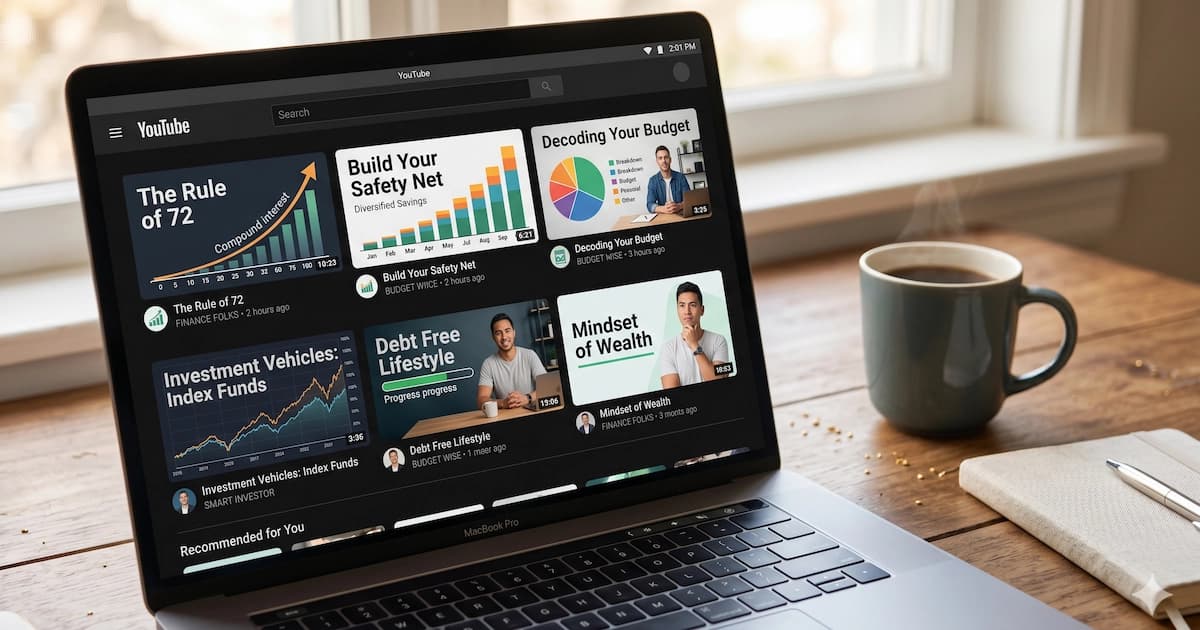
Finance and stock-market YouTube channels worth watching in India and the US: Rachana Ranade, Pranjal Kamra, Graham Stephan, Ben Felix, and who each is for.
18 min read

Personal finance basics explained in plain English: income, saving, debt, credit, and investing, the small set of concepts every adult tends to encounter.
10 min read