Money Saving Tips for Beginners: 12 That Hold Up

By Tapabrata Biswas · Published May 11, 2026 · 11 min read
Researched with AI assistance, reviewed and edited by Tapabrata Biswas.

The most popular money-saving article on the internet has 47 tips. The next most popular has 53. The one after that has 100. Long lists feel comprehensive but fail beginners because the tips aren't ranked by leverage: saving on phone bills sits next to "make your own laundry detergent" as if they're equivalent. They aren't. One saves $600 a year. The other saves $40 and consumes hours per month.
The twelve tips below are ordered roughly by impact, with the structural ones (where the dollars are big) first and the small habit-building ones (where the dollars are small but the discipline matters) at the end. A beginner who applies just the first three outperforms a beginner who tries to apply all 47 from a generic list and burns out.
Tier 1: the three structural moves that produce most of the savings
The first three tips do most of the work. Together they save 5-10% of net income for a beginner household and require almost no ongoing willpower.
1. Automate one transfer to savings on payday
A recurring transfer fires the day after each payday, before any bills are scheduled. The amount lands in a separate high-yield savings account at an online bank: different from your checking bank, so it isn't visible during routine spending. Whatever stays in checking after the transfer is the working budget for the period.
This is the pay-yourself-first approach, and it's the single highest-leverage move available to most households. Start at $25 per paycheck if money is tight or 5% of net income if it isn't. Step up after three successful cycles. The amount matters less than the order: savings happens before spending, every cycle, regardless of what the household feels like that month.
Households who set this up save more in the first year than households trying to "save what's left" save in three.
2. Audit fixed costs once a year
Insurance, phone plan, utilities, subscriptions, internet. These are the categories where comparison shopping produces real annual savings without ongoing willpower cost. A 30-minute audit of each, once a year, saves $400-$1,200 annually for a beginner household.
The categories most worth examining, with the realistic savings range each one produces:
| Category | Typical annual savings | Time to action |
|---|---|---|
| Insurance shopping (auto + home) | $200-$600 | 30 min via multi-quote site |
| Phone plan switch (to prepaid sub-brand) | $480-$960 | 1 hour incl. number port |
| Subscription audit (cancel unused) | $100-$400 | 20 min reviewing 3 months of statements |
| Utility provider switch (in deregulated states) | $100-$300 | 15 min online |
| Total annual savings if all four done | $880-$2,260 | ~2 hours total |
Insurance: auto and home insurance premiums vary 20-40% between providers for the same coverage. Rates change every renewal cycle. A 30-minute comparison via a multi-quote site or independent broker frequently produces $200-$600 in annual savings.
Phone plan: major U.S. carriers' prepaid sub-brands (Mint Mobile, US Mobile, Visible) offer the same network coverage as the parent carrier at one-third to one-half the price. Switching saves $40-$80/month per line.
Subscriptions, the average U.S. household spends $200+/month on subscriptions, often without remembering each one. Pull three months of credit card statements; cancel anything that hasn't been used. Most beginners find 2-5 subscriptions worth cancelling.
Utilities: many U.S. states have deregulated electricity markets where switching providers takes 5 minutes online and locks in a lower per-kWh rate.
A single hour spent on these four categories in January often saves more annually than twelve months of disciplined coffee-cutting.
3. Build the first $400 of an emergency fund before anything else
This is the threshold the Federal Reserve uses to measure household financial fragility. According to the Federal Reserve's 2023 Economic Well-Being of U.S. Households report, 37% of American adults could not cover an unexpected $400 expense from cash. Crossing the $400 threshold removes most of the small-emergency credit-card-debt risk, the single most common pattern that traps households into long-running high-interest debt.
The first $400 takes 8 paychecks at $50 per paycheck biweekly, or 16 paychecks at $25. Manageable through the automated transfer in tip 1. The detailed path is in our companion piece on how to build an emergency fund.
The first $400 matters more than any other single move because of what it prevents. A car battery, a medical copay, a school fee: any of these that lands while the household has $0 in liquid savings goes onto a credit card at 22% APR and starts compounding for years. The $400 buffer breaks that cycle on day one.
Tier 2: moderate-leverage tactics worth applying after the structural moves are in place
The next three tips produce smaller savings but matter for households who've already automated the basics.
4. Track spending for one month, then do nothing else
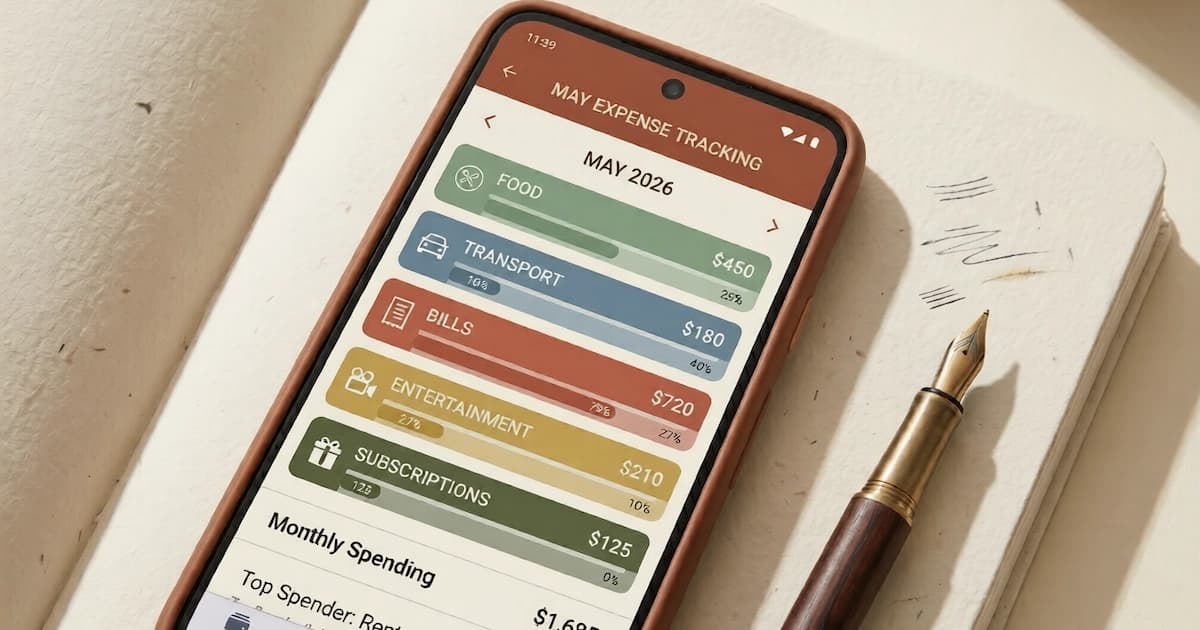
The exercise of writing down every dollar spent for 30 days is annoying for the first week and revelatory for the second. Almost every beginner discovers categories they hadn't realised consumed real money: daily coffees that total $150/month, weekend takeout that totals $80, small online purchases that aggregate to $200.
The point of the exercise isn't judgment; it's calibration. The category that consumes 20% of discretionary spending without contributing 20% of the value is the obvious place to make the first small adjustment. The awareness alone changes spending behaviour by 5-10% for most beginners who run the exercise, even without a formal budget.
5. Use the 24-hour rule for non-essential purchases over $50
Most impulse purchases that survive a 24-hour wait are purchases the household actually wanted. Most that don't survive are purchases the household forgot existed by the next day. The 24-hour rule isn't restrictive. It's a small friction layer that filters genuine wants from temporary impulses.
The rule works because the brain's response to "I want this" is much stronger in the moment than it is the next day. Inserting a one-day delay between the impulse and the purchase eliminates a meaningful share of low-value spending without creating the deprivation feeling that produces rebound months.
6. Plan groceries before shopping, not while shopping
Meal-planning the week ahead, building a list, and not deviating reduces grocery spending by 10-15% with no change in what gets eaten. The biggest source of grocery overspending isn't expensive choices. It's impulse additions that don't fit any meal plan.
A 15-minute Sunday meal-planning session, paired with a written list, produces $30-$80/month in grocery savings for most households. The annual total is meaningful; the time investment is small.
Tier 3: small-dollar habits worth building over time
The last six tips are the small-leverage ones. None individually moves the math much, but together they compound across years and form the financial discipline that makes everything else easier.
7. Use cash for one specific overspend category
Hand-to-hand cash creates more friction than card swipes. For households with one or two specific categories where overspending is consistent (eating out, entertainment, personal spending), withdrawing the budgeted amount in cash at the start of the period and not using cards for that category often cuts category spending by 20-30% with no other intervention.
8. Cancel one subscription you forget you have
Most U.S. households have at least one subscription they haven't used in 90+ days. Pull three months of credit card statements, find the candidate, cancel it. Repeat once a quarter.
9. Buy generic on at least three categories
Store-brand groceries cost 25-40% less than name-brand for nearly identical products. Pick three categories where you currently buy name-brand without strong preference (often: pasta, cereal, pantry staples, cleaning products) and switch to generic. Most households don't notice the change in product quality but do notice the change in monthly grocery total.
10. Use the library
The library system is the most under-used free resource for most households. Books, audiobooks, ebooks, magazines, streaming movies and TV shows (via Hoopla, Kanopy, Libby), free internet, free meeting rooms, free events: all available with a $0 library card. For households spending $20+/month on Audible, Kindle Unlimited, or similar, the library replicates most of it for free.
11. Cook one extra meal at home per week
Cooking at home is dramatically cheaper than eating out. The full "cook everything at home" advice fails for most beginners because it's a lifestyle change. Cooking one extra meal at home per week, with no other changes, takes about 4 meals out per month down to 3. The savings is modest but the habit is sustainable, which matters more for long-term saving.
12. Buy quality once for items used daily
For items used daily over multi-year horizons (mattress, work shoes, kitchen knife, winter coat, work bag), buying once at moderate quality costs less per year than replacing cheap versions every 6-12 months. The trick is being honest about which categories actually qualify: most things bought "for life" don't end up used that long.
Common mistakes beginners make
Three patterns trip new savers up regularly.
The first is starting with the small-dollar tactics. Cutting daily coffee saves $1,800/year: real money, but small compared to a $600 insurance shopping result that takes 30 minutes. Most beginners who lead with the small habits burn out before the big-leverage moves get done.
The second is trying to apply all 12 tips at once. The structural moves (1-3) take a few hours of setup and run themselves afterward. The mid-tier tactics (4-6) take ongoing attention but pay back. The small habits (7-12) compound slowly. Trying to do all of them in week one produces overwhelm and abandonment by week three.
The third is treating one bad month as system failure. Most households need 2-3 cycles before the new habits feel normal. A month where the planned transfer didn't survive isn't evidence the method doesn't work. It's evidence that month one was calibration. Reduce the amount, don't pause the system.
What experts say
The Consumer Financial Protection Bureau's emergency fund and savings guidance is the most comprehensive plain-language resource on the structural saving moves and is the basis for much of tip 3.
Investopedia's overview of personal saving provides the conceptual background for why structural moves outperform willpower-based ones over multi-year horizons.
For applications when the household is genuinely tight on cash, see our companion piece on how to save money on a tight budget. For the underlying budgeting framework that makes saving sustainable, see budgeting tips for beginners.
Frequently asked questions
What's the single most important money-saving tip for beginners? Automate the saving before you see the money. A scheduled transfer of even $25 per paycheck to a separate savings account on payday saves more in a year than most willpower-based "try to save what's left" approaches save in three. The order matters more than the amount: savings before spending, not the other way around.
How long until money-saving tips actually start producing results? Visible results usually appear by month three for households who stick with the structural tactics (automated transfers, fixed-cost cuts) rather than the willpower-based ones (cutting daily coffees). Within six months, most households see meaningful balance growth in the savings account; within twelve, the new habits feel normal rather than effortful.
Should I try to save money or pay off debt first? Most experts recommend a small starter emergency fund first ($1,000), then aggressive paydown of any debt above 15% APR (typically credit cards), then growing the emergency fund to 3-6 months of expenses. Without the buffer, the next emergency goes back on the credit card and the debt cycle restarts. The first $1,000 emergency fund breaks that cycle.
How much can a typical beginner realistically save? Start at 1-5% of net income. The exact percentage matters less than picking an amount you can sustain through the first three months without crisis. Households who start at 2% and step up gradually almost always end up saving more annually than households who start at 15% and abandon the plan in month two.
In summary
The twelve money-saving tips that matter most for beginners cluster into three tiers: structural moves (automated transfer, fixed-cost audit, first emergency fund), moderate-leverage tactics (spending tracking, 24-hour rule, meal planning), and small-dollar habits (cash for problem categories, subscription audits, generic groceries, library use, cooking one extra meal a week, buying quality on daily-use items). The structural tier does most of the work; the rest compound over time.
Pick one tip from tier 1 and start it tonight: set up the recurring transfer, run the insurance comparison, or open the savings account. The first tip moves the math more than any of the small-dollar tactics combined, and once it's running you don't have to think about it again until the first raise.
Sources
- Consumer Financial Protection Bureau, An Essential Guide to Building an Emergency Fund: consumerfinance.gov/an-essential-guide-to-building-an-emergency-fund
- Investopedia, Financial Tips for Young Adults: investopedia.com/articles/personal-finance/082913/8-financial-tips-young-adults.asp
- Federal Reserve, Economic Well-Being of U.S. Households: federalreserve.gov/publications/report-economic-well-being-us-households.htm




You might also like

Structural tactics for households living close to the line, rather than the cut-your-coffee advice that does not survive the first hard week.
11 min read

Where the idea came from, how to set up the automatic transfer, and why saving before spending changes the arithmetic and not the willpower.
10 min read

What to do in week one, the common collapse points, and the small habits that decide whether a budget survives into month two.
9 min read