What Is a No-Spend Challenge? Rules and Pitfalls

By Tapabrata Biswas · Published May 10, 2026 · 11 min read
Researched with AI assistance, reviewed and edited by Tapabrata Biswas.

A typical 30-day no-spend challenge frees up $200-$800: money that would otherwise have gone to eating out, entertainment, online shopping, and small impulse purchases. The rules are simple: for a defined period, spend nothing on discretionary categories. The savings are immediate and visible.
A worked example for a single household, drawn from the discretionary categories most likely to disappear during a 30-day no-spend month:
| Discretionary line | Normal monthly spend | No-spend month | Saved |
|---|---|---|---|
| Coffee shops + bakeries | $90 | $0 | $90 |
| Eating out + takeout | $320 | $0 | $320 |
| Online shopping (clothes, gadgets) | $140 | $0 | $140 |
| Entertainment (movies, events) | $60 | $0 | $60 |
| Hobby + impulse purchases | $80 | $0 | $80 |
| Total saved in one month | $690 | $690 |
Indian households running the same exercise see comparable proportional results, a typical urban professional cuts ₹4,000-₹15,000 from food delivery, Swiggy/Zomato, OTT add-ons, and impulse purchases over a 30-day no-spend.
The challenge has more value than just the savings, though. Many participants report that the experience surfaces spending patterns they hadn't recognised as patterns, the daily takeout coffee, the weekend online browse, the "treat" that happened five times a week. Once visible, the patterns can be re-evaluated even after the challenge ends.
The standard rules
A no-spend challenge has three components: a duration, an essentials list, and a discretionary list.
The duration is most often 7, 30, or 90 days. The 30-day version is the most common because it produces visible savings within a single calendar month and builds enough habit to be worth the effort, without requiring the longer commitment that 90 days demands. How the three compare:
| Duration | Typical $ saved | Typical ₹ saved (urban India) | Habit-formation impact | Completion rate |
|---|---|---|---|---|
| 7-day | $50-$180 | ₹2,000-₹6,000 | Minimal: novelty only | 80%+ |
| 30-day | $200-$800 | ₹6,000-₹25,000 | Strong: substitution behaviours stick | 50-60% |
| 90-day | $700-$2,500 | ₹20,000-₹75,000 | Very strong, but high abandonment risk | 25-35% |
The 30-day version sits at the productive intersection of high enough savings, durable habit change, and a completion rate that makes it worth attempting in the first place.
The essentials list, what you can spend on, covers housing (rent or mortgage payments), utilities (electricity, gas, water, internet, phone), insurance premiums, fuel for required transportation, basic groceries (not premium prepared foods), prescribed medications, healthcare (copays, doctor visits), and minimum debt payments.
The discretionary list, what you can't spend on, covers eating out and takeout, coffee shops and bakeries, entertainment (movies, concerts, events), some subscription services, clothing not required for work, online shopping, hobby purchases, gifts (with planned exceptions), and personal care beyond basics.
The exact line between essentials and discretionary needs to be written down before the challenge starts. The most common failure mode of no-spend challenges is the in-flight redefinition of "essential" to include things that weren't on the list at the start.
The subscription question
Most no-spend challenges keep existing subscriptions running (Netflix, Spotify, gym memberships) because cancelling them mid-month is administrative work that often produces refund issues. The challenge is about new spending decisions, not about wholesale subscription audits.
That said, many participants use the no-spend month as a trigger to audit existing subscriptions: which ones did you actually use in the past month? Which would you not miss? The audit isn't part of the challenge itself, but it pairs naturally with the increased spending awareness the challenge creates.
How a typical 30-day no-spend challenge plays out
Days 1-7 are high motivation, easy execution. The novelty of the challenge carries through the first week without much effort. Most participants report the first week feels almost easy.
Days 8-14 are when reality sets in. The first social trigger arrives in this window, a friend's birthday dinner, a colleague's after-work drinks, a planned event you'd already committed to. Pre-decided rules about exceptions matter most here.
Days 15-21 are the middle slog. Motivation has worn off; novelty is gone; the challenge feels like a constraint rather than an interesting project. That's the highest-risk window for abandonment.
Days 22-30 go one of two ways. Either the household has settled into the rhythm and finishes strong, or the rebound has happened and the back half is a recovery from a mid-challenge collapse. Pre-planning for the day-15-to-21 window is the single most important predictor of which path the back half follows.
Pre-challenge planning that determines success
Five planning steps before day one significantly affect whether the challenge succeeds.
The first is writing the essentials and discretionary lists explicitly. Print them, sign them, post them somewhere visible. Vague mental rules expand during the challenge; written rules don't.
The second is identifying and pre-handling the social triggers. Look at your calendar for the challenge period. Are there birthdays, weddings, work events, planned dinners with friends? Decide in advance whether each one is an exception (write it down with a budget) or whether you'll attend without spending (no drinks, no food beyond what you can eat at home before going). Surprise social spending kills most no-spend challenges.
The third is stocking the pantry. A no-spend challenge with an empty pantry on day one becomes an immediate grocery scramble. Doing one normal grocery shop the day before the challenge starts gives the household a reasonable base to work from.
The fourth is designating the savings destination. The money you don't spend needs to go somewhere visible and separate. Set up a transfer at the end of the challenge to move the saved amount to a high-yield savings account, an emergency fund, or a specific savings goal. Without a destination, the saved money tends to get reabsorbed into general spending in month two.
The fifth is telling at least one other person. Social accountability matters. A partner, a friend, or an online community provides the external check that many participants need to push through the day-15-to-21 window.
The rebound trap
The most common pattern in failed no-spend challenges isn't gradual decline but sudden collapse. The household completes 18-22 days successfully, then a single trigger (a stressful day, an aspirational shopping moment, a social event) produces a compensatory spending spree that erases the early savings.
The structural cause is willpower depletion. By week three, the discipline cost of the challenge has accumulated, and a single high-stress moment is enough to break it. Once broken, the "cheat day" framing makes additional spending feel justified, and the spree compounds.
Three patterns help avoid the rebound.
The first is to pre-decide the exceptions. A challenge with zero exceptions is more fragile than a challenge with two pre-planned exceptions. "I will spend on my best friend's birthday dinner ($30 budget)" is sustainable; "I'll figure it out when it comes up" isn't.
The second is to track the savings during the challenge, not after. Calculating the running savings each day or each week makes the cost of breaking it visible. Knowing you've saved $180 by day 18 makes a $50 impulse purchase feel like a 28% loss rather than just a $50 purchase.
The third is to plan the day-30 transition before day 30 arrives. Most rebounds happen in the days immediately after the challenge ends, when the constraint releases all at once. Planning what month two looks like, say a 50% reduction from normal discretionary spending rather than a return to baseline, prevents the post-challenge spending spree.
What participants typically discover
Beyond the savings amount, no-spend challenges tend to produce three discoveries.
The first is specific category surprises. Most participants identify at least one spending category they hadn't realised was significant. The daily $5 coffee that totals $150/month. The weekend online browse that totals $80/month. The "small" impulse buys that aggregate to $200/month.
The second is substitution behaviours. Households often discover free or low-cost alternatives to discretionary spending: library books and not new books, home coffee and not café coffee, walks and not paid entertainment. Many of these substitutions persist after the challenge ends.
The third is the actual cost of normal life. A no-spend challenge surfaces what monthly essentials actually cost without the discretionary noise around them. That data point is useful for any subsequent budgeting work.
When no-spend challenges work best
The challenge fits four situations particularly well.
Households recovering from a spending burst: post-holiday, post-vacation, or post-life-event spending often leaves households feeling out of control. A 30-day no-spend challenge resets the baseline.
Households trying to break a specific category habit. A household that has tried and failed to "cut down on takeout" can succeed with a 30-day no-takeout commitment because the binary rule is easier to honour than a vague reduction goal.
Households building an emergency fund. The $200-$800 typical savings from a no-spend month, combined with continued normal saving, can meaningfully accelerate building the first $1,000 of an emergency fund.
Households doing a financial audit. The challenge surfaces spending patterns that are normally invisible. Even if the household doesn't continue at no-spend levels, the awareness from a single month carries into subsequent months.
When no-spend challenges don't work well
Three situations make the challenge a poor fit.
Households with very low discretionary spending already. If you're already spending under $100/month on discretionary categories, the no-spend challenge produces minimal savings and significant friction.
Households with frequent unavoidable social obligations. Weddings, family events, and work-mandated socialising can make a strict no-spend challenge unworkable. Modified versions with planned exceptions work better.
Households using the challenge as a substitute for budgeting. A no-spend month isn't a substitute for an ongoing budget. The challenge provides a one-time intervention; sustained financial improvement requires the ongoing structure of zero-based budgeting or another framework.
What experts say
Investopedia's coverage provides the conceptual background and the pairing with broader budgeting frameworks.
The Consumer Financial Protection Bureau's emergency fund guide describes the structured-savings principle that the no-spend challenge implements as a discrete project rather than as ongoing behaviour.
For other money saving challenges and how no-spend fits alongside the others, see our money saving challenges roundup and the 52-week money challenge explained.
Frequently asked questions
What is a no-spend challenge in one sentence? A no-spend challenge is a defined-period commitment (typically 7, 30, or 90 days) to avoid all discretionary spending while continuing to pay for essentials like rent, utilities, groceries, and healthcare. The structure creates immediate visible savings and surfaces spending patterns that are normally hidden by the routine of daily life.
What counts as "essential" during a no-spend challenge? Most participants define essentials as: housing payments, utilities, insurance, fuel for required transportation, basic groceries, prescribed medications, healthcare, and minimum debt payments. What does NOT count as essential: eating out, entertainment, subscriptions (some), clothing not required for work, takeout coffee, online shopping, hobbies, gifts. The exact line should be defined in writing before the challenge starts.
How much money does a typical no-spend challenge save? Most 30-day no-spend challenges save $200 to $800, depending on the household's normal discretionary spending. Higher-income households tend to save more in absolute dollars; lower-income households tend to see a larger percentage reduction in monthly spending. The savings is in addition to whatever the household was already saving.
Why do most no-spend challenges fail in the second half? The most common failure pattern is the rebound: week one and week two go well, then a particular trigger (a friend's birthday, a stressful day, an aspirational online shopping moment) breaks the discipline and produces a compensatory spending spree that erases the early savings. The fix is planning specifically for the predictable trigger moments before the challenge starts.
In summary
A no-spend challenge is a 7, 30, or 90-day commitment to avoid discretionary spending while continuing essentials. The 30-day version saves $200 to $800 for most households and produces meaningful awareness of spending categories that are normally invisible. The most important pre-challenge planning is the explicit written list separating essentials from discretionary, and the pre-decided exceptions for unavoidable social obligations.
The discoveries from a no-spend month, the daily $5 coffee that totals $150, the subscriptions you don't actually use, the substitution habits that turn out to feel fine, are worth more than the dollar savings for most participants. A single 30-day challenge run carefully often saves more money over the following twelve months (through the substitution habits it creates) than the savings totalled during the challenge itself.
To keep those savings going after the month ends, take a look at the range of budgeting methods and choose one to build on.
Sources
- Investopedia, No-Spend Challenge: investopedia.com/terms/n/no-spend-challenge.asp
- Consumer Financial Protection Bureau, An Essential Guide to Building an Emergency Fund: consumerfinance.gov/an-essential-guide-to-building-an-emergency-fund
- Consumer Financial Protection Bureau, Financial Well-Being in America: consumerfinance.gov/data-research/research-reports/financial-well-being-america



You might also like

Ten money saving challenges for 2026, who each suits, and the structural reason short challenges work when year-long resolutions do not.
11 min read

Save a rising amount each week for a year. The correct rupee and dollar totals, the December and Diwali collision nobody flags, and what it adds up to.
9 min read
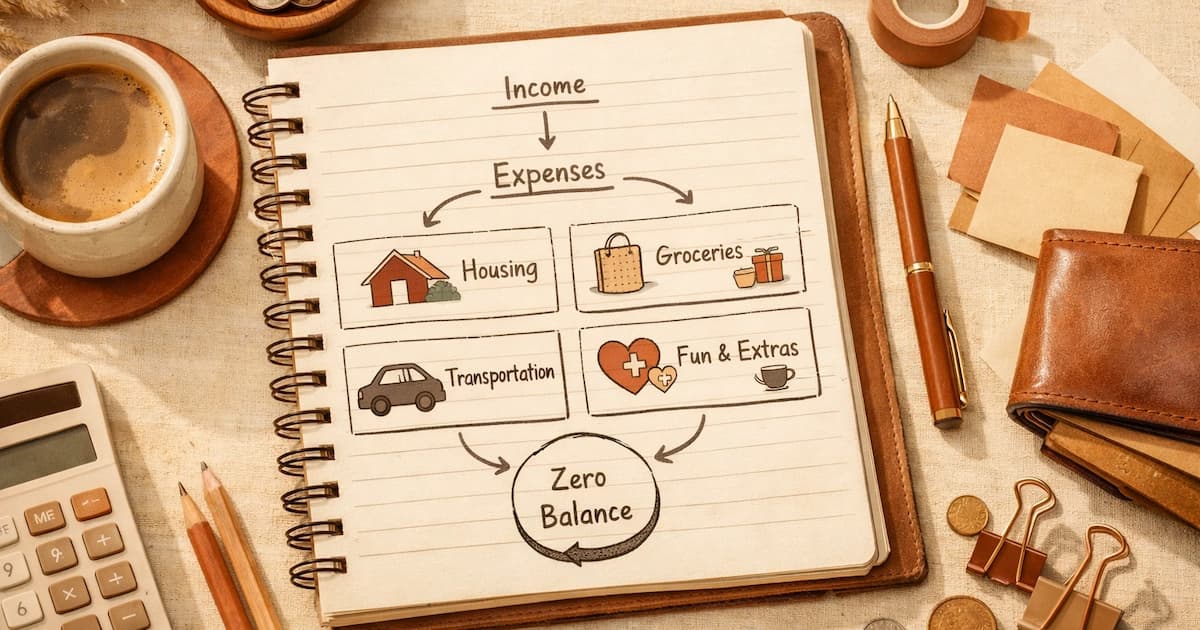
Give every rupee a job until income minus spending is zero. The five steps, a worked example in rupees and dollars, and where it breaks down.
14 min read