What Is Financial Literacy: Explained Simply for Beginners

By Tapabrata Biswas · Published May 6, 2026 · 11 min read
Researched with AI assistance, reviewed and edited by Tapabrata Biswas.

Fewer than half of adults across more than thirty OECD countries can correctly answer three basic questions about interest, inflation, and risk. They aren't trick questions: they're the kind of math that decides whether a credit card balance grows or shrinks each month, whether a savings account keeps pace with inflation, whether one bad call wipes out a year's worth of retirement contributions. The gap between hearing about money in the news and understanding how it actually works in your own bank account is what financial literacy is built to close.
The most-cited cross-country benchmark is the S&P Global FinLit Survey 2014, which tested adults in over 140 countries on five basic financial concepts. The headline numbers: about 24% of Indian adults qualified as financially literate, against 57% in the United States and 71% in Norway. The survey hasn't been repeated, but it remains the reference point most central banks and educators cite, and the gap it documented in India still drives RBI's National Strategy for Financial Education (NSFE 2020-2025).
The Consumer Financial Protection Bureau's long-running financial well-being study finds that people who score higher on basic money knowledge make fewer expensive mistakes with their money. They carry less revolving debt. They have more emergency savings. They feel more confident about retirement. None of that requires a finance degree: just a working understanding of the basics.
What is financial literacy?
Financial literacy is the ability to understand how money works in everyday life and to apply that understanding when making decisions. The Organization for Economic Co-operation and Development (OECD) defines it as the combination of awareness, knowledge, skill, attitude and behaviour needed to make sound financial decisions and ultimately achieve individual financial wellbeing. In plain language: financial literacy is the difference between reading a credit card statement and understanding what's actually happening inside it.
The concept covers a small set of fundamentals that show up in most adult financial situations: earning, budgeting, saving, borrowing, investing, paying tax, and protecting against financial risks like illness or unemployment. Financial literacy doesn't require advanced mathematics or a finance degree. It does require knowing the basic mechanics of each topic, what compound interest means, what a credit score measures, what an emergency fund is for, well enough to make informed choices when those topics come up. If you're stuck on the vocabulary itself, our plain-English glossary of financial terms covers the foundational words.
Why financial literacy matters
The most direct way to see why it matters is to look at what happens when it's missing.
Households that don't understand how credit card interest compounds get caught in the minimum-payment trap, where a small balance stretches into years of payments. Credit applications get denied for reasons that seemed mysterious: until you learn what a credit score actually measures. Someone nearing retirement who hasn't learned the basics of investing may either keep everything in cash and lose ground to inflation, or chase returns through products they don't understand.
The link between financial knowledge and outcomes shows up across multiple research studies. The Consumer Financial Protection Bureau finds that people who score higher on financial knowledge questions also report fewer late payments, more emergency savings, lower revolving debt, and greater confidence about meeting their long-term goals. None of those outcomes require complex strategies. They come from understanding the basics well enough to avoid the most common pitfalls.
The core concepts of financial literacy
There's no single official list of what financial literacy covers, but most frameworks, the OECD, the CFPB, the U.S. Securities and Exchange Commission's investor-education arm: agree on the broad areas. Each one is its own topic; the goal is to know enough about each to recognise it when it appears in your own life.
Budgeting and spending
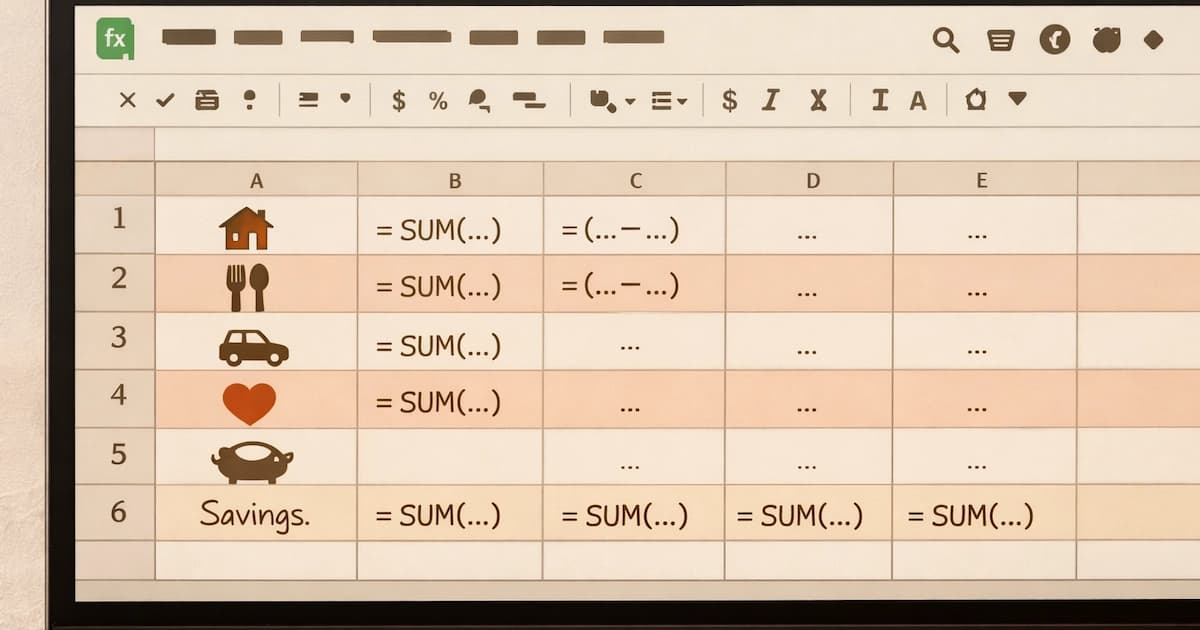
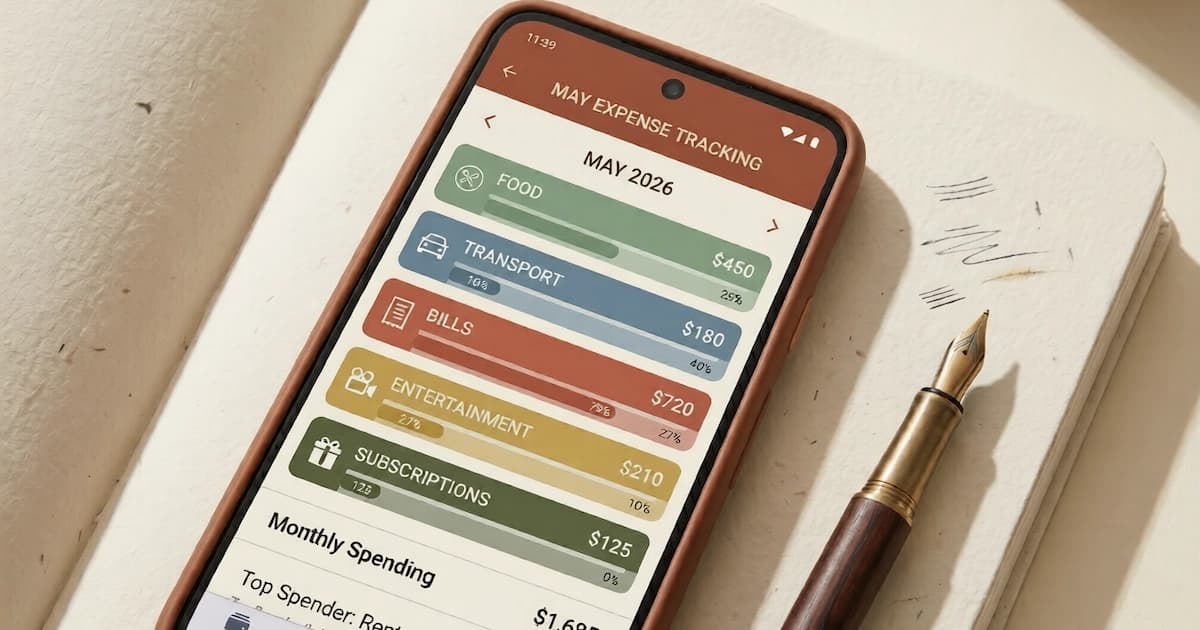
A budget is simply a plan for how income gets allocated across needs, wants, and savings. The 50/30/20 rule and zero-based budgeting are two common methods, but financial literacy in this area is less about picking a method and more about knowing where your money actually goes each month.
Saving and emergency funds
An emergency fund is money set aside specifically for unexpected expenses, a car repair, a medical bill, a job loss. Most financial educators describe it as the foundation of personal finance because, without one, every unexpected expense becomes either debt or a crisis.
Debt and credit
A credit score is a number, between 300 and 850 in the United States on the FICO scale, or 300 to 900 on India's CIBIL scale, that summarises how reliably a person has handled past borrowing. Lenders use it to decide whether to extend credit and at what interest rate. Knowing how scores are calculated, what affects them, and how interest accrues on different types of debt are core literacy topics in this area.
Investing basics
Investing is the practice of putting money into assets, stocks, bonds, real estate, retirement accounts, with the goal of growing it over time. Financial literacy here isn't about picking specific investments. It's about understanding what an index fund is, how compound growth works, and what the difference is between accounts like a 401k and a Roth IRA.
Insurance and risk
Insurance, health, auto, home, life, exists to protect against financial losses too large to absorb on your own. Financial literacy in this area means knowing what each type of insurance does and roughly how it's priced, even if you rely on a professional to choose specific policies.
How financial literacy develops over time
Financial literacy is rarely learned all at once. Most adults pick it up topic by topic, in response to a real-life event. A first student loan teaches you about interest. A first credit card teaches you about minimum payments. A new job with a 401k match prompts the question of what a 401k actually is.
Researchers from the FINRA Investor Education Foundation describe this as a "just-in-time" learning pattern: people are most receptive to financial information when they're about to make a decision that requires it. The challenge is that decisions about money often arrive without warning, and the cost of learning after the fact can be significant. People who build a base of literacy proactively, by reading explanations like this one before they need them, tend to make better-informed decisions when those moments arrive.
Reading is one route and a structured course is another. A course fixes the running order and ends in an assessment, which at least tells you whether any of it stuck. If that suits how you learn, we compared free and paid personal finance courses across India and the US, including which ones give the course away and then charge for the certificate.
A useful way to think about it: every time you understand a new money concept, you have one fewer area where someone selling a product can take advantage of what you don't know.
A simple real-world example
Imagine a household earning $4,000 per month after taxes. They have a credit card balance of $3,000 carrying 22% annual interest: close to the 22% average US credit card APR reported in the Federal Reserve's G.19 Consumer Credit release for 2024. They have $200 in savings. They rent an apartment.
Without financial literacy in place, the pattern goes like this: pay the credit card minimum each month, spend the rest on living expenses and discretionary purchases, treat the $200 as the emergency fund. The car needs a $600 repair, the cost goes onto the credit card, which now carries $3,600 at 22%, and the household pays interest on that repair for the next several years. At a $90 minimum payment, that $600 repair takes around 4 years to pay off and costs roughly $290 in additional interest.
With basic financial literacy in place, the same household sees the situation differently. They understand that 22% interest means the credit card debt is growing faster than almost anything they could earn elsewhere, so paying it down becomes a priority. They understand that $200 isn't an emergency fund, so they begin building one: even slowly. They know any unexpected expense will hit either savings or debt, and they make a conscious choice about which.
The math is the same. The decisions are different.
Common misconceptions about financial literacy
Three misunderstandings show up often when people start learning about money.
The first is the assumption that financial literacy means knowing complicated investment strategies. It doesn't. Everyday topics, budgeting, saving, debt, credit, basic insurance, are the foundation. Investment strategy sits on top of that foundation; it isn't the foundation itself.
The second is the idea that financial literacy is for people who already have money. The opposite is closer to true. People with limited income often have the most to gain from understanding the basics, because every dollar they don't lose to fees, interest, or avoidable mistakes stretches further. CFPB research finds that financial knowledge benefits people across all income levels, and the largest measured wellbeing gains often appear in lower-income brackets.
The third is the belief that financial literacy is something you finish learning. Personal finance topics evolve. Tax rules change. New account types appear. New financial products get introduced. Financial literacy is closer to physical fitness than to a degree: ongoing engagement keeps the knowledge current.
What research and experts say
Several institutions have studied financial literacy systematically.
The OECD/INFE International Survey of Adult Financial Literacy, which assesses adults across more than thirty countries, has found in successive waves that fewer than half can correctly answer basic questions about interest, inflation, and risk diversification. The S&P Global FinLit Survey 2014, still the largest cross-country benchmark on the subject, pegged India at roughly 24% adult financial literacy and the United States at 57%, with most major economies clustering between 30% and 70%. According to Investopedia, this knowledge gap correlates with measurable financial outcomes, the likelihood of having an emergency fund, the likelihood of saving for retirement, and the level of high-interest debt carried.
The Consumer Financial Protection Bureau tracks something it calls "financial well-being", a broader measure of how secure people feel about their finances. Higher financial literacy scores predict higher financial well-being scores, even when controlling for income.
The U.S. Securities and Exchange Commission's Office of Investor Education and Advocacy maintains free resources explaining how investments work in plain English, specifically because the SEC has found that investor losses frequently trace back to a lack of basic understanding rather than bad luck.
If you're starting from the foundations and want to keep going, our companion piece on personal finance basics everyone should know covers the next layer of concepts. From there, what net worth actually is and how inflation works in everyday terms are two natural next reads.
Frequently asked questions
What is the simplest definition of financial literacy? Financial literacy is the ability to understand and apply basic money concepts, earning, budgeting, saving, borrowing, and investing, well enough to make informed decisions about your own finances.
Is financial literacy the same as being good with money? Not exactly. Financial literacy is the knowledge piece, understanding how money works. Being good with money also requires applying that knowledge through consistent habits and behaviour. Knowing the rules of the road is different from being a careful driver.
Why does financial literacy matter? Research from the Consumer Financial Protection Bureau has linked higher financial literacy with fewer late payments, more savings, lower debt, and greater confidence about retirement. People without financial literacy often pay more in fees and interest simply because they do not know what to ask.
Can financial literacy be learned later in life? Yes. Financial literacy is a skill, not a personality trait. Most adults learn personal finance topic by topic: by reading explanations, asking questions, and applying what they learn to their own situation. Many people learn the most after they have already made expensive mistakes.
In summary
Financial literacy is the practical knowledge of how money works in everyday life: how income flows, how debt accrues, how savings grow, how credit is measured, how investing functions at a basic level. It isn't a finished destination. It's a small, gradually-built base of understanding that makes every later money decision a bit clearer than the one before it.
The shortest path to financial literacy isn't a course. Look up the next money concept that confuses you the next time it shows up in your life, read about it until you understand it, then move on. After this overview, personal finance basics covers the specific concepts most adults encounter next.
For a guided tour of the individual concepts that make up this skill, our financial literacy explained overview maps the whole cluster in one place.
Sources
- Consumer Financial Protection Bureau, Financial Well-Being in America: consumerfinance.gov/data-research/research-reports/financial-well-being-america
- Investopedia, Financial Literacy: What It Is and Why It's Important: investopedia.com/terms/f/financial-literacy.asp
- Organization for Economic Co-operation and Development (OECD), International Survey of Adult Financial Literacy: oecd.org/financial/education
- U.S. Securities and Exchange Commission, Office of Investor Education and Advocacy: sec.gov/investor



You might also like

Personal finance basics explained in plain English: income, saving, debt, credit, and investing, the small set of concepts every adult tends to encounter.
10 min read

What CIBIL, UPI, EMI and TDS mean, and their US equivalents FICO, ACH and withholding. Plain definitions with real numbers, plus the pairs people mix up.
15 min read

What is net worth? A plain-English explanation of the most foundational personal finance number, plus how to calculate yours in five minutes.
10 min read